Inspiring Dining Room Ideas for a Functional & Stylish Home
Unlock the full potential of your home with our dining room ideas! Transform your space from formal to functional. Get started designing your dream dining room today!
By Roomellow Team
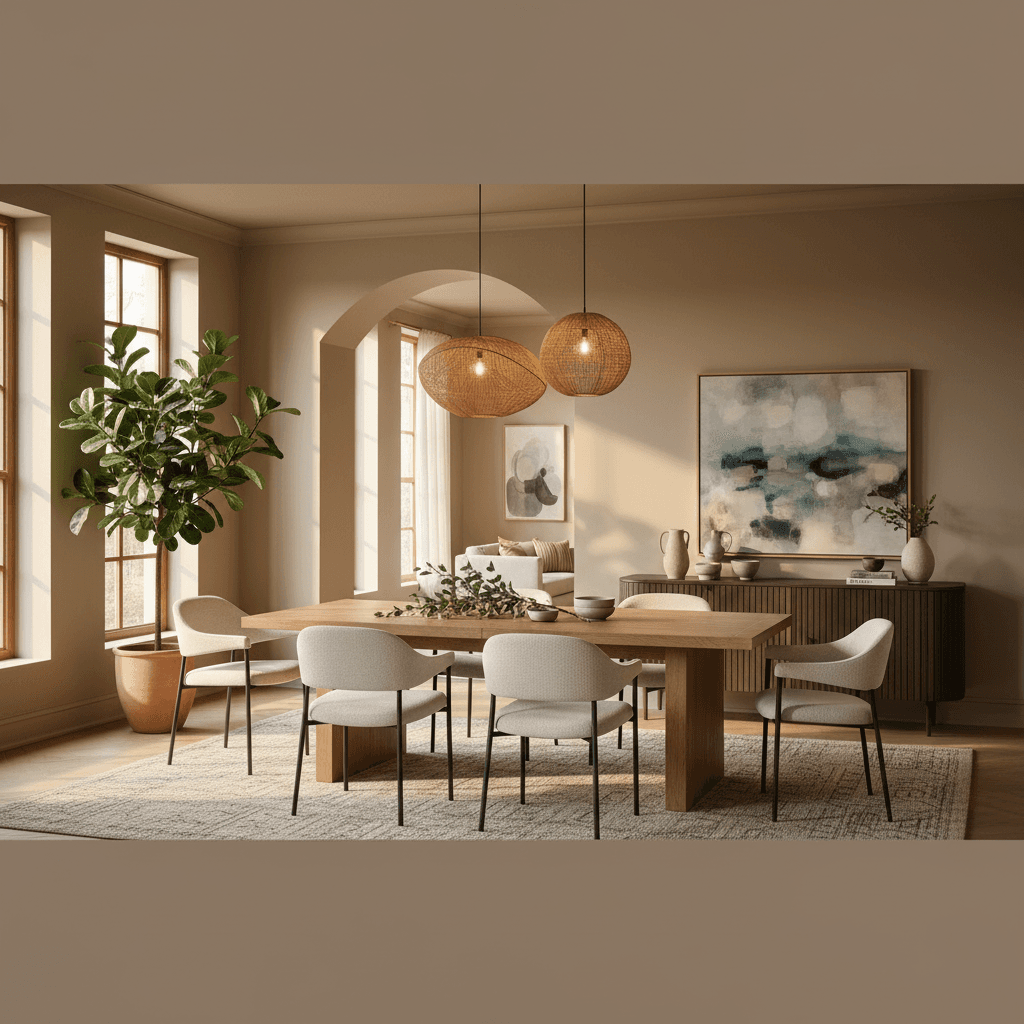
The dining room often feels like the unsung hero of the home. For many, it's a room that sits pristine, gathering dust between holiday meals, a space reserved for "special occasions." But I firmly believe your dining room should be a hardworking, inviting hub that flexes to your life, not just a stage for formal events. It can be a place for quick breakfasts, family game nights, and even a temporary work-from-home spot, all while being ready for that dinner party.
The trick is to design it with intention, making sure every piece earns its place. Forget the idea that a dining room needs to be stiff or overly formal. Let's dig into how to make yours both beautiful and genuinely useful, a true extension of your home.
Beyond the Table: Defining Your Dining Room's Purpose
Before you even think about buying a dining table, you need to understand what you truly need from this room. This is the first, non-negotiable step. Are you a large family that gathers for dinner every night? Do you host elaborate dinner parties once a month? Or is your dining room doubling as a homework station or a temporary home office? Maybe it's all three.
For instance, if your dining room is also your primary workspace, a sturdy, comfortable chair is a must, even if it means sacrificing some aesthetic flair for ergonomics. You'll also want ample surface area on the table. If it's mainly for entertaining, perhaps a table with an extension leaf is smarter than one fixed at a large size, allowing you to reclaim floor space day-to-day. My advice? Grab a notebook, sit in your current dining room, and list every activity you wish you could do there, and every activity you actually do there. This clarity will guide every subsequent decision.
The Foundation: Dining Tables and Chairs
This is where the rubber meets the road. Your table and chairs aren't just furniture; they're the anchor of the room, dictating flow, comfort, and much of the overall style.
Choosing the Right Dining Table
Size and Shape: This is paramount, and often where people go wrong. The standard rule is to leave at least 36-42 inches of clearance between your table and any wall or other furniture to allow chairs to be pulled out comfortably. For a comfortable seating experience, each diner needs about 24-30 inches of table width.
- Rectangular Tables: These are the most common and versatile.
- A 60-inch long table typically seats 4-6.
- A 72-inch long table seats 6-8.
- A 96-inch long table seats 8-10. I find that rectangular tables can sometimes feel a bit imposing in smaller spaces, but they’re hard to beat for maximizing seating.
- Round Tables: Excellent for promoting conversation and making small rooms feel more open, as they lack sharp corners.
- A 36-44 inch diameter round table seats 2-4.
- A 48-60 inch diameter round table seats 4-6. They create an intimate atmosphere, but you lose some functional surface area compared to a rectangular table of similar footprint. I often recommend a round table for smaller dining nooks or open-plan spaces where a square or rectangular table would interrupt the flow too much.
- Oval Tables: A beautiful compromise between rectangular and round. They offer the social aspect of a round table with the increased surface area of a rectangular one, often feeling less visually heavy than a rectangle.
- A 60-inch oval table seats 4-6.
- A 72-inch oval table seats 6-8. They’re particularly effective in narrow dining rooms where a rectangular table might feel too blocky.
Table Materials: Each material brings its own set of aesthetics and practical considerations.
- Solid Wood (Oak, Walnut, Maple): The gold standard for durability and timeless appeal. It can be sanded and refinished, offering longevity that veneers simply can't match. Expect to pay more ($800-$3000+) for a good solid wood table, but it's an investment. Walnut is my personal favorite for its rich tone and grain, especially in mid-century modern or modern settings.
- Wood Veneer: More affordable ($300-$1000+) than solid wood, veneers are thin layers of real wood glued over an MDF or particleboard core. They offer the look of wood without the high price tag or weight. The trade-off is durability; deep scratches or water damage are harder to repair. They're great for a first apartment or if you like to change furniture frequently.
- Glass: Visually lightens a room, making it feel more spacious. A fantastic choice for smaller dining rooms. However, fingerprints are a constant battle, and the material can feel less "warm" than wood. Tempered glass is essential for safety. Price ranges widely ($200-$1500+).
- Marble/Stone: Luxuriously beautiful and incredibly durable. Each piece is unique. The major downside is cost ($1000-$5000+), weight, and porosity (etching from acids is a real concern, so coasters and immediate wipe-downs are critical). If you choose marble, consider honed over polished for a less reflective surface that hides minor imperfections better.
- Metal: Usually seen in bases or accents, but full metal tables (like industrial steel or brass) exist. Very durable and can lend a contemporary or industrial edge. Can feel cold without other softening elements.
Pairing Dining Chairs
This is where you can truly express personality. Please, for the love of good design, avoid the matching dining set unless you are absolutely sure it's the right choice for a very specific, cohesive look. Mixing and matching adds character and depth.
- Comfort vs. Style: While aesthetics are important, dining chairs must be comfortable. Your guests should be able to sit for a two-hour dinner without squirming. Look for good lumbar support and a seat depth of at least 16-18 inches. Always try to sit in a chair before you buy it, or at least check return policies.
- Upholstered Chairs: Offer the most comfort and an opportunity to introduce color and texture. Bouclé, velvet, or linen can look incredible, but consider your lifestyle. If you have pets or young children, performance fabrics (like Sunbrella or Crypton) are a non-negotiable for me. Otherwise, you’ll be stressed about spills.
- Wood or Metal Chairs: More durable and easier to clean than upholstered options. They can be softened with seat cushions. These are often a smart choice for daily use, especially if you have an active household.
- Armchairs vs. Side Chairs: Armchairs are more substantial and comfortable for longer meals, often reserved for the head of the table. Side chairs are armless, allowing for more seating flexibility and a less formal look. I love the look of two armchairs at the ends of a rectangular table, flanked by side chairs.
- Bench Seating: Can be space-saving if one side of the table is against a wall, and it offers flexible seating for children. It often feels more casual.
- Mixing Styles: A beautiful way to add interest. You could pair a rustic wooden table with sleek, modern upholstered chairs, or a glass table with classic Windsor chairs. Just ensure there's a cohesive element – maybe a shared material, color, or a consistent height and scale – so it doesn't look haphazard.
Lighting: Setting the Mood and Function
Lighting is often overlooked, but it's the secret sauce for any well-designed dining room. It’s not just about illumination; it’s about creating an atmosphere.
The Chandelier or Pendant
This is usually the main event. It should be appropriately sized for your table and room. A good rule of thumb for diameter is to take the width of your table in inches and subtract 12. For example, a 48-inch wide table would suit a 36-inch diameter chandelier. You also want it to hang about 30-36 inches above the tabletop, lower if your ceilings are very high, higher if they're standard 8-foot. This ensures it illuminates the table without obstructing views across it.
Layering Light
- Dimmers: Absolutely non-negotiable. Being able to adjust the light from bright for tasks (homework, crafts) to soft and ambient for dinner parties is crucial. I install dimmers on every light fixture in my home.
- Sconces or Wall Lights: These add a beautiful layer of light and can highlight artwork. Position them at eye level to provide flattering light.
- Table Lamps or Floor Lamps: If space allows for a sideboard or console, a small table lamp can add a soft glow, especially effective in larger rooms or those that transition into other living areas.
Grounding the Space: Rugs
A rug under your dining table can instantly define the area, add warmth, and introduce color and texture. But get the size wrong, and it will look awkward.
- The Golden Rule for Sizing: Your rug should be large enough so that when chairs are pulled out, their back legs still remain on the rug. This typically means the rug should extend at least 24-30 inches beyond the edges of your table on all sides.
- For a 60-inch rectangular table (4-6 people), a 8x10 or 9x12 rug usually works.
- For a 72-inch rectangular table (6-8 people), a 9x12 rug is generally best.
- For a 48-inch round table, an 8-foot round or 8x10 rectangular rug can work. I personally prefer a rectangular rug under a round table sometimes; it creates an interesting contrast.
- Material Matters: Given the high traffic and potential for spills, durability and cleanability are key.
- Wool: My top recommendation. Naturally stain-resistant, incredibly durable, and beautiful. It's an investment, but a good wool rug will last decades.
- Jute/Sisal: Natural fibers that offer great texture and a casual vibe. They're durable but can be harder to clean if liquids spill.
- Synthetic (Polypropylene, PET): Often very affordable and highly stain-resistant. Ideal for households with kids or pets, or if you want a trendy pattern without a major financial commitment. They don't have the luxurious feel of wool but are incredibly practical.
Storage & Style: Sideboards, Buffets, and Bar Carts
These pieces aren't just for storing seldom-used serving ware; they provide valuable surface area and an opportunity for decorative display.
- Sideboards/Buffets: These offer closed storage for linens, dishes, and small appliances. They also provide a surface for serving food buffet-style, holding a lamp, or displaying art. When choosing one, consider its length in relation to your wall. It should ideally be about two-thirds the length of your dining table if placed on the same wall, or simply proportional to the wall space available. Don't choose one that's too shallow if you plan to place large platters on it.
- Bar Carts: A more compact option, perfect for displaying glassware, liquor, or simply providing a mobile serving station. They add a touch of personality and glamour.
These secondary pieces are excellent spots to weave in elements of specific design styles. A sleek, minimalist sideboard can ground a modern space, while a distressed wood buffet might be perfect for a farmhouse look.
Adding Personality: Art & Decor
This is where your dining room truly becomes yours. Don't treat it as an afterthought.
- Art: Choose pieces that speak to you. A large piece of art or a gallery wall can be a dramatic focal point. For a dining room, I often lean towards abstract art or landscapes that evoke a calm, convivial atmosphere. Make sure the art is appropriately scaled – a tiny print on a vast wall will get lost.
- Mirrors: A well-placed mirror can bounce light around, making a small room feel larger and brighter. It also adds a touch of sophistication.
- Tabletop Decor: Keep it simple and functional. A low floral arrangement (nothing too tall that blocks conversation!), a bowl of fruit, or a grouping of sculptural objects. When you're not using the table, it's nice to have something visually appealing, but it should be easy to clear for meals. My general rule: if it takes more than 30 seconds to clear the table, you have too much everyday decor.
Budgeting Your Dining Room Redesign
A beautiful dining room doesn't require an unlimited budget. It's about smart choices.
- Where to Splurge: I always recommend splurging on the dining table itself and good quality chairs, especially if you plan to use them frequently. A solid wood table and comfortable chairs are investments that will last. If you prioritize comfort, high-quality upholstery is also worth the extra cost.
- Where to Save: Rugs and lighting can often be found at more accessible price points. While a hand-knotted wool rug is divine, a well-chosen synthetic rug can be incredibly practical and stylish for a fraction of the cost. Similarly, you can find beautiful pendant lights from various furniture stores without breaking the bank. Sideboards and decor are also areas where you can find great vintage pieces or more affordable options that still look high-end. For more on saving, check out our guide on Interior Design on a Budget: How to Style Your Room Without Overspending.
Making It Your Own with Roomellow
Pulling all these elements together can feel overwhelming, especially when trying to visualize how a 72-inch table will look with specific chairs and a rug in your actual space. This is precisely where Roomellow comes in. You can upload a photo of your dining room, and our AI can generate redesigns using real, purchasable furniture from various furniture stores. It’s an invaluable tool for experimenting with table shapes, chair styles, rug sizes, and lighting fixtures before you commit to any purchases. Think of it as your personal design assistant, helping you see how all these dining room ideas come to life in your home. Go on, / try it yourself and see what your dining room could become.
Ready to redesign your room?
Upload a photo of your room and get a professional AI redesign with real furniture you can buy. Free to try — no credit card required.
Try Roomellow free