Visualize Furniture in a Room: No More Costly Design Mistakes
Struggling to visualize furniture in a room? Learn actionable ways to confidently pick pieces, avoid costly mistakes, and design your dream space today!
By Roomellow Team
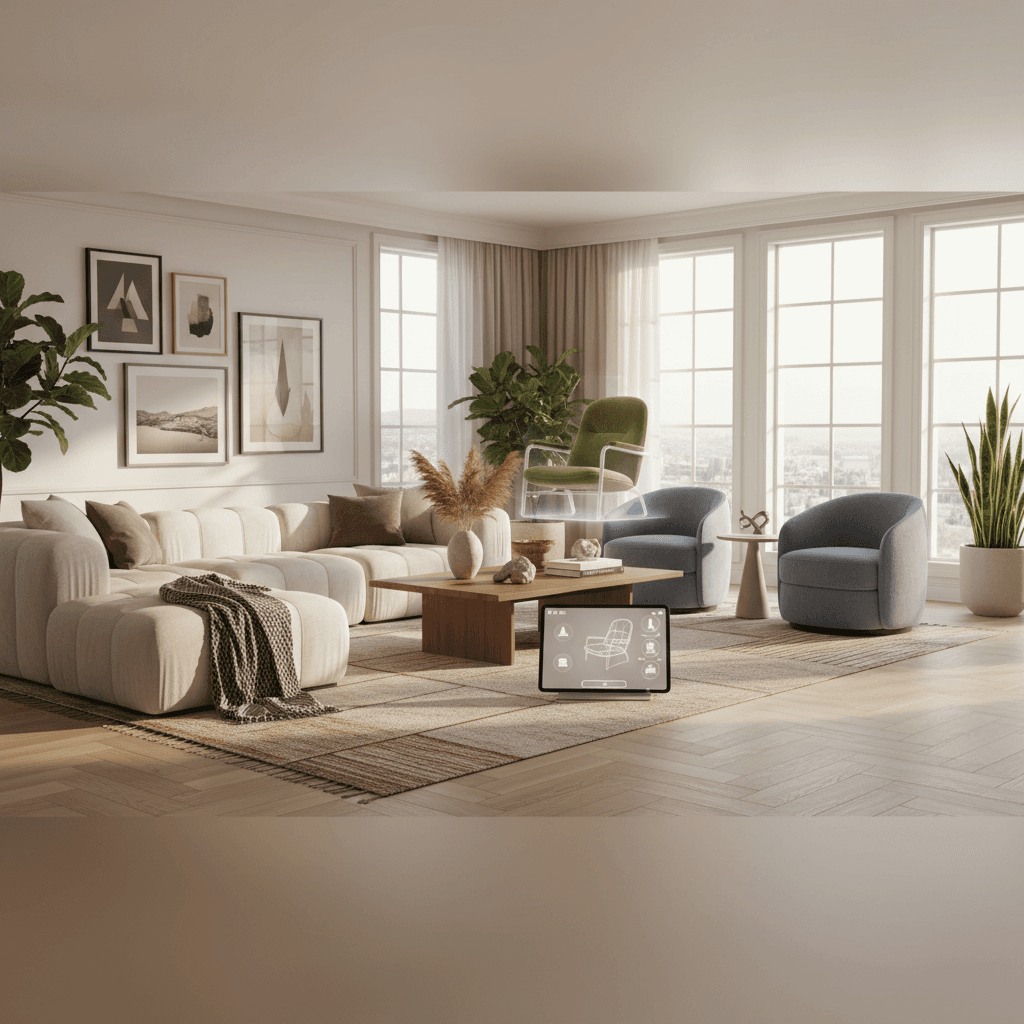
The biggest hurdle in redesigning a room isn't usually picking out furniture you like. It’s knowing if that furniture will actually work in your space. Will that gorgeous Chesterfield sofa fit through the door? Will it overwhelm your living room, or look dwarfed? Will the new dining table leave enough room to pull out chairs comfortably? These are the questions that keep us up at night, paralyzed by the fear of making an expensive mistake.
I’ve been there. We all have. You fall in love with a piece online, envision it perfectly in your head, only to have it arrive and realize it’s either a behemoth that swallows the room whole, or a tiny toy that looks utterly ridiculous. Trust me, the disappointment is real, and the hassle of returns is even more so.
But here’s the good news: you don't have to rely on guesswork or a vivid imagination alone. There are concrete, actionable ways to visualize furniture in a room before you click "add to cart." Some are old-school and hands-on, others leverage modern technology, but all aim to give you confidence in your design choices. Let’s break down how to truly see your new room come to life.
Why Visualization Matters More Than You Think
Before we jump into the "how," let’s briefly touch on the "why." Beyond avoiding buyer's remorse, good visualization is about crafting a functional, comfortable, and aesthetically pleasing space.
Think about it: a living room isn’t just a collection of items; it’s an ecosystem. Each piece needs to relate to the others, to the room's architecture, and most importantly, to your life. If you can’t properly visualize a 90-inch sofa next to a 60-inch media console, you might end up with a cramped pathway or an awkward empty corner. When you can truly see the furniture in place, you’re better equipped to:
- Prevent Costly Mistakes: Furniture is an investment. A $2,000 sofa you hate is a $2,000 problem.
- Optimize Space: Understand traffic flow, negative space, and how to make even small rooms feel larger. (Speaking of, you might find some useful tips in our guide on Small Room? Make it Look Bigger! Expert Design Secrets Revealed).
- Achieve Cohesion: Ensure pieces complement each other in style, scale, and color, rather than fighting for attention.
- Plan for Practicality: Where will the outlets be? Will the rug trip you? Can you open the closet door fully? These details are easily missed without proper visualization.
Method 1: The Old-School, Hands-On Approach (Low-Tech & Budget-Friendly)
Sometimes, the simplest tools are the most effective. These methods require a little effort but offer invaluable real-world insight.
1. Measure, Measure, Measure (And Then Measure Again)
This is the non-negotiable first step for any visualization method. You can’t visualize accurately if your starting numbers are off.
- The Room Itself: Get precise measurements of your room's length, width, and height. Note the placement of windows, doors (and which way they swing!), radiators, outlets, and any architectural quirks like built-in shelving or awkward alcoves.
- Existing Furniture: If you're keeping some pieces, measure their dimensions.
- New Furniture: This is critical. Don't just look at the width of a sofa; check its depth, height, seat depth, and arm height. For a dining table, consider its length, width, and height, but also the dimensions of the chairs you plan to use – especially their width, so you know how many can comfortably fit. I always keep a running list of dimensions for pieces I’m eyeing, right alongside their price and material.
Pro-Tip: Don't forget entryways! Measure your doorways, hallways, and stairwells. A gorgeous sectional is useless if it won't fit into your apartment building. I've heard horror stories – and maybe lived a few – of sofas needing to be hoisted through windows or even returned because someone forgot to measure the staircase. It's a real pain.
2. Mapping It Out with Painter’s Tape
This is my absolute favorite low-tech trick. It costs next to nothing and gives you an immediate, tangible sense of scale.
Grab a roll of painter's tape (the blue kind is perfect because it won't damage your floors) and your tape measure. Using the dimensions of the furniture you're considering, tape out the footprint of each piece directly onto your floor.
- Example: Living Room: Tape out the exact length and depth of that 84" long, 36" deep sofa. Then tape out your proposed coffee table (say, a 48" L x 28" W rectangle). Do the same for accent chairs, rugs, and consoles.
- Rugs are Key: Tape out the rug size (a 9x12 rug under a sectional is non-negotiable for most living rooms, in my opinion – anything smaller looks like a postage stamp). You’ll instantly see if it anchors the space or looks lost.
- Traffic Flow: Once everything is taped out, walk around the room. Pretend to sit on the sofa, pull out a dining chair, open a dresser drawer. This is where you’ll discover if you have enough clearance to move freely. You generally want at least 36 inches for a main pathway and 18-24 inches between a sofa and coffee table.
This method reveals so much that a mental image just can't. You'll quickly identify if a piece is too bulky, if a pathway is too narrow, or if you've allotted too much (or too little) space for a particular item.
3. Cardboard Cutouts & Mock-ups
If painter's tape isn't quite cutting it, or you want to visualize vertical elements, cardboard boxes are your friend. Collect a variety of boxes (moving boxes work great) and use them to create rough mock-ups of furniture pieces.
- Scale: Cut cardboard to the exact footprint of, say, an accent table, and stack books on top to mimic its height. For larger pieces like bookshelves or dressers, you can cut larger cardboard pieces and lean them against the wall.
- Visual Weight: This method helps you understand the "visual weight" of a piece – how much space it seems to occupy, both physically and visually. A solid wooden dresser will feel different than a metal étagère, even if they have similar dimensions.
Pros of Hands-On Methods:
- Extremely Accurate for Footprint/Scale: You’re literally seeing it in your space.
- Cost-Effective: Often free or very low cost.
- Immediate Feedback: You can walk through the space right away.
Cons of Hands-On Methods:
- Time-Consuming: Requires effort to measure and tape/cut.
- Lacks Aesthetic Detail: Doesn't show color, texture, material. It's purely about dimension and layout.
- Limited for Verticality: Hard to visualize true height and how it interacts with windows or art.
Method 2: Sketching & Mood Boards (Creative & Conceptual)
For those who enjoy a more artistic and holistic approach, sketching and mood boards are invaluable. They move beyond just dimensions to capture the feel of a room.
1. Hand-Drawn Floor Plans & Elevations
Dust off that graph paper! Drawing a simple floor plan to scale can be incredibly helpful for understanding layout.
- Floor Plan: Measure your room, then draw it on graph paper, assigning a simple scale (e.g., 1 square = 1 foot). Cut out scaled shapes representing your furniture. This allows you to easily move pieces around, test different configurations, and plan for walkways. You can also trace over photos of real furniture or use templates if you have them.
- Elevations: These are drawings of each wall, showing what furniture will look like against it. This helps visualize things like how high a headboard will reach under a window, or if a tall bookcase will feel too imposing. It’s also crucial for planning art placement or console table vignettes.
2. Mood Boards: Capturing the Vibe
A mood board isn’t about exact placement, but about the overall aesthetic. It’s how you ensure all your chosen pieces speak the same language.
- Physical Boards: Collect actual fabric swatches, paint chips, wood samples, printouts of furniture, lighting, and art. Arrange them on a poster board. This helps you see how colors, textures, and materials interact in a tangible way. Is that creamy bouclé going to clash with your cool-toned paint? Will the dark walnut feel too heavy next to a black metal lamp?
- Digital Boards: Pinterest is the obvious choice here, but you can also use tools like Canva. Gather images of specific furniture pieces, rugs, lighting, accessories, and even inspiring room photos. Arrange them to see if the overall look feels cohesive. This is also a great way to explore different styles, like mid-century modern or bohemian.
I always encourage clients to make mood boards. It’s a fun, low-pressure way to explore ideas and solidify your vision before making any commitments. Sometimes, a piece you loved on its own just doesn't quite fit the overall story you're trying to tell.
Pros of Sketching & Mood Boards:
- Holistic Approach: Considers aesthetics, color, texture, and overall feel.
- Great for Conceptualizing: Helps define the "story" of the room.
- Flexible & Creative: Easy to experiment with different styles and combinations.
Cons of Sketching & Mood Boards:
- Less Precise for Scale/Layout: Hand-drawn plans can be rough, and mood boards don't show exact dimensions in a room.
- Time-Consuming: Requires a creative eye and time to gather materials.
Method 3: The Digital Edge (Modern & Precise)
Welcome to the 21st century! Digital tools have revolutionized how we visualize furniture, offering accuracy and speed that traditional methods can't always match.
1. 2D Floor Planners Online
Many free and paid online tools allow you to quickly draw your room to scale and drag and drop generic furniture shapes. These are excellent for:
- Basic Layouts: Quickly trying out different furniture arrangements.
- Optimizing Traffic Flow: Ensuring clear pathways.
- Experimenting with Room Function: Seeing if a room can serve multiple purposes (e.g., a living room that also has a small Boost Productivity: Home Office Setup Ideas for Success area).
While these tools are great for basic layout, they often use generic furniture, so you don't get a true sense of specific pieces you're considering.
2. 3D Room Planners & Augmented Reality (AR) Apps
This is where things get really exciting. Many furniture brands offer AR features within their apps, allowing you to "place" a virtual 3D model of their furniture in your actual room using your phone's camera.
- How AR Works: Your phone's camera captures your room, and the app overlays a realistic 3D model of the furniture piece, scaled correctly. You can walk around it, see it from different angles, and get a much better sense of how it will look and fit.
- Benefits: It's incredibly immersive and often quite accurate for scale and general appearance. You can see how a piece like a velvet sofa will interact with your existing decor and lighting.
Limitations: AR apps are usually tied to specific retailers, meaning you can only visualize furniture from their store. This is fine if you've already narrowed down your choice to a single brand, but less helpful for comparing across different stores or mixing and matching.
3. Roomellow: Your Secret Weapon for Visualization
This is exactly the problem we set out to solve here at Roomellow. We created a platform specifically designed to bridge the gap between "liking" a piece of furniture and knowing it belongs in your room.
Instead of generic shapes or limited brand selections, Roomellow lets you upload a photo of your actual room. Then, our AI goes to work, generating redesigns that are specifically tailored to your space, incorporating real, purchasable furniture from various furniture stores.
Think of it this way:
- No More Guesswork: You don't have to imagine that mid-century modern credenza from West Elm in your living room. You see it, in your living room, complete with other curated pieces like a Ruggable rug or a Crate & Barrel lamp.
- Real Furniture, Real Stores: We don't just use abstract concepts. Our designs feature furniture you can actually buy, with links to where you can purchase them. This could be a sofa from Albany Park, a dining table from CB2, or a bed frame from Article.
- Explore Multiple Styles Instantly: Want to see your bedroom as Scandinavian? Or your dining room as farmhouse? Roomellow can generate multiple design options for you in moments, letting you compare and contrast entire looks, not just single items. It’s like having a team of designers give you mock-ups on demand. If you're curious about the tech behind it, check out our insights on AI Interior Design Tips: Get the Best Room Redesign Results.
- See the Whole Picture: The beauty of Roomellow is seeing how an entire collection of furniture – a sofa, a coffee table, a rug, accent chairs – fits together and into your existing space. It’s a complete visual concept, helping you understand scale, proportion, color palettes, and overall harmony.
It truly takes the pain out of visualization, letting you experiment with different aesthetics and furniture combinations without any of the manual effort. If you're ready to ditch the guesswork and see your dream room come to life, I encourage you to try it yourself.
Pros of Digital Tools (especially Roomellow):
- Highly Accurate for Aesthetics & Scale: Especially with 3D/AR and Roomellow's AI renderings.
- Fast & Efficient: Generate multiple options quickly.
- Comprehensive: Roomellow shows entire curated looks with real products.
- Convenient: Accessible from your phone or computer.
Cons of Digital Tools:
- Can Be Overwhelming: Too many options can sometimes lead to analysis paralysis.
- May Require Initial Setup: Uploading photos, setting parameters.
Key Considerations Regardless of Method
No matter how you choose to visualize, keep these fundamental design principles in mind. They’re the secret sauce to a room that feels "right."
1. Scale and Proportion are Everything
This is arguably the most crucial aspect. A piece of furniture needs to be the right size for the room and in relation to other pieces.
- Room Size: A massive sectional in a small living room will make it feel cramped and busy. Conversely, tiny furniture in a large, open-concept space will look lost and insignificant. For a typical living room that’s 12x15 feet, a 90-inch sofa is often a good fit, allowing for accent chairs and a coffee table without feeling jammed. If you have a small living room, you really need to be strategic; our guide on How to Design a Small Living Room (Without Making It Feel Cramped) has tons of specific advice.
- Furniture Relationships: Your coffee table should typically be about two-thirds the length of your sofa and within 1-2 inches of its seat height. Accent chairs shouldn't dwarf or be dwarfed by the main sofa. A king-size bed in a 10x10 foot bedroom is going to dominate.
- Vertical Space: Don’t forget ceiling height. A tall bookcase might look amazing in a room with 10-foot ceilings, but oppressive in a room with standard 8-foot ceilings. Always consider how pieces fill the vertical plane as well.
2. Traffic Flow: The Invisible Paths
Visualize how people will move through the room. Are there clear paths to doors, windows, and between furniture pieces?
- Main Pathways: Aim for at least 36 inches of clear space for primary walkways.
- Secondary Pathways: 24 inches is usually sufficient for less-frequented paths, like between an accent chair and a wall.
- Chair Clearance: If you have a dining room, ensure there’s enough room to pull chairs out comfortably without hitting a wall or another piece of furniture (typically 24-30 inches behind each chair). Check out our dining room page for ideas on spacing.
3. Lighting: Natural and Artificial
How will your chosen furniture interact with light?
- Natural Light: Will a tall piece block a window? Will a dark sofa absorb all the light in an already dim room?
- Artificial Light: Where will lamps go? Will there be enough surface area on end tables for table lamps, or enough space for floor lamps without them obstructing pathways? Good lighting can transform a space, so plan for it early.
4. Color and Texture: Building the Vibe
While hard to visualize without samples, always think about how colors and textures will play off each other.
- Color Palette: Stick to a cohesive color scheme (usually 3-5 main colors). Will that vibrant teal sofa clash with your existing wall color, or will it be a delightful pop? Our Transform Your Living Room: Best Color Schemes & Combinations guide can help here.
- Texture: Mix different textures for visual interest – a smooth leather sofa with a chunky knit throw, a rough wood coffee table with a soft shag rug. Bouclé looks incredible and feels luxurious, but it's a nightmare if you have pets or young kids because it snags and stains easily. Be honest about your lifestyle.
5. Storage Needs: The Unsung Hero
It's easy to focus on aesthetics and forget practicality. Where will you put your books, remotes, blankets, or kid's toys?
- Built-in Storage: Look for furniture with integrated storage like ottomans with lift-tops, coffee tables with drawers, or media consoles with ample cabinetry.
- Concealed vs. Display: Decide what you want to hide away and what you want to display. Open shelving is great for decor, but closed cabinets are essential for clutter.
Pro Tips for Next-Level Visualization
After years of designing spaces (and making a few mistakes myself), I’ve learned a few things that elevate visualization from good to great.
- Don't Rush It: Good design takes time. Live with your painter's tape outlines for a few days. Mull over your mood board. Revisit your Roomellow designs. The more time you spend visualizing, the more confident you'll be.
- Get Samples (Always!): This is paramount for fabrics, woods, and paints. Order swatches! Hold them up in your room at different times of day to see how the light affects them. A fabric you love online might look completely different in your north-facing living room.
- Think in Layers: Design isn't just about the big pieces. It's the rug, the furniture, the lighting, the art, the plants, the throw pillows. Visualize each layer building upon the last. A beautiful rug (like a 9x12 under a full-sized sectional, please!) grounds the space and sets the tone, making everything else feel right.
- Consider the View: From your favorite seat on the sofa, what will you see? From your bed, what’s your view? Design for those moments.
- Mix, Don't Match: Skip the matching furniture sets. Seriously. It often looks generic and lacks personality. Instead, mix a leather accent chair with a fabric sofa, or a modern wooden dining table with upholstered chairs. This creates depth and character.
- Acknowledge Your Lifestyle: Be honest about how you actually live. If you have kids and pets, a white linen sofa might be a beautiful dream but a practical nightmare. Choose materials and pieces that suit your reality.
Visualizing furniture in a room might seem daunting at first, but by breaking it down into manageable steps and leveraging the right tools – from simple tape to sophisticated AI – you can approach your redesign with clarity and excitement. It's about empowering you to create a home you truly love, without the dreaded "what if."
Ready to redesign your room?
Upload a photo of your room and get a professional AI redesign with real furniture you can buy. Free to try — no credit card required.
Try Roomellow free