Smart Kids Room Decor Ideas for Play, Rest & Easy Growth
Discover smart kids room decor ideas that evolve with your child. Create inspiring, practical spaces designed for lasting joy and easy updates. Get expert tips!
By Roomellow Team
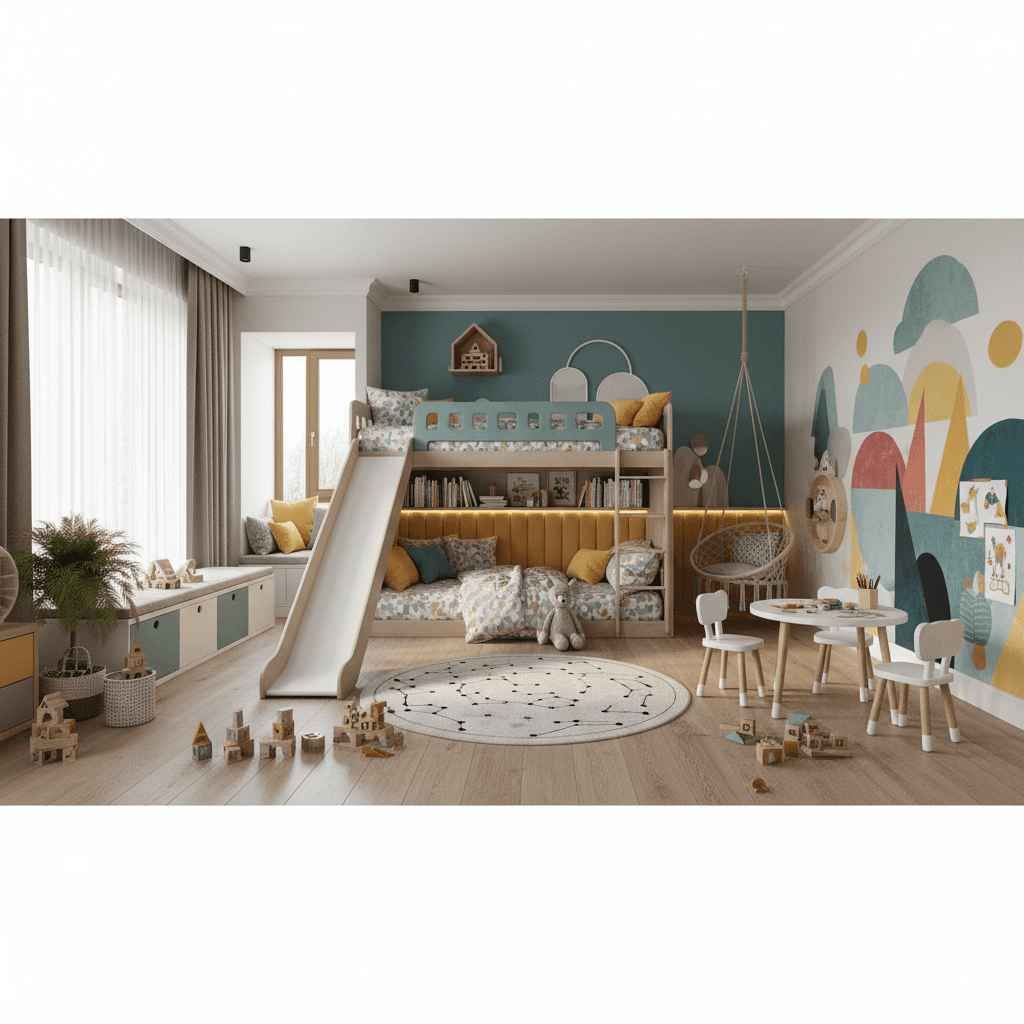
Designing a kids' room can feel like a high-stakes mission. You're balancing whimsical dreams with practical realities, creating a space that needs to inspire play, encourage rest, and somehow, miraculously, contain the endless parade of toys that multiplies faster than rabbits. It’s not just about picking out cute stuff; it’s about crafting an environment that evolves with your child, encourages independence, and, frankly, makes your life a little easier.
I've tackled my fair share of kids' rooms – both for clients and for my own nieces and nephews – and I've learned a few things. The biggest takeaway? Longevity is your best friend. Trends come and go, but smart design choices that grow with your child will save you time, money, and sanity in the long run. Forget the fleeting themed rooms that kids outgrow in a year; we're aiming for a foundation that adapts as they do.
Designing for Growth: Beyond the Theme
My first piece of advice is always to resist the urge to go all-in on a hyper-specific theme. A spaceship mural might be adorable for a 4-year-old, but by 8, they might be more interested in coding or dinosaurs. Instead, think about themes in broad strokes: "coastal adventure" instead of "Spongebob's pineapple house," or "enchanted forest" rather than "Elsa's ice palace."
You can layer in their current passions through easily changeable elements like bedding, artwork, throw pillows, and even a well-chosen rug. This approach means you're not repainting walls or replacing major furniture pieces every few years. It gives you the flexibility to update the room's vibe without a complete overhaul, which is a major win for your budget and your weekend plans.
Start with a neutral, calm backdrop for walls and larger furniture items. Think soft whites, warm grays, muted greens, or gentle blues. These colors provide a soothing base that won't overwhelm a child's senses and will serve as an excellent canvas for injecting color and personality through accessories. For inspiration on calming palettes, you might find our thoughts on Expert Bedroom Color Ideas: Create Your Dream Sanctuary helpful, even if they're not specifically for kids.
The Foundation: Furniture That Works Hard (and Looks Good Doing It)
Kids' furniture needs to be resilient. It needs to withstand jumping, crayon marks, and the occasional spilled juice box. This is where investing in quality pieces, even if it feels like a stretch, really pays off.
Beds: From Toddler to Teen
The bed is often the anchor of the room.
- Toddler Beds: If you're transitioning from a crib, a toddler bed is a great intermediate step, usually using the crib mattress. They're low to the ground, minimizing fall risks, and create a cozy, scaled-down sleep space. They're typically quite affordable, ranging from $100-$300.
- Twin Beds: This is the most common choice for school-aged children and often lasts through their teenage years. A standard twin mattress is 38x75 inches. I'm a big proponent of a simple, sturdy twin bed frame – solid wood or a well-constructed metal frame will stand the test of time. Look for options with built-in storage drawers underneath to maximize space, especially in smaller rooms.
- Full Beds: If space allows, a full-size bed (54x75 inches) offers more room for growth and comfort. It's also great for snuggling up with a parent for storytime. Just be sure it doesn't overwhelm the room, leaving no space for play or other furniture.
- Bunk Beds/Loft Beds: These are fantastic for shared rooms or for maximizing floor space in a single room. A loft bed frees up the entire area underneath for a desk, reading nook, or play zone. Always prioritize safety: ensure bunk beds have sturdy guardrails and a secure ladder. For good quality, expect to pay anywhere from $400 for a basic metal bunk bed to $1,500+ for a solid wood loft bed with integrated desk and storage.
My personal preference for kids' beds is something understated. A simple platform bed or a timeless sleigh bed allows the bedding and decor to tell the story, not the bed frame itself.
Storage: The Unsung Hero
I cannot stress this enough: storage is non-negotiable in a kids' room. Without smart storage solutions, you'll be drowning in toys, clothes, and art supplies.
- Dressers: A sturdy dresser is essential. Look for solid wood or high-quality MDF construction. Dovetail joints are a sign of good craftsmanship for drawers. I prefer dressers with at least 4-5 drawers – a chest dresser is excellent for vertical storage, while a wider dresser can double as a changing table for babies or a display surface for older kids. A good quality dresser will run you $300-$800, but it’s an investment that can move with them to college.
- Open Shelving vs. Closed Cabinets: Both have their place. Open shelving (like the ubiquitous IKEA Kallax or similar cube organizers) is fantastic for displaying books, art, and neatly contained toy bins. It encourages kids to see what they have and makes cleanup theoretically easier. However, it requires a commitment to tidiness. For toys that are less aesthetically pleasing or for containing clutter, closed cabinets or baskets within cubbies are your best friend.
- Toy Chests/Bins: A large toy chest is great for dumping larger items, but I find that smaller, categorized bins work better for actual organization. Label them clearly (even with pictures for younger kids!) to make cleanup less daunting. Fabric bins are soft and safe, while plastic bins are easy to clean.
- Wall-Mounted Storage: Floating shelves or wall-mounted book displays save precious floor space and add visual interest. They're perfect for displaying cherished items, trophies, or a rotating selection of books. Just ensure they are securely anchored to studs.
Work & Play Zones
As children grow, their room isn't just for sleeping. It's their primary play zone, and eventually, their study space.
- Desks: Once school starts, a dedicated desk becomes important. Choose one that's size-appropriate and offers some storage – a drawer or two for pencils and paper. A simple floating desk or a compact desk with a hutch can be a space-saving solution. Prices vary widely, from $100 for a basic kids' desk to $500+ for a solid wood option with good storage.
- Creative Corners: A small table and chairs are wonderful for art projects, puzzles, or tea parties. For younger kids, an easel or a magnetic whiteboard can inspire creativity. These don't need to be expensive – often, a hand-me-down table can be painted to fit the room's aesthetic.
Color & Personality: More Than Just Bright Hues
Kids' rooms often make people think of a riot of primary colors. While vibrant hues certainly have their place, you can achieve a playful and stimulating environment without overwhelming the senses.
- Wall Colors: As mentioned, I favor a calmer base. But that doesn't mean boring! A soft sage green (Benjamin Moore Saybrook Sage is a favorite), a warm blush pink (Sherwin-Williams Faint Coral), or a serene sky blue (Farrow & Ball Skylight) can be incredibly inviting. If you want a punch of color, consider an accent wall. A striped pattern in two complementary colors, or a removable wallpaper with a subtle pattern (think tiny stars, polka dots, or a delicate botanical print), can add personality without permanence. Check out our Small Room? Make it Look Bigger! Expert Design Secrets Revealed for tips on using color and patterns effectively, which applies to kids' rooms too.
- Injecting Color: This is where accessories shine. Bring in bright reds, sunny yellows, or electric blues through pillows, throws, rugs, and artwork. These elements are easily swapped out as your child's preferences change. A brightly colored rug can define a play area and add a huge dose of personality.
- Personalization: Involve your child in the process! Let them pick out a piece of art or the pattern for their duvet cover. Their input makes the room feel truly theirs and fosters a sense of ownership.
Texture & Layers: The Comfort Factor
Beyond color, texture adds depth and coziness, essential for a room where comfort and play are paramount.
- Rugs: A rug is probably the single most important textural element in a kids' room. It softens the space, dampens sound (a godsend for energetic play!), and provides a warm, comfortable surface for playing on the floor. For a twin bed, a 5x7 or 6x9 rug is usually a good fit, anchoring the bed and extending into the play area. For a full bed, an 8x10 might be more appropriate.
- Material: Look for durable, washable options. Wool rugs are fantastic for their natural stain resistance and longevity, but they can be a bit more expensive. Synthetic rugs (like polypropylene or PET) are often more budget-friendly and incredibly easy to clean. Avoid anything too shaggy, which can be a trap for small toys and crumbs.
- Window Treatments: These serve multiple purposes: light control, privacy, and adding softness. Blackout curtains are a godsend for naps and early bedtimes, especially for younger children. Choose machine-washable fabrics. For safety, always opt for cordless blinds or curtains, or ensure cords are securely tied up and out of reach.
- Bedding: This is where you can really lean into personality and comfort. Choose soft, breathable materials like cotton or linen. Have at least two sets of sheets and duvet covers – kids' bedding needs frequent washing! Don't be afraid of fun patterns, but keep one set more neutral for balance.
Lighting: Functional and Fun
Good lighting in a kids' room serves practical needs and contributes to the overall mood.
- Ambient Lighting: A good overhead fixture, perhaps a flush mount or semi-flush mount that won't get knocked into during enthusiastic play, is crucial for general illumination. A dimmer switch is a smart addition, allowing you to adjust the brightness for different activities.
- Task Lighting: A desk lamp for homework and creative projects is essential. For younger kids, a wall-mounted nightlight provides comfort and helps guide them in the dark. A bedside lamp is great for reading before bed.
- Whimsical Touches: Don't forget the fun! A string of fairy lights around a bed frame or a playful neon sign can add a magical touch without being over the top.
Decor & Details: The Personal Touch
This is where the room truly comes alive and reflects the unique personality of its inhabitant.
- Artwork: Frame your child's own artwork! It's personal, free, and incredibly charming. Supplement with prints that align with their interests – animals, maps, abstract shapes, or characters they love. Grouping a few pieces together creates a gallery wall effect.
- Display Shelves: Beyond functional storage, small shelves are perfect for showcasing their favorite books, trophies, or a curated collection of small toys and treasures. A picture ledge above a desk or bed is great for this.
- Mirror: A full-length mirror, safely secured to the wall, is great for older kids to check their outfits and can also make a smaller room feel more expansive.
- Growth Chart: A stylish growth chart is a wonderful way to mark milestones and becomes a cherished keepsake.
- Soft Furnishings: A cozy bean bag chair, floor cushions, or a small armchair creates a comfortable reading nook or a spot for friends to hang out.
Safety First, Always
This isn't really a design element, but it’s the most important consideration in any kids' room.
- Secure Furniture: All tall furniture (dressers, bookshelves, TV stands) must be anchored to the wall to prevent tip-overs. Anti-tip kits are readily available and simple to install.
- Cord Safety: As mentioned, use cordless blinds or secure any dangling cords from window treatments or lamps.
- Outlet Covers: Protect curious fingers from electrical outlets.
- Choking Hazards: For younger children, keep small toys and decor items out of reach.
- Chemicals: Store cleaning supplies, medications, and any other hazardous materials securely out of the room or in a locked cabinet.
- Rug Pads: Use a non-slip rug pad under all rugs to prevent slips and falls.
Designing a kids' room is an ongoing journey, not a destination. It’s about creating a flexible, functional, and joyful space that can adapt as your child grows and discovers new interests. By focusing on quality, versatility, and a touch of their personality, you'll create a room that serves them well for years to come.
Ready to redesign your room?
Upload a photo of your room and get a professional AI redesign with real furniture you can buy. Free to try — no credit card required.
Try Roomellow freeReady to bring these ideas to life? Head over to Roomellow.com, upload a photo of your child's room, and let our AI transform it with real, purchasable furniture from various furniture stores. You can experiment with different layouts, colors, and styles without lifting a single box. It's an incredible tool for visualizing your vision before you commit.