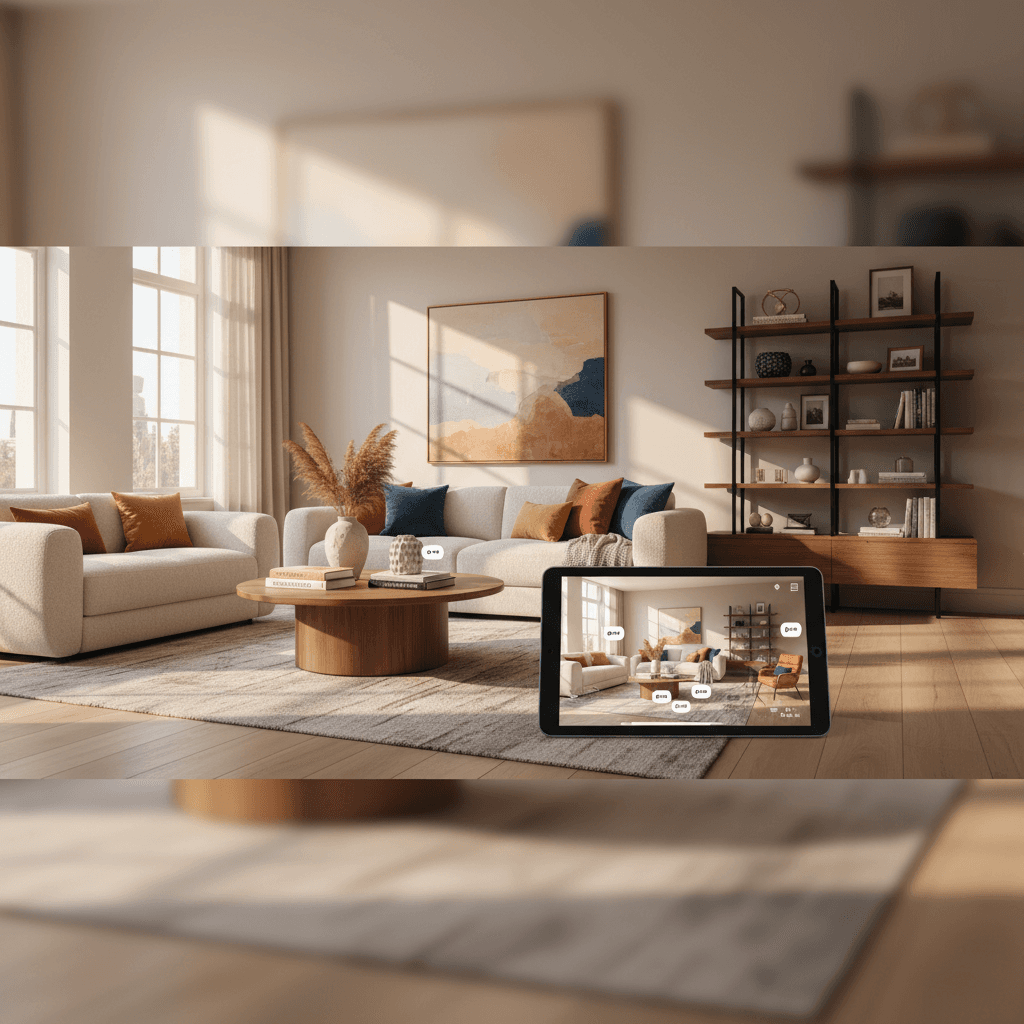
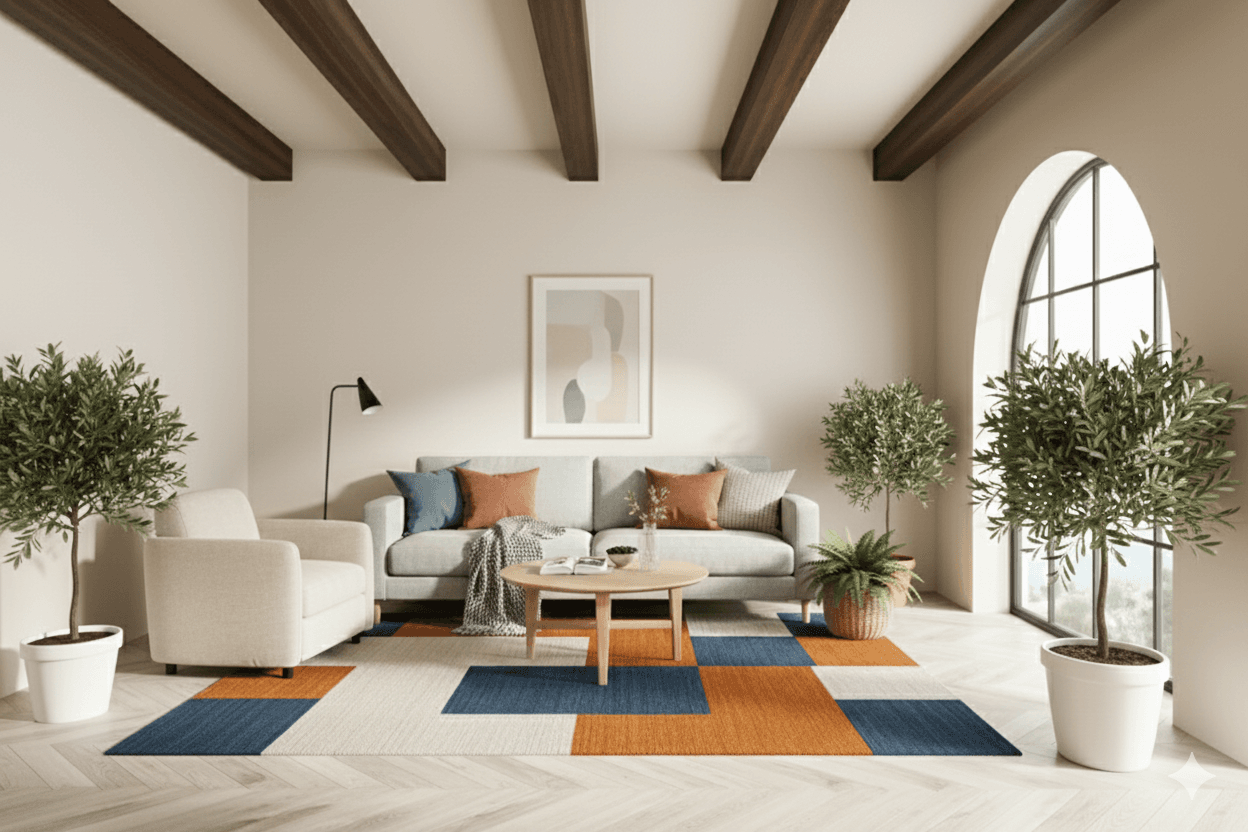
Buy Furniture Online: How to Test It in Your Room Before You Click Order
Buying furniture online is risky — 30% of DTC furniture orders get returned. Here's how to virtually test a sofa, bed, or rug in your actual room before checkout, with the tools that use real products you can actually buy.
By Roomellow Team
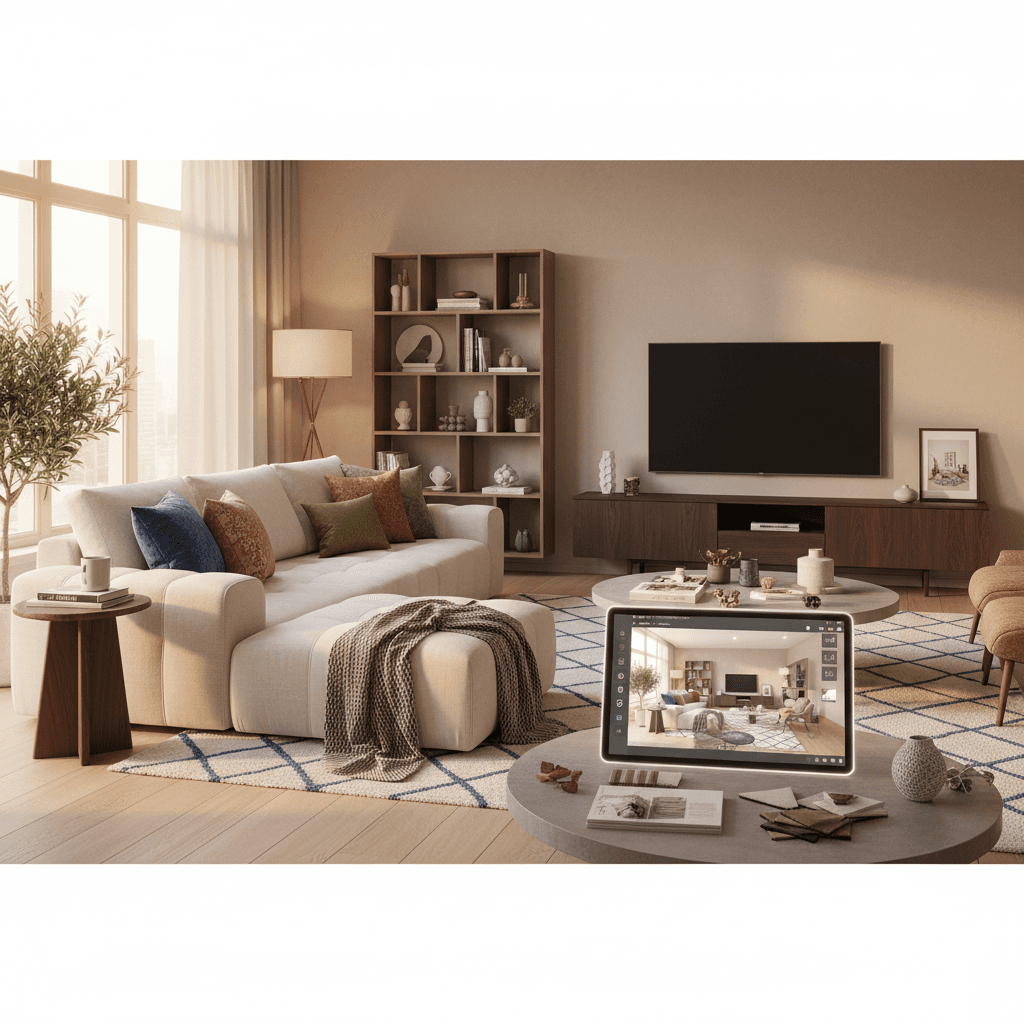
Buying a sofa online is a small act of faith. You click a thumbnail, scroll through five staged studio photos, read a few hundred reviews from people whose rooms look nothing like yours, and then commit four-figure money to a piece of furniture you've never sat on. A week later it arrives. Maybe the linen is greyer than the website's warm beige. Maybe the seat depth makes your knees bend at the wrong angle. Maybe it's just too big in a way the dimensions on the product page never communicated.
The DTC furniture industry's open secret: roughly 30% of online furniture orders get returned, and the cost of that return cycle — pickup logistics, restocking, refurbishment, sometimes landfill — gets baked into the price you paid in the first place. Buyers know this intuitively. That's why furniture cart abandonment averages 78% across DTC retailers: the doubt at the click stage is real, and most shoppers walk away rather than gamble.
The fix isn't better photography or longer dimensions tables. The fix is letting you see the actual product in your actual room before checkout. This guide walks through how that's possible today, the four categories of tools that promise it (only one of which actually delivers), and the specific scenarios where virtual testing closes the gap between "I think this might work" and "I'm hitting buy."
Why testing furniture before buying matters more than testing clothes
Clothes you can return easily — drop them at a return center, get a refund in three days. Furniture is different. A sofa return involves scheduling pickup, re-crating, freight shipping, and a 15-30% restocking fee at most retailers. The total cost of returning a $1,800 sofa often lands around $400-600, and a meaningful chunk of returned furniture ends up unsellable.
This is why the "virtual fitting room" concept that transformed apparel ecommerce has been slow to land for furniture: the technical problem is harder. A shirt fits or doesn't on a known body. A sofa has to interact with your specific room — its corners, light, existing furniture, wall art, the rug you already own. Generic "place a 3D model in a room" tools don't actually solve this. Real-room visualization that uses the actual product photos from the retailer's catalog does.
The four categories of tools that claim to let you preview furniture before buying break down like this.
Category 1: 3D layout apps (free, generic, limited)
Tools like Floorplanner, Roomstyler, and Planner 5D give you a free 2D/3D canvas where you drag generic furniture shapes into a floor plan. Useful for understanding spatial relationships and traffic flow — will the sofa block the doorway, can two people walk around the dining table at the same time, does the bed leave enough room for nightstands.
What they don't solve: the visual question. The 3D sofa model in their library is a generic placeholder, not the specific Article Sven or West Elm Harmony you're considering. When you see "it fits," you're seeing a stand-in. The texture, color, leg style, cushion firmness — none of it matches what you'll actually receive.
Use them for: layout planning, spatial verification, early ideation. Don't use them for: deciding which specific sofa to buy.
Category 2: Brand-specific AR apps (single-brand, one product at a time)
IKEA Place, Wayfair's View in Room, and Amazon's AR view let you point your phone at a corner of your living room and see a virtual product placed in that spot. The model is the actual product from that retailer's catalog, which is a meaningful step up from generic 3D apps.
The catch: AR overlay works best for one product at a time, and only the retailer hosting the app. You can't put the IKEA sofa next to the West Elm coffee table next to your existing rug. You can't compare two sofas side-by-side. You can't generate a full room redesign — only verify a single placement.
Use them for: sanity-checking a single product's scale and color in a corner of your room. Don't use them for: comparing across brands, full room makeovers, or seeing how multiple pieces work together.
Category 3: AI design tools (most use stock or AI-generated furniture)
A wave of AI room design apps launched in 2023-2025 that promise full-room redesigns from a single photo. They're genuinely impressive at the visual layer — the AI generates a photorealistic redesigned room in seconds. The problem hides one click deeper: when you ask "how do I buy this sofa I love?", the answer is usually some version of "find a similar one."
That's because the furniture in the render isn't real — it's AI-generated. The model created a sofa that looks like a sofa, but no actual brand sells exactly that piece. You're left in the worst position: you've fallen in love with something you can't buy, and the "find similar" search returns 40 pieces, none of which match the render.
Use them for: style inspiration, mood-board generation. Don't use them for: actually buying anything you see.
Category 4: AI tools that use real catalogs (test → buy → done)
This is the category Roomellow operates in. The model takes your room photo, picks real products from real retailers' catalogs, composes them into your room photorealistically, and links each visible item to a purchase page where you can buy that exact SKU. Every chair, sofa, rug, and lamp in the render is something a real store sells right now.
The technical difference matters: instead of "generate a sofa that looks plausible," the system asks "which sofa from the connected catalog should we place in this room, and how does its actual product photo composite into this scene?" The result is that the render is a preview of the purchase, not an inspiration board.
That solves the four problems the other categories don't:
- Real scale — the sofa in the render is rendered at its true dimensions in your true room
- Real visual — the leg style, fabric, cushion shape are the actual product, not a stand-in
- Real price — total room cost is summable before you commit
- Real availability — products show as in-stock or out-of-stock from the actual retailer
You can browse rooms by type or filter by design style to see what this looks like in practice — the renders link to actual products at actual stores.
How a virtual test actually works (the 60-second version)
Here's the workflow when you've decided to use a real-catalog AI tool:
- Take a photo of your room — phone camera works fine. Daylight is best. Get the whole room in frame, including a bit of floor and ceiling so the AI has scale reference.
- Pick a style — modern, scandinavian, mid-century, etc. — or describe what you want in plain language ("warm and cozy, leather and wood, plant-friendly")
- Generate the render — usually 15-30 seconds. The AI selects real products that match the style and composes them into your room.
- Review the products — every visible piece is listed in a sidebar with brand, price, and a direct link to the retailer's product page.
- Iterate — swap any product for an alternative, regenerate with a different style, adjust the layout.
- Check the total budget — sum across the sidebar to see what the full room actually costs before committing to anything.
- Click through to buy — the link takes you to the retailer's product page, where you check out normally.
The whole flow takes about 5 minutes for an initial render, plus however long you want to spend iterating. Compare that to the typical online furniture-buying process — search, scroll, compare across tabs, second-guess, abandon, come back two weeks later — and the time savings before you even count the avoided returns is substantial.
When you should NOT buy furniture online (even with virtual testing)
Virtual testing closes a lot of the gap, but not all of it. Three scenarios where you should still buy in person:
- Custom upholstery decisions — fabric texture, density, and warmth are hard to convey through any screen. If the upholstery decision is the entire reason you're buying the piece, swatch samples or in-store visits remain worth it.
- Highly specific ergonomic needs — back support, seat depth, cushion firmness. Virtual visualization tells you it fits the room; it doesn't tell you whether your back will hate it in three months.
- Antique or one-of-a-kind pieces — virtual rendering relies on a catalog. Items with no SKU don't appear.
For everything else — sofas, beds, rugs, lighting, coffee tables, dining sets, side tables, decor — virtual testing is now the cheapest way to make a confident online furniture decision.
The shift this represents for furniture retailers
The interesting business angle hiding in all this: retailers who let customers virtually test their products before checkout see meaningful conversion lifts and lower return rates. The buyer who sees the sofa in their actual living room before clicking "buy" is dramatically less likely to send it back. The DTC furniture industry has been quietly experimenting with this for years; what's new is that AI room visualization makes it cost-effective to deploy across an entire catalog, not just hero SKUs.
If you run a furniture brand and want to see what this could mean for your store, we walk through the integration in a 30-minute demo — no slide deck, just the product working with your catalog.
The short version
Buying furniture online used to mean accepting a 1-in-3 chance you'd return it. It doesn't have to anymore. The four categories of pre-purchase visualization (3D layout, brand AR, generic AI, real-catalog AI) solve different parts of the problem; only the last actually closes the loop between seeing it in your room and buying that exact piece. Use a 3D app for layout, use brand AR for a single-product sanity check, skip the generic AI tools entirely (you'll fall for things you can't buy), and use real-catalog AI when you're at the point of making a purchase decision.
Test before you buy. The sofa you don't return is the cheapest sofa you can own.