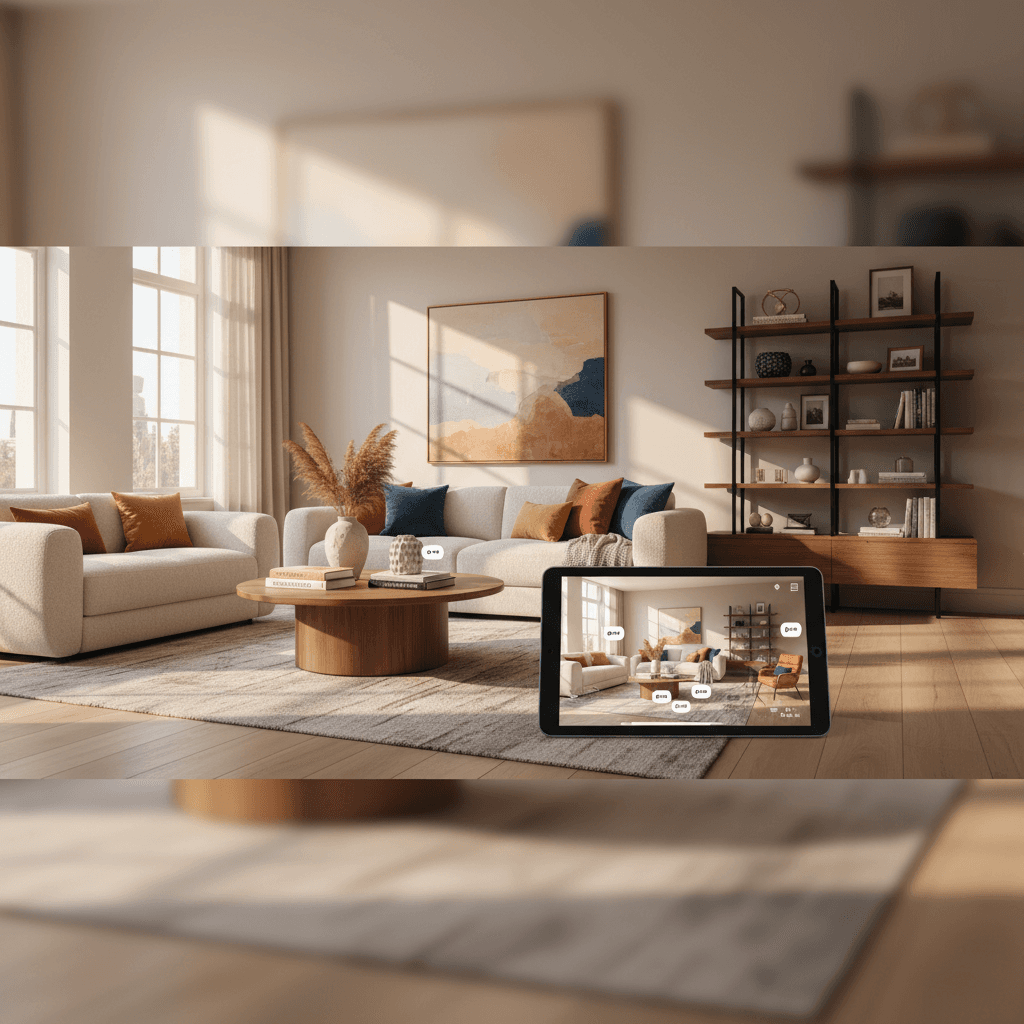
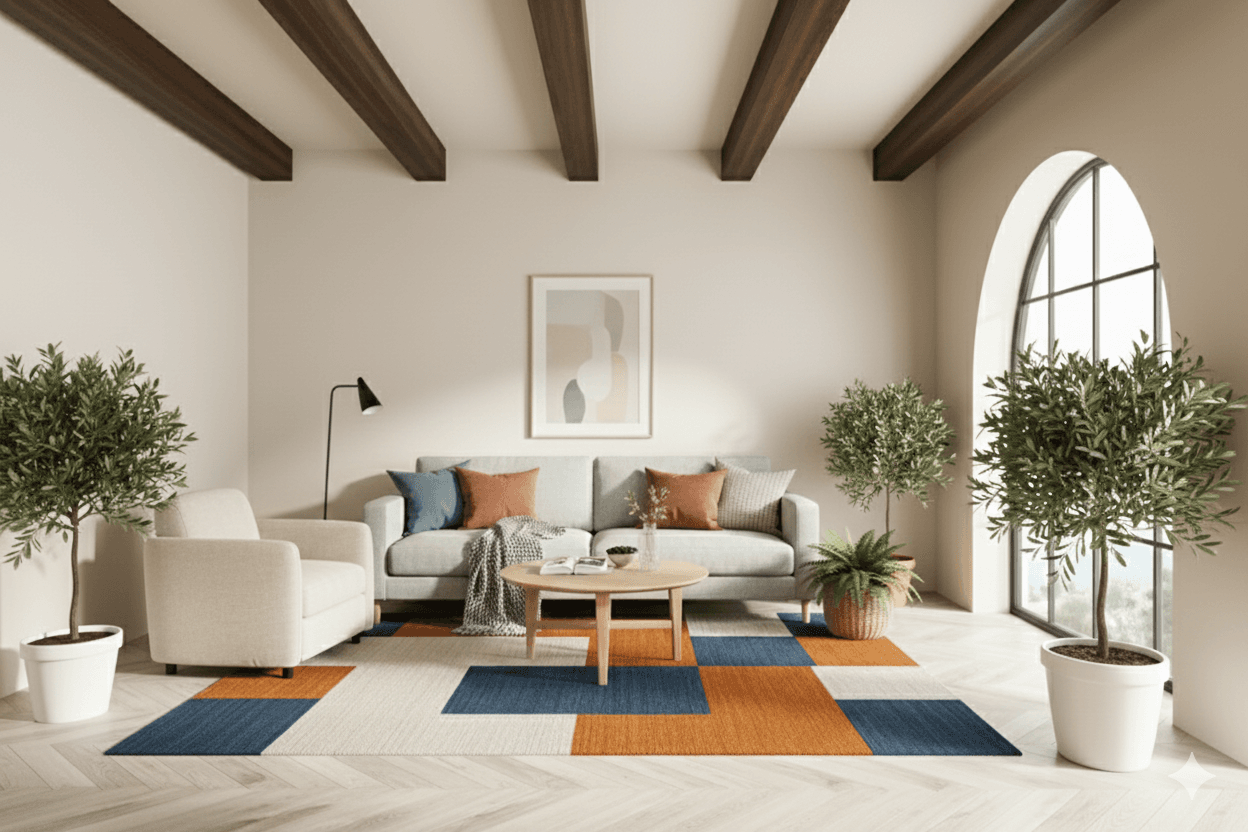
AI Room Design with Real Products: How It Works (and Why It Matters)
AI room design tools that show real, purchasable furniture — not fictional renders. A practical guide to what's actually shippable in 2026, with concrete examples.
By Roomellow Team
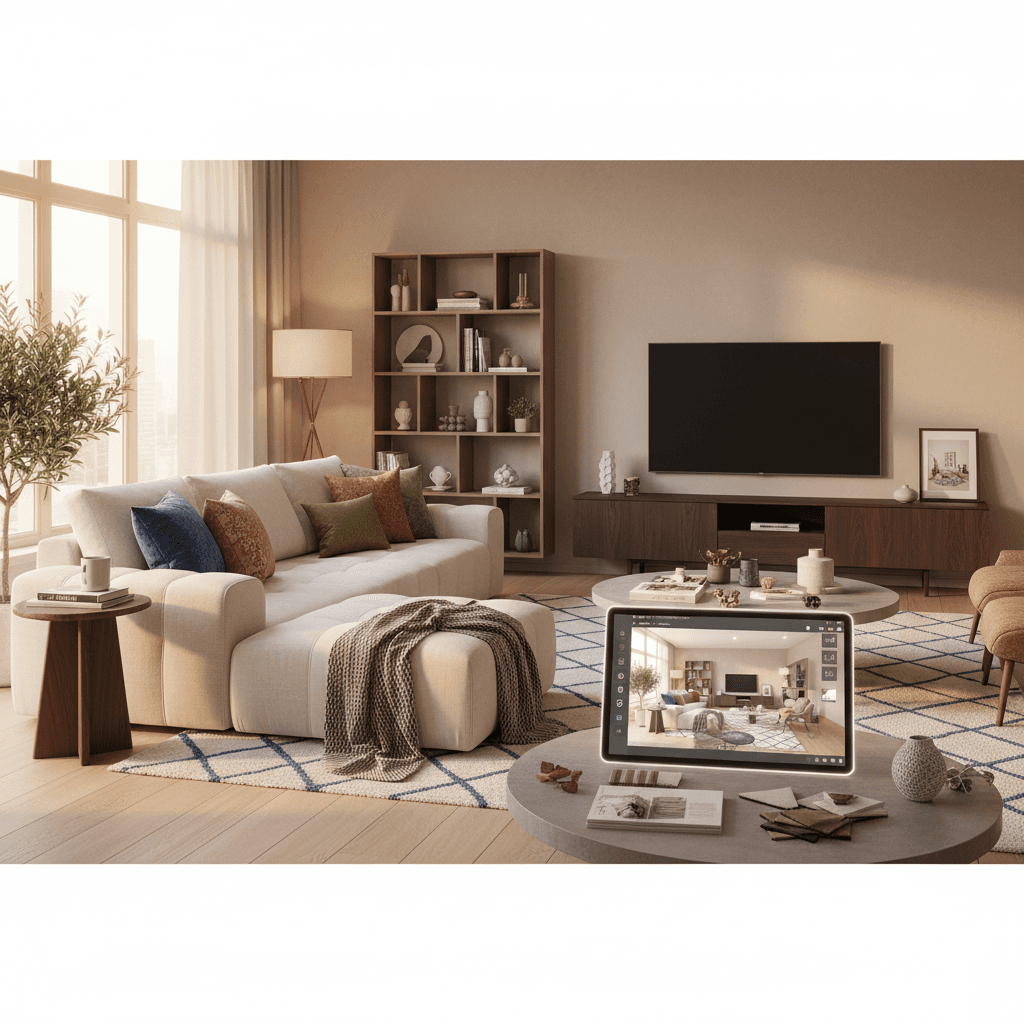
There are two kinds of "AI room design" tools, and the difference matters a lot:
Type A generates beautiful renders of furniture that doesn't exist. You see a stunning living room, you want to buy that exact sofa, and… you can't. The sofa was hallucinated by the model. Sometimes it's vaguely "in the style of" something real. Usually it's not.
Type B generates renders using real products from real stores. Every piece of furniture in the render is a real SKU you can buy at the listed price, from the actual retailer. The AI doesn't invent the furniture — it composes a scene using real catalog items.
Type A is everywhere. Type B is the one that actually moves you toward owning a redesigned room. This is a guide to the Type B category in 2026 — how it works, which tools do it, and where it still falls short.
What makes "real products" hard for AI to get right
Generating an aesthetic image of a living room is easy for modern AI. It's been easy for a year.
Generating a living room where every visible item is a real, purchasable SKU is much harder. You need three things working together:
1. A real product catalog — not stock 3D assets, but actual inventory from actual stores. Updated as the store's catalog changes. Linked to real prices, stock status, and product pages.
2. AI that respects the catalog — the model can't just imagine a sofa. It has to compose a scene using specific reference images of specific products you've chosen, while still making the result look natural in your room.
3. Your actual room as the canvas — not a 3D model approximation of your room, the actual photo of your space, with the AI rendering new furniture onto it.
Combine these and you get something that's hard to describe until you've used it: a redesigned version of your room that's also a working shopping cart. Most tools that claim "AI interior design" do one of the three. Almost none do all three.
How it actually works (from the inside)
A Type B AI room design tool runs roughly like this:
Step 1 — Room analysis. You upload a photo of your room. The AI detects: room type (living room, bedroom, dining room), lighting conditions, existing colors, scale references, and what kind of furniture would naturally fit. Skip this and the renderings end up the wrong size or the wrong style for your space.
Step 2 — Product retrieval. The system searches the catalog for products that match your style and the room's needs. If you said "mid-century modern," it pulls actual mid-century sofas, coffee tables, lamps. Each product is a specific SKU with a specific photograph and a specific price.
Step 3 — Composition. This is the hard part. The AI takes your room photo + the chosen products' reference images and composes a new image: your room, but with those specific products placed naturally inside it. The geometry has to be right (a king-size bed doesn't fit in a 9x9 bedroom), the lighting has to look natural, and the products have to be recognizable as the actual products you'd buy.
Step 4 — The shopping cart. Every product in the rendering is tagged with its store, price, and product page link. Tap the sofa, see what it is, buy it from the retailer.
Step 5 — Iteration. Don't like the rug? Swap it. The system regenerates the room with the new rug while keeping everything else stable. Try ten combinations, settle on the one you love.
What this looks like in Roomellow
Roomellow is built end-to-end around the Type B pattern. The catalog as of 2026:
- 40,000+ real products from 27 stores
- DTC brands: Floyd (modular flat-pack), Maiden Home (premium American-crafted), Joybird (mid-century), Inside Weather (configurable sofas), The Citizenry (global artisan rugs), Albany Park (affordable modular)
- Premium catalogs: Lulu and Georgia (rugs/lighting/decor), Outer (outdoor furniture), Medley Home (handcrafted made-to-order)
- Larger retailers: IKEA, Living Spaces, Star Furniture
- Regional stores: Five Elements, Skandinavia Texas, World Interiors, Couch Potatoes (Austin), Home Zone, and others
When you generate a room, the AI pulls from the full catalog — meaning a single rendering might mix a Floyd sectional with a Citizenry rug with a Lulu and Georgia floor lamp with an IKEA side table. They show up in your actual room, in proportion, with realistic lighting. Each is tagged with its store and a buy link.
You're not committing to a single retailer. The AI's job is to find the best products for your room and style across everything in the catalog.
A concrete example: redesigning a living room
Say you upload a photo of a 12x16 living room. Currently it has a beige sofa, a brown coffee table, an oatmeal rug, and a TV mounted on the wall. You want it to feel more modern.
You select "mid-century modern" and add "warm neutrals, lots of natural materials."
The AI returns a rendering that:
- Replaces the beige sofa with a walnut-framed 88-inch sofa from Joybird (real SKU, $1,975)
- Adds a round Saarinen-style coffee table from World Interiors (real SKU, $549)
- Lays down a hand-knotted oatmeal rug from The Citizenry (real SKU, $1,290)
- Adds a brass arc floor lamp from Lulu and Georgia (real SKU, $898)
- Keeps your TV where it is (the AI respects existing fixtures)
You don't like the arc lamp. Swap it for a table lamp from Five Elements. Regenerate. Now you have a complete mid-century living room rendered in your actual space, with $4,712 worth of real furniture, every piece purchasable today, every link working.
If you decide to buy: each item links out to its store's product page. You check out at Joybird, World Interiors, The Citizenry, and Five Elements separately. Roomellow doesn't process the transactions — we just put you in front of the right products at the right stores.
Where AI room design with real products still struggles
Honest limitations:
Catalog coverage. Some stores aren't on the Shopify-public-API pattern (West Elm, Crate & Barrel, Pottery Barn, RH). Their products aren't reachable for third-party visualizers. If those are the brands you want, your only option is each store's own AR app.
Style coverage. AI image models are best at well-represented design styles — mid-century, modern, minimalist, Scandinavian. Less mainstream styles (heavy traditional, deep maximalist, niche regional) come out less crisp. If your aesthetic is "Memphis Group meets cottagecore," generated renders may need more iteration to land right.
Precision spatial fitting. AI renders give you a strong visual sense of how furniture works in a room, but they're not measurement-grade. If you need to confirm a 96-inch sofa fits between two walls precisely, supplement with a measurement-first tool (Planner 5D, HomeByMe).
Lighting in your photo. Bad room photos make bad renders. The AI does best with daytime photos in decent natural light. Dark, blurry, or extreme-angle shots produce weaker results.
Brand-new products. When a store adds a product to their Shopify catalog, our sync picks it up within ~24 hours. There's a small lag between "store lists new sofa" and "Roomellow can render with it." For most workflows, this is fine; for "I want to order what I just saw on Instagram today," it's not.
How this changes furniture shopping
The reason 60–70% of furniture e-commerce carts get abandoned isn't price — it's purchase confidence. People can imagine a $300 lamp working in their living room. They can't imagine a $2,400 sectional. So they hesitate, leave, and most don't come back.
AI room design with real products attacks that exact problem. You see the actual sofa in your actual room before paying. The decision happens at the visualization step, not after the truck shows up.
The downstream effect for shoppers is fewer wrong-purchase regrets. The downstream effect for stores is better conversion and lower return rates — the two metrics that matter most in furniture e-commerce.
For furniture retailers reading this
A side note for anyone running a Shopify furniture store.
Adding AI room visualization to your storefront doesn't require building one from scratch. If your catalog is on standard Shopify, Roomellow can read it directly via the public API. We pull your products, your customers upload their room photo, and the rendering shows your products in their room. They buy from your store, at your prices.
We've added 5 new stores to the catalog in the past week — typical onboarding is same-day. If you run a DTC furniture brand and want to add this to your customer experience, reach out via our stores page.
The shorter version
If you're shopping:
- Use a Type B (real-products) tool, not a Type A (fictional-renders) tool. The Type A ones are fun. They don't help you buy anything.
- Pick a tool that covers multiple stores' catalogs unless you've already decided you're buying from one.
- Use real room photos, not 3D approximations, if you want the result to look realistic.
If you're running a store:
- Customers are stuck on the same purchase-confidence problem they've had since e-commerce started. The category to watch closely in 2026–2027 is shoppable AI room design.