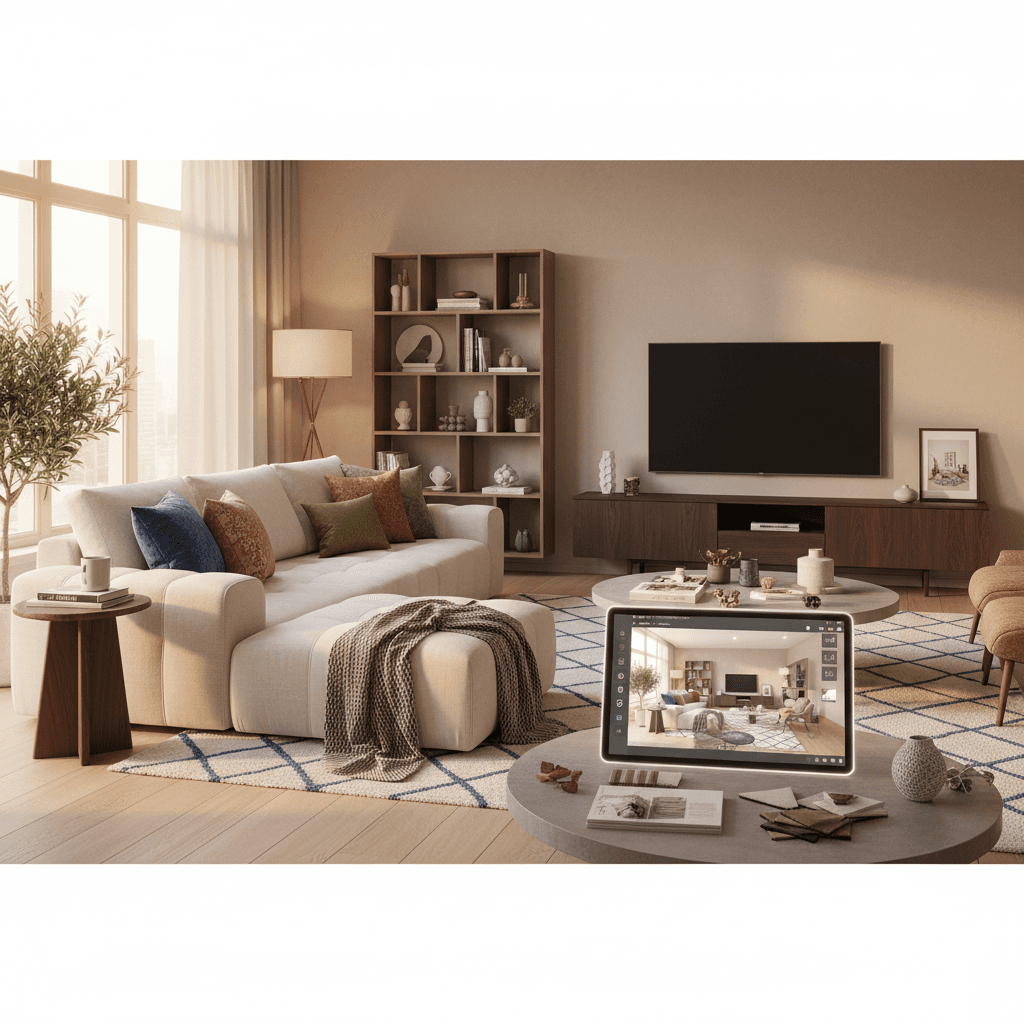
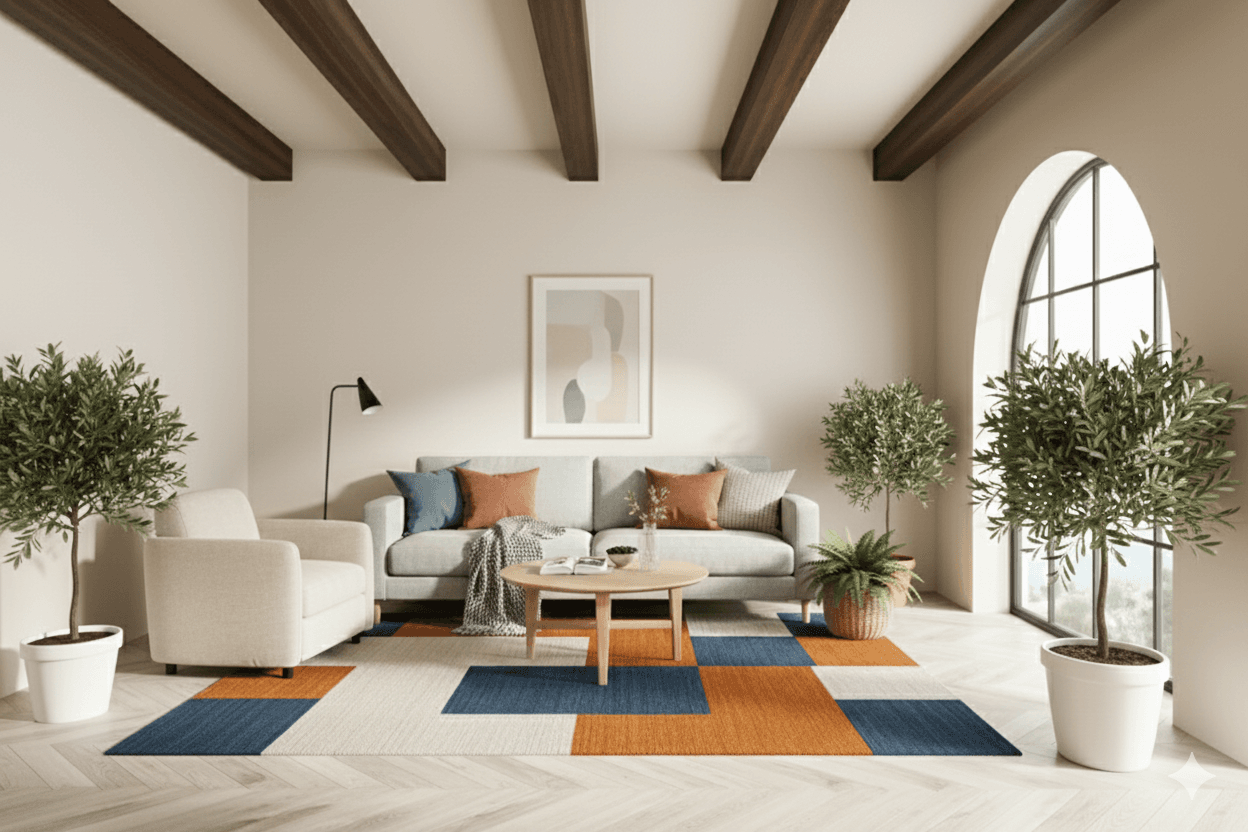
Shoppable Room Visualizer: Design Your Space with Real Furniture You Can Actually Buy
A shoppable room visualizer lets you design your space with real, purchasable furniture — not generic 3D models. Here's how it works and which tool fits your situation.
By Roomellow Team
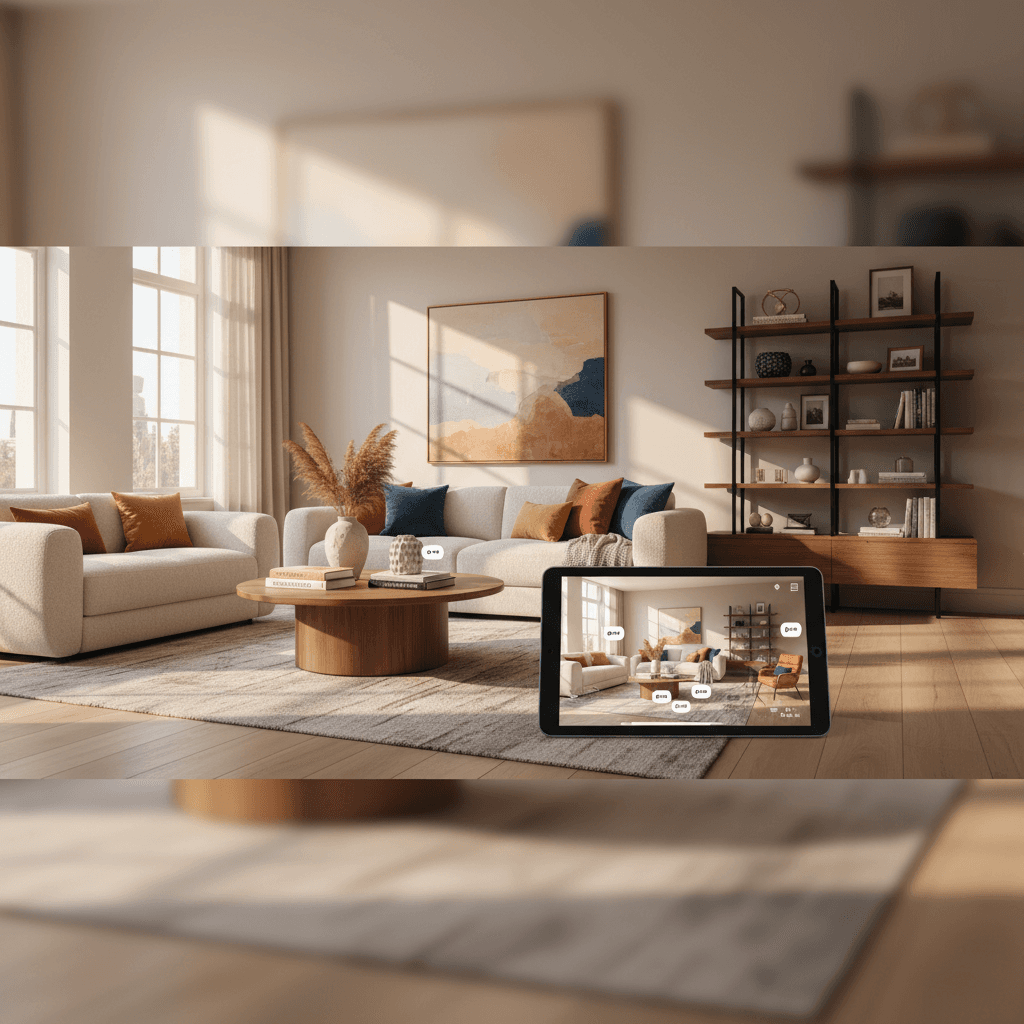
Most "room visualizer" tools show you furniture that doesn't exist. You design a room, fall in love with the layout, then try to find that exact sofa for sale — and discover it's a generic 3D model from some asset library. The visualization was the easy part. The shopping is where the tool falls apart.
A shoppable room visualizer is the opposite. Every piece of furniture in the rendering is a real product from a real store, with a working buy link. You're not designing in a vacuum — you're shopping in 3D.
This guide covers how shoppable room visualizers work, what to look for, and where the gaps still are.
What "shoppable" actually means
Three things separate a shoppable room visualizer from a regular one:
1. The furniture is real. Every sofa, table, rug, and lamp in the rendering is a real SKU you can purchase. Not "inspired by" a real product, not "similar to" one — the exact item.
2. The link is real. Click the sofa, and you go to the store's product page. The product is in stock, the price is current, and the shipping options are theirs.
3. The catalog updates. When the store discontinues a product, the visualizer stops offering it. When prices change, the visualizer reflects that. No render-the-room-only-to-find-the-couch-is-gone.
Sounds basic. Almost none of the popular tools do this. Most show you stock 3D models or AI-generated furniture (gorgeous, fictional, unbuyable).
Why this matters more than people realize
The big problem in online furniture shopping isn't that people don't like the products. It's that they can't picture them in their actual space.
A $2,400 sectional looks great in a curated catalog photo. In your specific living room, with your specific lighting and your existing rug, it might look completely wrong. Customers know this. So they hesitate, abandon the cart, and the sale doesn't happen. Furniture retailers see this as their #1 conversion problem.
Shoppable room visualizers close that gap. You see the actual sofa in your actual room, decide whether you like it, and if you do, you buy it from the link. The decision happens at the visualization step, not after you've taken delivery and you're staring at it in regret.
For shoppers: less wrong-purchase risk, less time spent agonizing. For stores: more confident customers, fewer returns.
What to look for in a shoppable room visualizer
Not all tools that claim "real products" are equal. The questions worth asking:
How many stores' catalogs does it cover? A visualizer that only shops one retailer is fine if you already know you're buying from that retailer. If you don't, you want multi-store coverage so you can compare styles, prices, and what fits.
Can you use a photo of your actual room? Some tools build a 3D model from your measurements (Planner 5D, HomeByMe). Others let you upload a photo of your space and redesign that exact view (Roomellow, IKEA Kreativ with its room-scanning). The photo-based approach is faster and looks more realistic — but only works for visual decisions, not spatial precision.
How fast can you iterate? The whole value of visualizing is trying different things. If swapping a sofa takes 30 seconds, you'll try ten. If it takes three days (the old Modsy model), you'll try two and settle.
Does it work for the styles you actually want? Tools that lean on AI generation can produce gorgeous mid-century or minimalist renders, but might struggle with traditional, cottage, or maximalist looks. Try your specific style before committing.
Is the catalog up to date? A visualizer that's six months stale is going to keep showing you out-of-stock products. Look for tools that sync from store APIs daily, not annually.
How Roomellow does it
Roomellow is a shoppable room visualizer built around real catalogs. The flow:
- Upload a photo of your room. Living room, bedroom, dining room, home office — any room you're trying to design.
- Pick a style (or just describe what you want — "warm minimalist with lots of wood").
- Get a redesigned version of your room rendered with real furniture from 27 stores in our catalog. Every item is shoppable.
- Swap furniture you don't love. Don't like that coffee table? Tap it, pick a different one, regenerate.
- Click through to buy at the retailer's own site.
The catalog as of 2026: 40,000+ products across 27 stores. The mix is intentional — DTC brands like Floyd (modular flat-pack), Maiden Home (premium American-crafted sofas), Joybird (mid-century DTC), Inside Weather (configurable sofas), The Citizenry (global artisan rugs), Lulu and Georgia (premium decor), plus regional and full-service retailers (Five Elements, World Interiors, Living Spaces, Star Furniture, IKEA, and more).
You're not locked into any one store. You can mix a Joybird sofa with a Floyd coffee table with a Citizenry rug, see them in your actual room together, and click through to buy each at its own retailer.
Floyd as a concrete example
Floyd is a Detroit-based DTC brand known for modular flat-pack furniture — beds, sectionals, tables, storage. About 165 products in their public catalog.
In Roomellow, Floyd's catalog is fully wired in. Search "modern modular sofa" and you'll see their Sink Down sectional alongside other matching products from other stores. Generate a "mid-century living room" and Floyd's furniture is part of the option set. Click any Floyd piece in the rendering and you land on Floyd's product page to buy it directly.
This isn't a custom integration we built one-off for Floyd. The same pipeline reads any public Shopify catalog. We can add a new store in about a day; we've added 5 new stores to the platform in the past week.
Where shoppable visualizers still fall short
A few honest limitations of where the tech is in 2026:
Spatial precision. If you need to confirm a 96-inch sofa fits between two specific walls, a measurement-first planner (Planner 5D, HomeByMe) is still the better tool. Shoppable visualizers are for visual decisions, not architectural specs.
Stores without public APIs. Some big names — West Elm, Crate & Barrel, Pottery Barn, RH — run custom e-commerce platforms without public catalog APIs. Their products aren't accessible to third-party shoppable visualizers. If those are the brands you want, their own apps' AR features are the closest thing.
Custom or made-to-order pieces. Visualizers render what's in the catalog. Bespoke or custom-built items don't fit the pattern.
Photo quality. Bad lighting in your room photo = unconvincing renders. Most tools do best with daytime shots in decent natural light.
For furniture retailers — adding a shoppable visualizer to your store
A note for anyone running a Shopify furniture store: adding a shoppable visualizer doesn't have to mean building one from scratch.
The standard objection from retailers is "we want this but can't justify the engineering investment." Fair. The thing is, the engineering investment is unnecessary if your catalog is on a standard Shopify backend — the visualizer can read your catalog directly.
Roomellow runs as a layer on top of your existing Shopify store. It pulls your products via the public API (no integration work on your side), lets customers upload their room photo, and renders the room with your products in it. Customers buy from your store, at your prices, with your branding.
If you're running a DTC furniture brand and want to add room visualization to your storefront, reach out via our stores page. Onboarding is typically same-day.
Picking the right tool
Quick rule of thumb:
- Real products + your actual room + multi-store: Roomellow.
- Locked to one retailer but want their products specifically: IKEA Kreativ (IKEA), the store's own AR app (West Elm, Wayfair, Amazon, etc.).
- You want a human designer to drive the project: Havenly, Decorilla, Decorist.
- You need to confirm sizes and floor plans first: Planner 5D, HomeByMe, Roomstyler.
The category is finally where shoppers wanted it to be. Real rooms, real furniture, instant iteration. No more 3D models that don't exist for sale.