Unlock Style: How to Mix & Match Furniture Like a Pro
Tired of dull rooms? Learn how to expertly mix and match furniture to create a unique, personalized space that tells your story. Discover the secrets to cohesive design!
By Roomellow Team
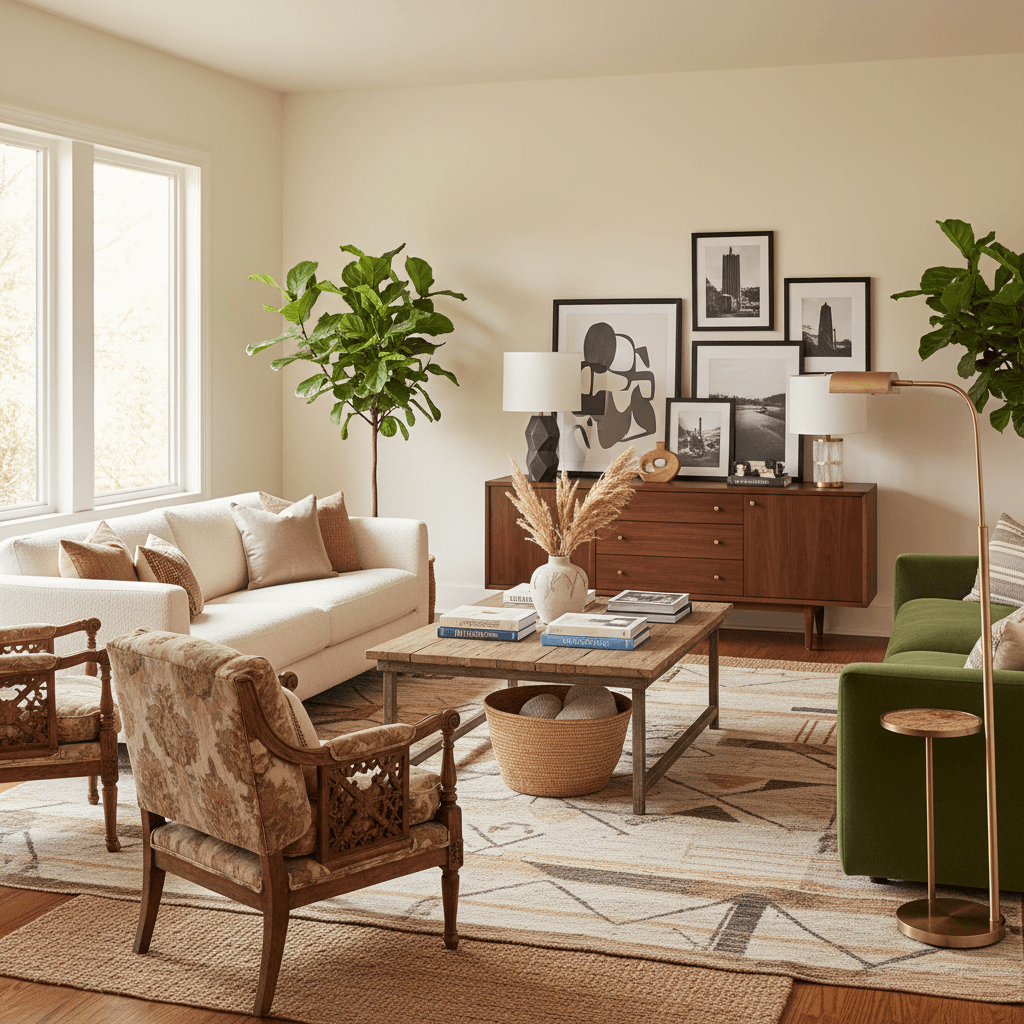
One of the most common questions I get from people diving into a redesign is, "How do I make my room look cohesive without everything matching perfectly?" It’s a valid concern. We’ve all seen those catalog-perfect rooms where every piece comes from the same collection, and frankly, it feels a little… soulless. The secret to a truly personal, inviting space isn't in matching sets, but in the art of mixing and matching furniture. It’s about creating a conversation between pieces, not a monologue.
For a long time, the default was to buy entire living room or bedroom sets – a sofa, loveseat, and armchair all in the same fabric, or a bed, dresser, and nightstands all from the same wood line. While convenient, this approach often leaves a room feeling flat and impersonal. It lacks the curated, layered look that truly makes a house feel like a home. Your space should tell your story, not a furniture store's.
When you thoughtfully mix and match, you open up a world of possibilities. You can incorporate pieces you genuinely love, items with sentimental value, or even budget-friendly finds alongside investment pieces. This method allows for more flexibility, personality, and ultimately, a more dynamic and interesting interior. It also means your room can evolve with you, rather than being stuck in one rigid aesthetic. Ready to break free from the matching set mindset? Let's get into the specifics.
The Foundation: Why Mixing Trumps Matching Every Time
Think about your favorite outfit. Is it head-to-toe from one brand, or a thoughtful combination of different textures, colors, and styles that somehow just works? Design is no different. Here’s why mixing and matching is not just a trend, but a fundamental principle of good interior design:
- Personality and Story: Your home should reflect who you are. A mix of pieces tells a richer story than a uniform set. It suggests travel, evolving tastes, and a life lived.
- Visual Interest and Depth: Different textures, materials, and styles create layers that are more appealing to the eye. It prevents monotony and adds character.
- Budget Flexibility: This is a big one. You can splurge on a key anchor piece, like a really comfortable sofa, and save on accent chairs or side tables. This intelligent allocation of your budget can get you a high-end look without a high-end price tag for every single item.
- Longevity and Adaptability: Trends change. If your entire room is tied to one specific style, it can feel dated quickly. When you mix, you can easily swap out smaller, less expensive pieces to refresh the look without overhauling everything.
The goal isn't to throw a bunch of random items into a room and hope for the best. It's about intentional curation – making deliberate choices that, while diverse, ultimately harmonize.
Actionable Tips for Mixing and Matching Furniture Like a Pro
1. Anchor with a Large, Neutral Piece (or Two)
Start with your biggest investment pieces, usually the sofa in the living room or the bed frame in the bedroom. These are your anchors, and keeping them relatively neutral in color and classic in silhouette gives you a lot of flexibility for everything else.
For a living room, I almost always recommend a sofa in a solid, versatile color like charcoal grey, oatmeal, cream, or a deep navy. These act as a calm backdrop, allowing you to introduce more adventurous colors, patterns, and materials through accent chairs, coffee tables, and textiles. A classic three-seater sofa, like West Elm’s Harmony sofa in a performance linen, is a smart choice. It’s comfortable, durable, and its clean lines will play well with various styles you bring in. If you're pondering the endless sofa options, check out our guide on Expert Guide: Choose the Right Sofa for Your Living Room.
In the bedroom, a simple upholstered headboard or a classic wood frame works similarly. You can then bring in nightstands that are entirely different in material or style. For example, a crisp white upholstered bed looks fantastic with a pair of antique walnut dressers as nightstands, or even modern metal pedestals. The key is that the anchor provides stability without being overly prescriptive about the room's overall aesthetic.
Trade-off Tip: While a neutral sofa is excellent for versatility, don't shy away from textured neutrals. A cream bouclé sofa looks incredible and adds immense visual interest, but be honest with yourself about maintenance if you have pets or small children. Performance fabrics, on the other hand, offer durability without sacrificing style.
2. Play with Diverse Textures and Materials
This is where rooms truly come alive. A room filled with only smooth, uniform surfaces feels flat. Introducing a variety of textures and materials adds depth, warmth, and a tactile richness that's simply irresistible.
Think about the interplay:
- Wood: Different wood tones can absolutely coexist. A light oak coffee table (like something from Article or IKEA) can sit beautifully alongside a darker walnut credenza, as long as the undertones don't clash too harshly (e.g., avoid a very yellow-toned wood next to a very red-toned wood without a mediator). Don't be afraid to mix a chunky, rustic wood piece with a sleek, refined one.
- Metal: Integrate various metals. Polished brass can bring warmth and a touch of glamour, while matte black iron adds an industrial or modern edge. Consider a brass-framed mirror over a black metal console table.
- Fabrics: This is perhaps the easiest place to mix. Combine a structured linen sofa with a plush velvet armchair, a chunky knit throw, and some woven jute poufs. Leather, whether a supple top-grain or a more rugged distressed finish, introduces another layer of texture and patinas beautifully over time.
- Stone and Glass: A marble coffee table or a concrete side table introduces cool, hard surfaces that contrast beautifully with soft upholstery. Glass tabletops can add lightness, preventing a room from feeling too heavy.
The trick is to ensure that even with diverse materials, there’s a visual balance. If you have a lot of dark wood, lighten it up with some glass or lighter fabrics. If everything feels soft, introduce a hard edge with metal or stone.
3. Blend Styles with Intention, Not Chaos
This is often the most intimidating part of mixing and matching, but it’s incredibly rewarding. You don’t need to pick one style and stick to it religiously. In fact, a room with a single, rigid style often feels like a museum display rather than a lived-in space. The goal is to create a dynamic tension between styles that ultimately harmonizes.
Start by identifying 2-3 dominant styles you genuinely love. Perhaps you're drawn to the clean lines of modern design, but also appreciate the warmth of bohemian textures or the vintage charm of mid-century modern pieces. The key is to find common ground.
How to blend:
- Shared Lines/Shapes: A sleek, minimalist sofa can pair beautifully with a mid-century armchair if both share a similar clean-lined aesthetic, even if one is wood and the other is upholstered.
- Color Palette: Use your color scheme as the unifying element (more on this next). Even if the styles are distinct, if they share a cohesive color story, they'll feel connected.
- Unifying Material: Perhaps you decide to incorporate a lot of warm walnut wood. A mid-century walnut credenza, a modern walnut dining table, and even a rustic walnut picture frame can bridge different styles.
Example: Imagine a Scandinavian living room. You might have a simple, light wood sofa and a minimalist coffee table. To add interest, bring in a distressed leather armchair (a touch of rustic or industrial) and a vintage Persian rug (bohemian or traditional). The clean lines of the Scandinavian pieces keep it feeling fresh, while the leather and rug add depth and personality. It’s a delicate dance, but the result is a truly unique space.
4. Master the Art of Scale and Proportion
This is non-negotiable for creating a visually pleasing room. You can mix all the styles and textures you want, but if the scale is off, the room will never feel right. Each piece of furniture needs to relate to the other pieces and to the overall size of the room.
- Sofa and Coffee Table: Your coffee table should typically be about two-thirds the length of your sofa and roughly the same height as your sofa's seat cushion (or slightly lower). A tiny round side table next to a sprawling sectional will look lost and functionally awkward. If you have a large sectional, a substantial coffee table is essential, perhaps a large square or rectangular one from a place like CB2 or Crate & Barrel.
- Rugs: A properly sized rug literally grounds your space. For a living room, a 9x12 rug under a sectional is non-negotiable for most standard living rooms. At a minimum, all front legs of your main seating pieces (sofa, accent chairs) should sit comfortably on the rug. If the rug is too small, floating awkwardly in the middle of the room, it shrinks the space rather than defining it. This is a common mistake in How to Design a Small Living Room (Without Making It Feel Cramped).
- Dining Room: The size of your dining table needs to correspond to the size of your dining room and the number of people you typically seat. Allow at least 24 inches of width per person at the table. Your dining chairs should be proportionate to the table – not too bulky for a delicate table, nor too dainty for a robust one. Check out our Inspiring Dining Room Ideas for a Functional & Stylish Home for more on this.
- Overall Balance: Distribute visual weight evenly. If you have a very heavy, dark cabinet on one wall, balance it with a lighter, perhaps taller, piece on an opposing wall, or a large piece of art. Avoid clustering all your visually heavy items in one corner.
5. Curate a Cohesive Color Palette
Even when mixing styles and materials, a well-defined color palette acts as the ultimate unifier. It’s the invisible thread that ties everything together. I recommend choosing 3-4 main colors: 1-2 neutrals (your base), and 1-2 accent colors (your pops of personality).
- Neutrals First: Start with your walls and your largest furniture pieces. These are typically in neutral tones like white, cream, beige, grey, or even a soft green or blue.
- Accent Colors: Introduce your accent colors through smaller furniture pieces (an accent chair, a painted console), textiles (throw pillows, blankets, curtains), and artwork.
- Distribution: Don’t put all your accent color in one spot. Distribute it around the room to create visual flow. If you have a rust-colored accent chair, repeat that rust in a throw pillow on the sofa, a piece of art, or a small decorative object. This creates a sense of intention and connection.
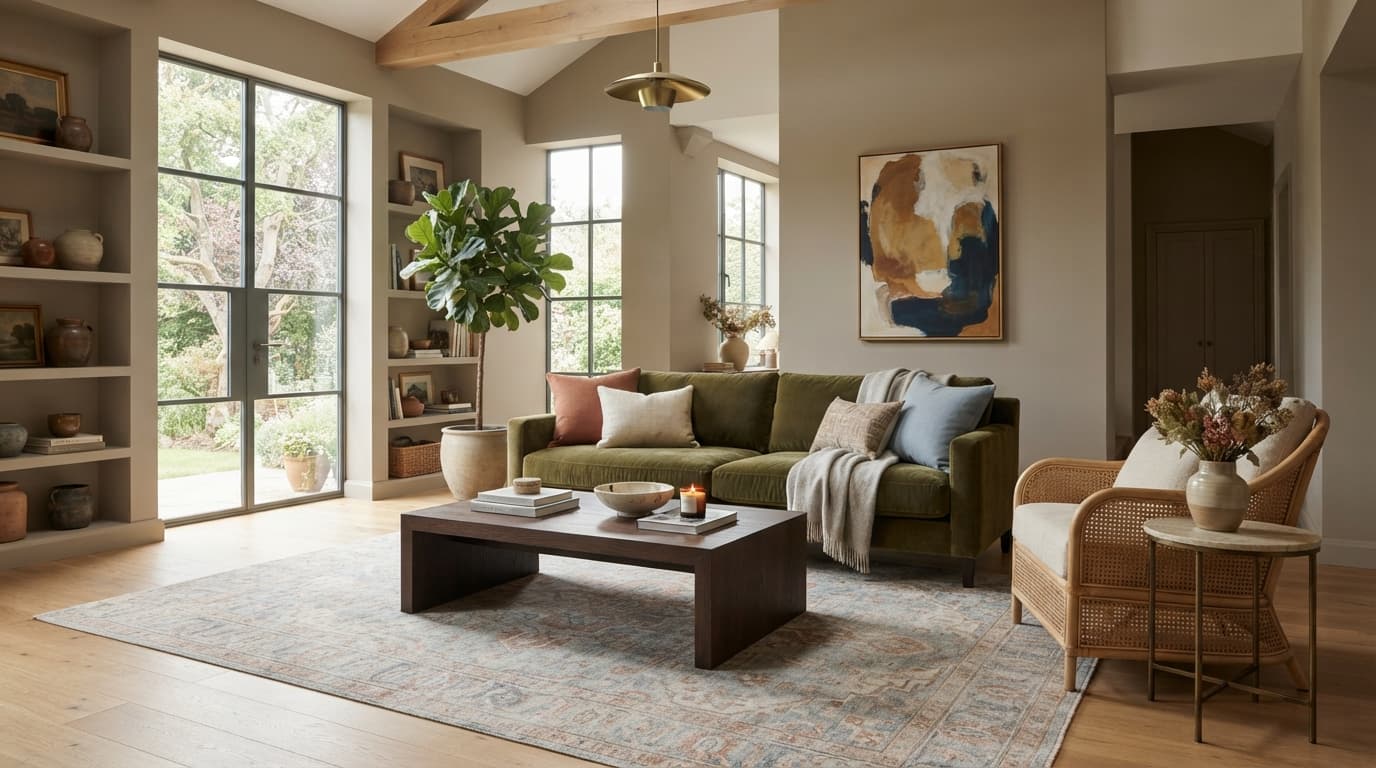
A classic example: Cream walls, a grey sofa, and then pops of olive green and muted terracotta in textiles and a vintage ceramic lamp. This creates a rich, layered look that feels warm and inviting, even with varied furniture styles. For more color inspiration, delve into Transform Your Living Room: Best Color Schemes & Combinations.
6. Embrace Negative Space (Don't Over-Furnish)
Mixing and matching doesn't mean cramming every beautiful piece you find into one room. Negative space – the empty areas around and between your furniture – is just as important as the furniture itself. It allows your curated pieces to breathe and be appreciated.
A common mistake is to fill every corner or every wall. This leads to a cluttered, overwhelming feeling, regardless of how lovely the individual pieces are. Give your eye a place to rest. Allow walkways to be clear. If you have a truly stunning antique chest, give it pride of place on a wall with minimal surrounding distractions. Less is often more, and well-placed empty space enhances the pieces you do choose to highlight. This principle is often at the heart of minimalist design.
7. The "One-of-a-Kind" Rule
This is my favorite rule. Every room benefits from at least one piece that feels truly unique, something that wasn't bought off a showroom floor alongside a thousand identical items. This could be:
- An antique dresser found at a flea market.
- A hand-carved coffee table from a local artisan.
- A vintage armchair reupholstered in a bold fabric.
- A piece of inherited furniture with a story.
These "one-of-a-kind" pieces inject immediate personality and depth. They are, by their very nature, mixed elements, and they often become the conversation starters in a room. They also challenge you to think creatively about how to integrate something truly unique into your existing decor. Don't be afraid to let a piece you love dictate a small part of your room's direction.
Bringing it All Together: Room-Specific Applications
While the principles remain the same, their application varies slightly from room to room.
- Living Room: Your sofa and accent chairs are prime candidates for mixing. Skip the matching set. Instead, pair a fabric sofa with a leather armchair and a wooden cane chair. Use varied coffee table ideas — perhaps a round marble coffee table with a rectangular ottoman as a side table. Explore different looks on our living room page.
- Dining Room: This is a classic spot to mix. A robust wooden dining table (say, a solid oak one from a furniture store like Arhaus) paired with sleek upholstered chairs (perhaps in a performance velvet) or even a mix of two different chair styles at either end of the table. A metal frame chair mixed with a more traditional wood chair works if the scale is right. Don’t be afraid to look at Modern Dining Room Ideas: Timeless Table & Tress Chairs Makeover for inspiration that breaks the mold.
- Bedroom: Avoid the matching bedroom set. A upholstered bed frame pairs beautifully with mismatched nightstands — perhaps one mid-century modern wood piece and one sleek, modern metal console. Your dresser can be a family heirloom, or a modern piece that complements the room without being identical. Visit bedroom for more inspiration, or specifically, Unlock Your Dream Retreat: Essential Bedroom Ideas & Design Tips for comprehensive advice.
The beauty of mixing and matching is that there's no single "right" answer. It’s about experimentation, trust in your own eye, and a willingness to step outside the box of traditional furniture sets.
Feeling overwhelmed by all the choices? This is exactly where Roomellow comes in handy. You can upload a photo of your existing room, and our platform will show you how real, purchasable furniture from stores like Pottery Barn, Crate & Barrel, Article, and IKEA would look mixed and matched within your space. It's a fantastic way to visualize different combinations of styles, textures, and materials before you commit. Trying different coffee table styles with your existing sofa, or seeing how a new accent chair blends with your current rug, can make all the difference. Check out How to Redesign Your Room with AI (And Actually Buy the Furniture) to see how it works.
It truly helps to see different pieces from various furniture stores interacting in a real room setting. You might discover that a West Elm mid-century sideboard actually pairs beautifully with a more traditional Restoration Hardware dining table, or that an Anthropologie velvet chair provides the perfect pop next to your existing IKEA shelving unit. The visual proof takes all the guesswork out of the equation.
Ready to redesign your room?
Upload a photo of your room and get a professional AI redesign with real furniture you can buy. Free to try — no credit card required.
Try Roomellow freeFAQ on Mixing and Matching Furniture
How many different styles should I try to mix in one room?
I recommend sticking to 2-3 dominant styles to keep things cohesive. For instance, you might combine modern and mid-century modern, or farmhouse and industrial. Trying to incorporate too many distinct styles can make a room feel chaotic rather than curated. The key is to find commonalities in lines, materials, or colors between the chosen styles.
Can I mix different wood tones in the same room?
Absolutely, and you should! Mixing wood tones adds depth and prevents a room from looking too monotonous. The trick is to either:
- Find similar undertones: For example, warm oak and warm walnut often pair well.
- Create clear contrast: A very light blonde wood piece next to a very dark, rich wood piece can be very effective. What you want to avoid is several different, moderately contrasting wood tones that compete for attention without a clear intention. A good rule of thumb is to let one or two wood tones dominate, and use a third sparingly as an accent.
What if I have existing furniture I can't replace, but I want to mix and match?
Work with what you have! Your existing furniture becomes your starting point. If you have a traditional sofa you love, build around it. Introduce modern accent chairs, a contemporary coffee table, and fresh textiles. The goal isn't to erase your existing pieces but to integrate them into a new, more dynamic narrative. Think about how you can use new pieces to "update" or "reinterpret" the style of your existing items. Sometimes, simply reupholstering an old piece or adding new hardware can completely transform its vibe.