Small Room? Make it Look Bigger! Expert Design Secrets Revealed
Don't let a small room cramp your style! Our guide shows you how to make a small room look bigger with smart furniture & layout tips. Start expanding your space!
By Roomellow Team
We've all been there: standing in a room that feels more like a shoebox than a sanctuary, utterly convinced that no amount of decorating wizardry can make it feel anything but cramped. Maybe it’s your first apartment living room, a compact city bedroom, or a dedicated home office carved out of a corner. Whatever the space, the feeling of being visually squeezed is frustrating, and it can genuinely impact how you live and feel in your home.
But here’s the unvarnished truth: you absolutely can make a small room feel significantly larger, more open, and undeniably more inviting. It's not about magic, but a collection of smart, intentional design decisions that trick the eye and optimize every precious inch. As someone who's spent years meticulously planning layouts and sourcing furniture, I can tell you that the biggest mistake people make isn't buying furniture that's too big, but buying too many small, unrelated pieces that clutter a space and make it feel even more chaotic.
Let's unpack the real strategies that transform tight quarters into seemingly expansive havens.
1. Master the Art of Scale: Furniture That Breathes
This is where most people get it wrong. The instinct is often to buy tiny furniture for a tiny room. Resist that urge. Instead, think "right-sized" and "fewer, larger pieces."
The "Why": A room filled with many small, dinky items creates visual noise and makes the space feel fragmented. One well-proportioned sofa, even if it's technically a "small sectional," will anchor the room and create a sense of order far better than a loveseat paired with two small, mismatched armchairs.
- Leggy Furniture is Your Ally: Look for pieces with exposed legs – sofas, armchairs, coffee tables, and side tables. When you can see the floor underneath, it creates an optical illusion of lightness and airiness. A chunky, skirted sofa, while cozy in a large space, will eat up visual real estate in a small room.
- Example: Instead of a solid block coffee table, opt for a round glass-top table with a slim metal base. This allows light to pass through and doesn't interrupt the visual flow of the floor. For a living room, a mid-century inspired sofa from Article or a smaller-scale sectional from Crate & Barrel with exposed wood or metal legs is a far better choice than something heavy and low to the ground. You're looking for something with a seat depth of around 35-38 inches, not 45 inches, and armrests that are slim, not bulky.
- Multi-Functional Marvels: Every piece of furniture in a small room should earn its keep.
- Storage Ottomans: An upholstered ottoman can serve as extra seating, a footrest, and a discreet storage spot for throws, magazines, or remote controls.
- Nesting Tables: A set of two or three nesting tables provides flexible surface area when you need it and can tuck away neatly when you don't.
- Sofa Beds/Daybeds: For a guest room or a multi-purpose space, a stylish sofa bed (think a modern silhouette, not a lumpy pull-out) offers seating by day and sleeping by night.
- Floating Desks: For a small office or bedroom, a wall-mounted desk or a console table that doubles as a workspace is far more efficient than a bulky traditional desk. Look for options with built-in drawers or shelves to maximize storage.
- Embrace Transparency: Materials like glass, acrylic, and lucite are a small room's best friends. A clear acrylic coffee table, for instance, provides function without visual weight. It practically disappears, allowing the eye to travel through it, thus making the room feel more open. I'm a big fan of the Ghost Chair by Kartell for a desk chair – it's iconic and visually takes up almost no space.
For more deep dives into furnishing compact areas, check out our guide on the Best Furniture for Small Apartments: Maximize Your Tiny Space.
2. The Illusionists' Toolkit: Light, Color, and Reflection
These elements are powerful manipulators of perception. Use them wisely.
The "Why": Light colors reflect light, making walls appear to recede. Dark colors absorb light, making surfaces feel closer. Mirrors double your space visually.
- Paint It Light (Mostly): This is foundational. Opt for light, cool-toned neutrals – soft whites, pale grays, light blues, and greens. These colors genuinely make walls feel further away. I’m a huge proponent of Benjamin Moore's "Chantilly Lace" or "White Dove" for a crisp, airy feel, or Farrow & Ball's "Skimming Stone" for a warmer, almost greige-white.
- Caveat: Don't be afraid to use a single dark, rich color on an accent wall to add depth and drama. A deep charcoal or a moody blue on the furthest wall can actually make the room feel longer, as the eye is drawn to that focal point. Just don't paint all four walls a dark shade unless you're intentionally going for a cozy, jewel-box effect (which, while lovely, is the opposite of making a room look bigger).
- Find more inspiration for your palette with our Transform Your Living Room: Best Color Schemes & Combinations.
- Mirror, Mirror, on the Wall: Strategic mirror placement is a game-changer.
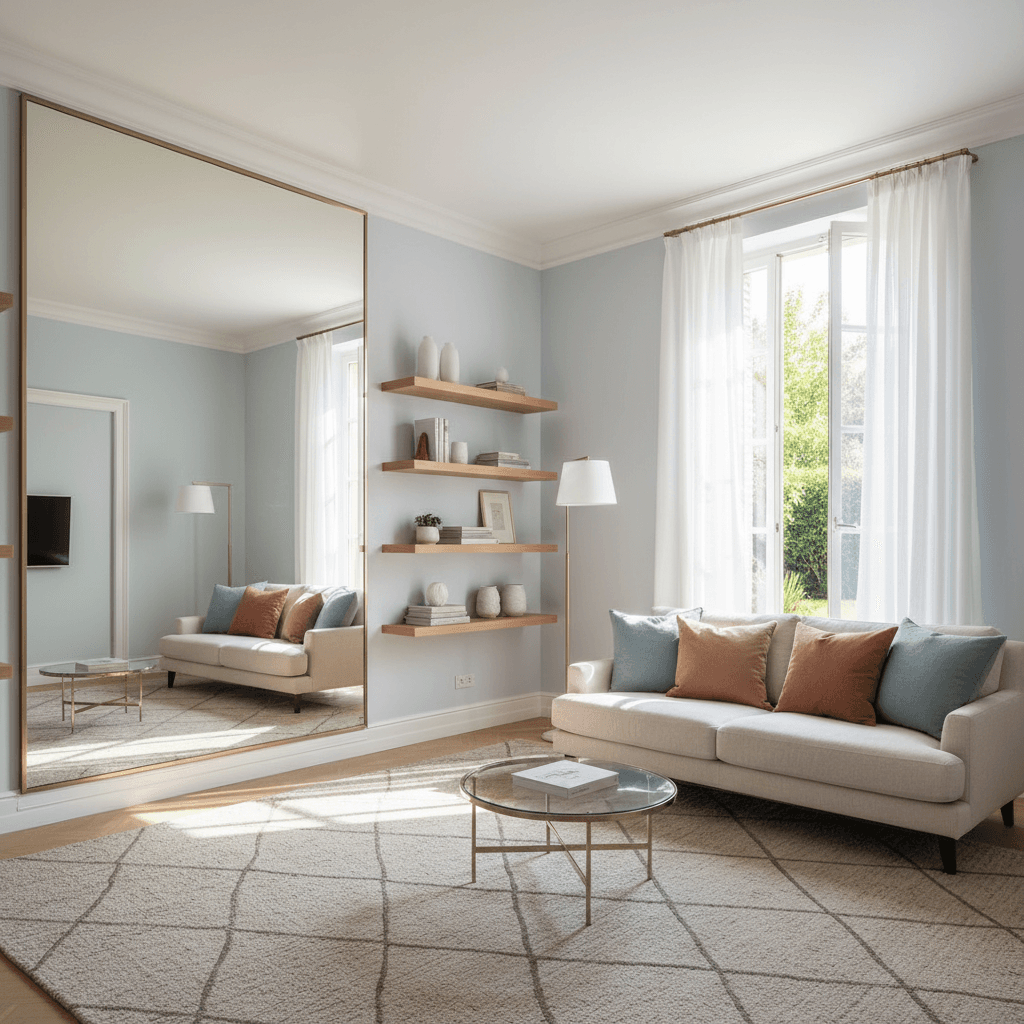
- Place a large mirror opposite a window to reflect natural light and the view, effectively bringing the outdoors in and doubling the perceived size of the window.
- Hang a full-length mirror (at least 30x70 inches) on a wall where it can bounce light from another source or simply reflect a good portion of the room. This adds depth instantly.
- Lean a substantial mirror against a wall rather than hanging it, which can feel more casual and modern, while still achieving the desired effect.
- Consider a mirrored furniture piece, like a small console table, which adds sparkle and reflective surfaces.
- Layered Lighting is Non-Negotiable: A single overhead light source casts harsh shadows and can make a room feel flat.
- Ambient Light: Think recessed lighting or a flush-mount ceiling fixture with a soft, warm glow.
- Task Light: A slim floor lamp next to your sofa for reading, or a stylish table lamp on a side table. Look for lamps with slender profiles.
- Accent Light: Sconces, picture lights, or even a small puck light tucked into a bookshelf can highlight specific areas and create visual interest, drawing the eye around the room and giving it depth. Up-lighting corners with small, inconspicuous lamps pushes light upwards, making ceilings appear taller.
3. The Power of Flow: Layout and Negative Space
This is about how you arrange your furniture and ensure unimpeded movement.
The "Why": A clear pathway makes a room feel open and navigable, while blocked views and cluttered walkways make it feel constricted. "Negative space" – the empty areas – is just as important as the filled areas.
- Float Your Furniture (When Possible): The common small-room mistake is pushing all furniture against the walls. While sometimes necessary, if you can pull your sofa even 6-8 inches away from the wall, it creates a visual "breathing room" that makes the room feel less static and more open. It literally creates space behind the furniture.
- Maintain Clear Sightlines: Avoid placing tall, bulky items directly in front of windows or doorways. Your eye should be able to travel across the room without obstruction. If you have a beautiful window, let it be the focal point.
- Define Zones, Don't Divide: In an open-concept small space, use a large rug or a carefully placed console table to delineate areas (e.g., living from dining) without erecting physical barriers. You want flow, not choppy sections.
- Embrace Verticality: Draw the eye upwards.
- High Curtains: Mount your curtain rod several inches above the window frame and extend it wider than the window itself. This makes the window appear larger and the ceiling taller. Opt for light, airy fabrics like linen or sheer cotton.
- Tall, Slim Storage: A tall, narrow bookshelf or display cabinet draws the eye up without taking up much floor space. Make sure it's anchored to the wall for safety.
- Vertical Art: Instead of horizontal pieces, choose a tall, striking piece of art or a stack of smaller pieces hung vertically to emphasize height.
For more specifics on clever layouts, check out How to Design a Small Living Room (Without Making It Feel Cramped).
4. Smart Storage: The Ultimate De-Cluttering Weapon
Clutter is the enemy of a small room. Period.
The "Why": Every visible item that doesn't have a dedicated home contributes to visual chaos, making a small space feel even smaller and messier. An organized room feels larger, calmer, and more intentional.
- Go Vertical with Storage: Utilize your wall space. Floor-to-ceiling shelving, mounted cabinets, or even pegboards for tools and accessories in an office can keep items off precious floor and surface areas.
- Example: An IKEA BILLY bookshelf, customized with doors on the bottom half, offers both display space and hidden storage.
- Hidden Storage is Gold:
- Under-Bed Storage: Pull-out drawers or bins underneath your bed are invaluable for seasonal clothing, extra linens, or rarely used items. Opt for a bed frame with built-in storage if you can.
- Baskets and Bins: Use decorative baskets or fabric bins on shelves, under console tables, or in open cubes to corral loose items like toys, remotes, or magazines. The key is that they look intentional, not haphazard.
- Furniture with Storage: We touched on storage ottomans, but also consider a console table with drawers, or a media cabinet with closed doors to hide electronics and wires.
- One-In, One-Out Policy: This sounds simple, but it’s crucial. For every new item that comes into your home, especially decorative pieces or clothing, consider if you can part with something similar. Be ruthless. A small room forces you to be an editor of your belongings.
To get more ideas for optimizing tight sleeping quarters, our Small Bedroom Decorating Ideas to Make Your Space Feel Bigger offers practical solutions.
5. Textiles and Decor: Intentional Touches
Your rugs, curtains, and art choices can make or break the illusion of space.
The "Why": Thoughtful choices in these areas can ground a room, define zones, and add personality without overwhelming. Incorrect choices can chop up a space or make it feel busy.
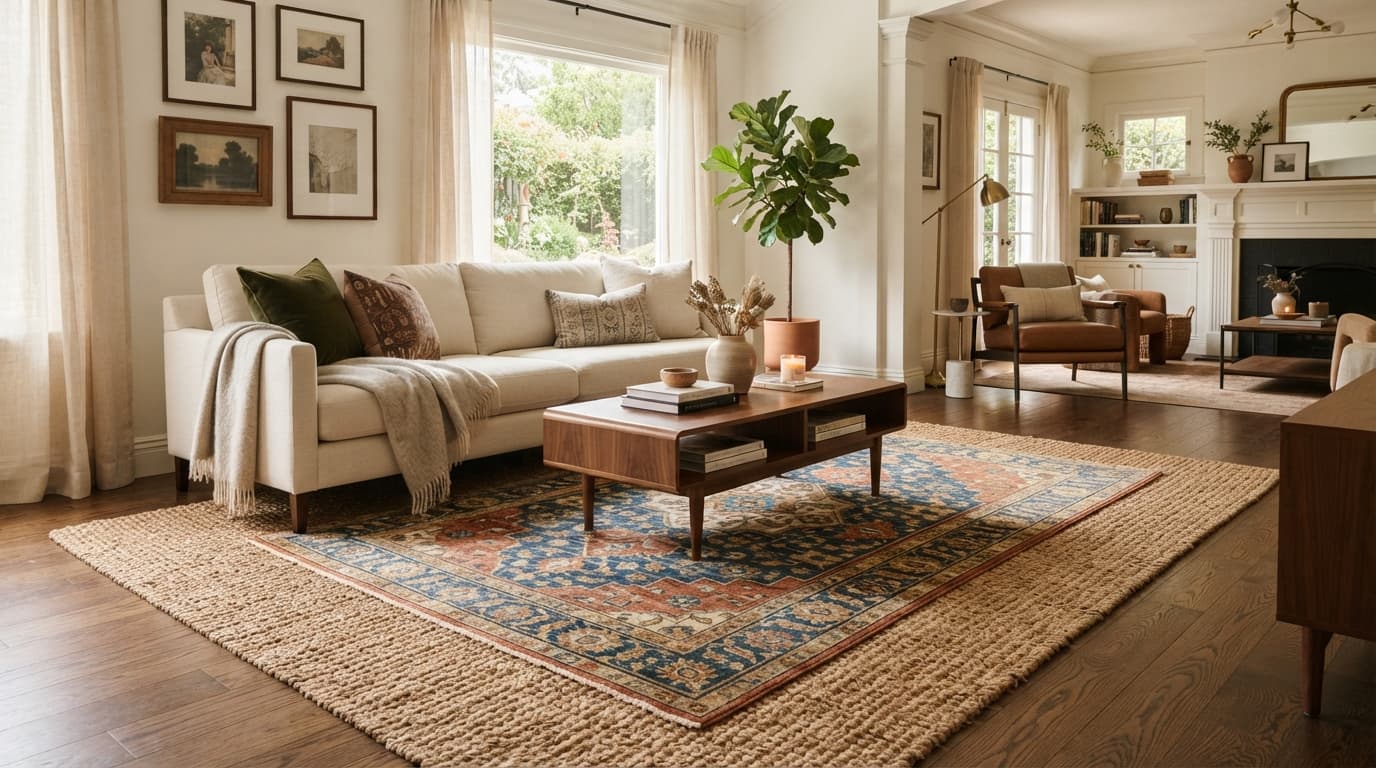
- Rugs: Go Big or Go Home: This is a non-negotiable for me. In a small living room, if you have a sofa and maybe an armchair, the rug needs to be large enough to sit under the front two legs of all your main seating pieces. A 9x12 rug under a small sectional is generally the minimum I'd recommend for a living room to truly anchor the space. A small rug that floats in the middle of the room, barely touching any furniture, actually makes the room look smaller by creating a postage stamp effect. It visually shrinks the zone.
- Curtains: High, Wide, and Light: As mentioned before, hang your curtains high and wide. Use light, translucent fabrics that let natural light filter through rather than heavy, opaque drapes that block it. Floor-to-ceiling curtains make the window look grander and the ceiling taller.
- Art: Less is More (But Go Big): Instead of scattering many small pieces of art across a wall, which creates visual clutter, choose one or two larger, impactful pieces. A large canvas or a well-curated gallery wall with a tight arrangement can act as a focal point and add depth.
- Texture Over Pattern (Mostly): In a small room, too many busy patterns can be overwhelming. Instead, layer textures: a chunky knit throw, a linen pillow, a velvety accent chair. This adds visual interest and richness without making the room feel busy. If you love pattern, choose one hero pattern for a cushion or an accent, and keep everything else relatively subdued. Bouclé fabric on a single chair looks incredible and adds luxurious texture, but be honest with yourself – it's a nightmare if you have pets. Linen or a tight-weave cotton blend is usually a safer, more practical bet for everyday use.
Bringing Your Small Room Dreams to Life with Roomellow
Applying all these principles can feel overwhelming, especially when you're trying to visualize how specific furniture pieces will actually look and fit in your space. That's where Roomellow comes in. You can upload photos of your room, describe your vision (e.g., "I want this living room to feel bigger and more modern," or "Give me a Scandinavian bedroom that maximizes space"), and our AI will generate redesigns using real, purchasable furniture from various furniture stores.
It takes the guesswork out of sizing, placement, and style, allowing you to experiment with leggy sofas, transparent coffee tables, or a bold accent wall without lifting a paintbrush or moving a single piece of furniture. You can see how a 9x12 rug truly anchors your space, or how a sleek, tall bookshelf draws the eye upwards, all before you commit to a purchase. It’s an invaluable tool for tackling the small room challenge with confidence.
Ready to redesign your room?
Upload a photo of your room and get a professional AI redesign with real furniture you can buy. Free to try — no credit card required.
Try Roomellow free