Transform Your Space: Smart Sectional Sofa Ideas & Design Tips
Struggling to pick the perfect sectional? Discover expert sectional sofa ideas, essential measuring tips, and design advice to transform your living room. Shop smart!
By Roomellow Team
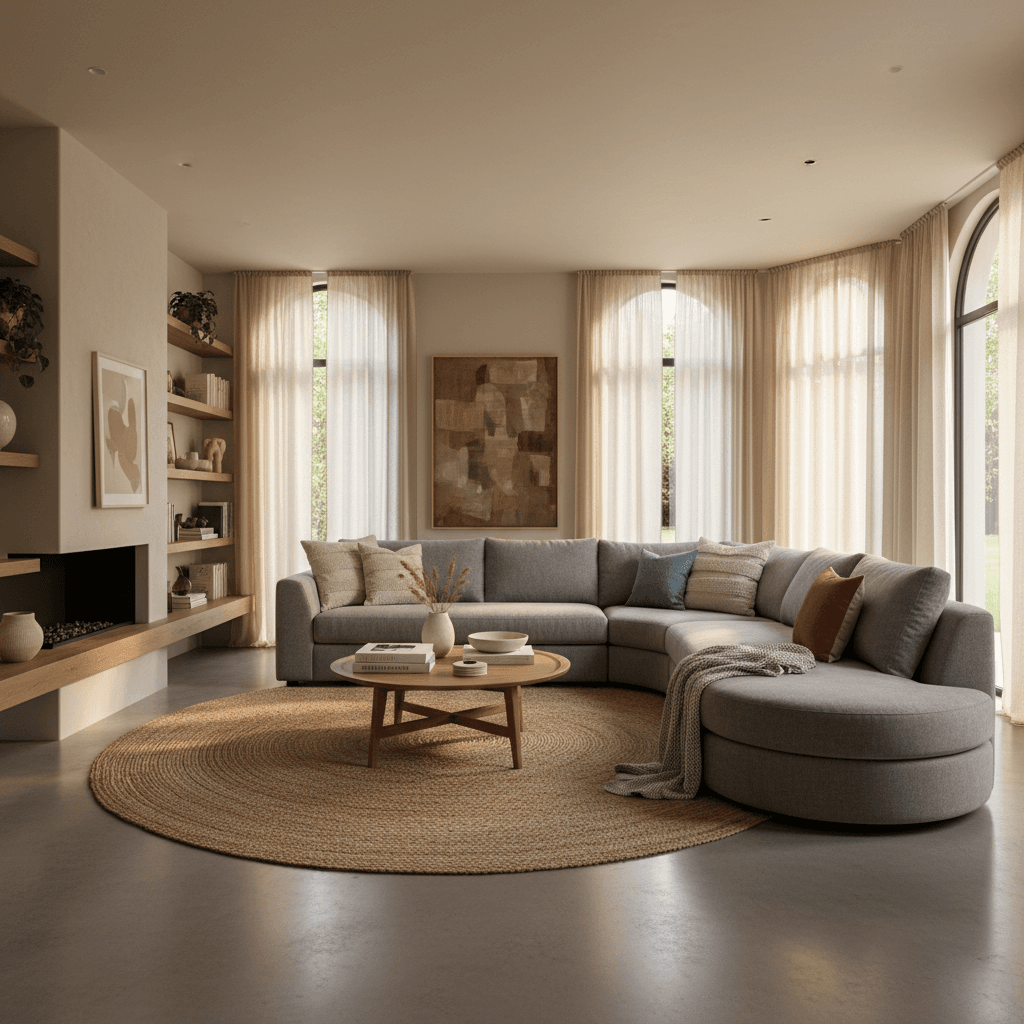
Choosing a sectional sofa feels like a big commitment, doesn't it? It’s often the largest piece of furniture in your living room, dictating the flow and the entire mood of the space. I've seen countless rooms transformed by the right sectional – and, frankly, just as many that felt cramped or awkward because of the wrong one. The key isn't just picking a sectional you like the look of, it’s about understanding how it lives and breathes within your specific room.
For years, sectionals got a bad rap, associated with bulky, overstuffed recliners from the 90s. But modern sectionals? They're sleek, versatile, and can be incredibly chic. They offer unparalleled comfort and seating capacity, making them ideal for everything from cozy movie nights to hosting a crowd. But because they're so dominant, getting it right requires a bit of upfront thought. I want you to feel confident in your choice, so let's walk through how to navigate the world of sectional sofas, ensuring yours isn't just a place to sit, but the foundation of a truly well-designed living room.
First Things First: Measure Everything, Twice.
Seriously, I can’t stress this enough. This is where most people go wrong. Before you even think about fabric swatches or arm styles, you need to grab your tape measure.
Measure Your Room: Get the length and width of your entire living room. But don't stop there.
- Walkways: Map out the clear pathways. You need at least 3 feet (about 90cm) of clear space for comfortable traffic flow around any major furniture pieces. More is always better, especially in high-traffic areas.
- Doorways and Hallways: This sounds obvious, but you’d be amazed how many people buy a massive sectional only to realize it won't fit through their front door, or around that tight corner in the hall. Measure the height and width of all entry points. Most sectionals come in multiple pieces, which helps, but some larger arms or chaises can still be tricky.
- Existing Furniture: If you're keeping other pieces, measure their dimensions too. You need to understand the full footprint of what you're working with.
Visualize the Footprint: Once you have your room dimensions, grab some painter’s tape and outline the exact dimensions of your potential sectional on your floor. Live with it for a day or two. Walk around it. Pretend to sit on it. Does it feel too big? Does it block a window or a vent? This simple step will save you so much headache and potential buyer's remorse. A common mistake I see is buying a sectional that's too deep for the room, making it feel like it's eating the space. For an average 12x15 foot living room, an L-shaped sectional with a longer side around 100-110 inches and the shorter chaise side around 60-70 inches is often a good fit. Go much larger, and you risk overwhelming the room. For tips on maximizing smaller spaces, check out our guide on How to Design a Small Living Room (Without Making It Feel Cramped).
Decoding Sectional Shapes: L-Shape, U-Shape, or Modular?
The shape of your sectional isn't just aesthetic; it’s about function and how it interacts with your room's layout.
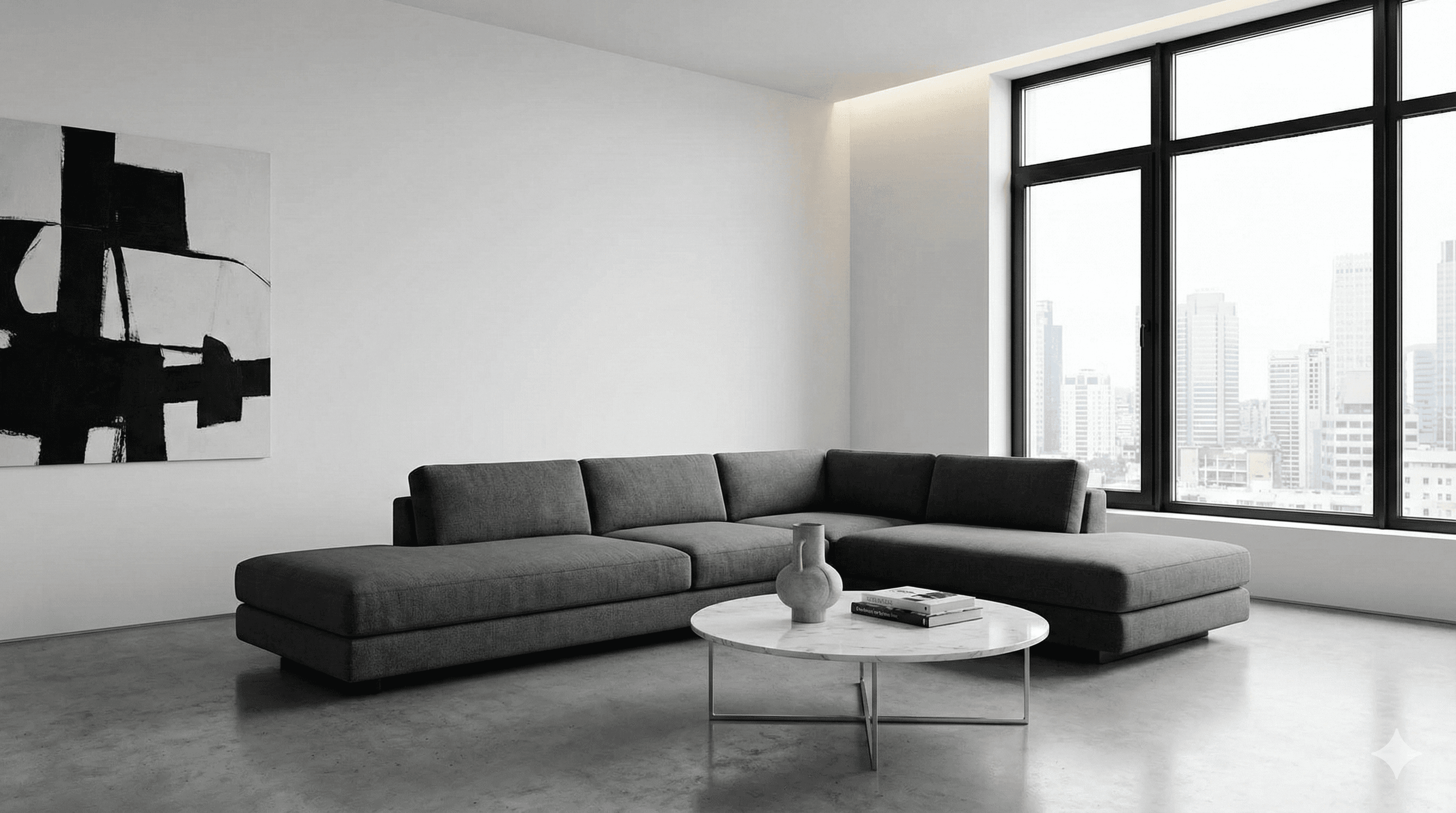
The Classic L-Shaped Sectional
This is your workhorse, the most popular and versatile option. It provides ample seating without completely closing off a space.
- Why it works: Perfect for defining a living area in an open-concept layout or maximizing seating in a more traditional room. The "L" shape naturally encourages conversation and provides a cozy corner for lounging.
- Crucial Choice: Right-Arm Facing (RAF) or Left-Arm Facing (LAF)? This is where people get confused. Imagine standing in front of the sectional looking at it. If the chaise or longer arm is on your right, it’s RAF. If it's on your left, it’s LAF. Get this wrong, and your sectional won't fit your layout. Consider your TV placement, any fireplaces, or windows you don't want to block.
- Best for: Most living rooms, apartments, and open-concept spaces that need clear zone definition. A typical L-shape might range from $1,500 for a more budget-friendly option from stores like Wayfair or IKEA, up to $6,000+ for higher-end pieces from stores like Crate & Barrel or West Elm, depending on size, material, and brand.
The Grand U-Shaped Sectional
If you have a large living room, a big family, or entertain frequently, a U-shaped sectional might be your dream.
- Why it works: It offers the most seating and creates an incredibly inviting, inclusive conversational pit. It’s the ultimate lounge zone.
- The Catch: It demands a lot of space. You need a room that can truly accommodate its expansive footprint without feeling crammed. Traffic flow around a U-shape is even more critical. You'll likely need a room that's at least 15x18 feet to pull this off comfortably.
- Best for: Large, open-plan homes, dedicated family rooms, or basements where comfort and maximum seating are priorities. Expect prices to start around $2,500 and easily climb past $8,000.
The Flexible Modular Sectional
This is my personal favorite for its adaptability. Modular sectionals are made up of individual, unattached pieces (like armless chairs, corner pieces, and ottomans) that can be arranged and rearranged in endless configurations.
- Why it works: You can start with a smaller configuration and add pieces later. You can create an L-shape one day, a U-shape the next, or even separate the pieces into individual seating if needed. This is brilliant for people who move frequently, or whose needs might change over time. It’s also excellent for navigating tricky doorways because each piece is smaller.
- The Trade-off: Sometimes the connectors between pieces aren't perfectly seamless, or the individual pieces can shift if not properly secured. And while flexible, the price can add up quickly as you buy more units.
- Best for: Growing families, renters, anyone who loves to redecorate often, or spaces with unconventional layouts. These can range from $2,000 for a mid-sized configuration up to $10,000+ for a large, high-quality set.
Material Matters: Durability, Style, and Lifestyle
The fabric or leather you choose for your sectional isn't just about how it looks; it's about how it lives. Be honest with yourself about your lifestyle. Do you have kids, pets, or do you eat dinner on the couch?
Fabric Options
- Performance Fabrics (e.g., Sunbrella, Crypton, LiveSmart): These are the unsung heroes of modern living. Designed to resist stains, fading, and wear, they are incredibly durable and often easy to clean. If you have a busy household, pets, or just want peace of mind, this is usually my top recommendation. They’ve come a long way aesthetically and now come in a huge range of textures and colors, often replicating the look of natural fibers.
- Pros: Durability, stain resistance, easy care.
- Cons: Can sometimes feel less "soft" or natural than pure cotton/linen. Higher upfront cost but pays off in longevity.
- Price impact: Adds 15-30% to the base fabric price.
- Cotton/Linen Blends: These offer a beautiful, natural, breathable look and feel. They drape beautifully and are great for a relaxed, Scandinavian, or coastal aesthetic.
- Pros: Soft, breathable, natural texture.
- Cons: Prone to wrinkling, can be less durable, and more susceptible to stains than performance fabrics. Not ideal for high-traffic, messy households.
- Price impact: Mid-range.
- Velvet/Bouclé: These luxurious textures are having a moment, and for good reason—they look incredible and feel amazing. Velvet offers a deep, rich sheen, while bouclé provides a nubby, inviting texture.
- Pros: Visually stunning, soft to the touch, adds warmth and sophistication.
- Cons: High maintenance. Velvet can show every fingerprint and pet hair, and bouclé, while forgiving in some ways, can snag easily and hold onto crumbs. Not a practical choice for homes with young children or shedding pets unless you're prepared for constant vigilance.
- Price impact: Often on the higher end due to material complexity.
- Chenille/Microfiber: Known for being incredibly soft and cozy. Microfiber is also quite durable and stain-resistant.
- Pros: Very soft, comfortable, often reasonably priced. Microfiber is durable and easy to clean.
- Cons: Can sometimes look less sophisticated depending on the quality. Chenille can flatten over time.
- Price impact: Generally budget to mid-range.
Leather Options
Leather sectionals are investments, but they offer unparalleled durability and a classic, timeless appeal. They develop a beautiful patina over time.
- Aniline Leather (Full-Grain): The most natural, highest quality leather. It retains the hide's natural markings, is incredibly soft, and develops a rich patina.
- Pros: Luxuriously soft, breathable, incredibly durable, beautiful aging.
- Cons: Most expensive, susceptible to scratches and sun fading. Requires specific care.
- Semi-Aniline Leather (Top-Grain): A bit more processed than full-grain, with a light protective coating. It’s more uniform in appearance and slightly more resistant to stains.
- Pros: Durable, good balance of natural look and stain resistance, softer than protected leather.
- Cons: Still relatively expensive, can scratch.
- Protected/Pigmented Leather: This is the most processed, with a thick protective coating and pigment. It's the most durable and stain-resistant option.
- Pros: Very durable, easy to clean, uniform color, great for high-traffic homes.
- Cons: Can feel stiffer, less breathable, and doesn't develop a natural patina like other leathers.
- Price impact: Leather sectionals generally start around $3,000 and can easily go up to $15,000+ depending on the leather grade and manufacturer.
For more guidance on choosing the right material for your main seating, read our insights on Expert Guide: Choose the Right Sofa for Your Living Room.
Styling Your Sectional: Beyond the Sofa Itself
A sectional is a statement, but it needs friends to complete the look. Don't let it sit alone and bare.
The Non-Negotiable Rug
A rug under a sectional is not optional; it’s essential. It defines the living area, adds warmth, texture, and grounds the entire space. My rule of thumb: a 9x12 rug under an average-sized sectional is often the absolute minimum. For larger U-shaped sectionals, you might even need a 10x14 or larger.
- Placement: The front two legs of the sectional must sit on the rug. Ideally, you want all legs of the sectional on the rug, with at least 6-12 inches of rug visible around the sides. Do not float a tiny rug in the middle of your sectional; it makes the room feel disconnected and small.
- Material: Consider a wool rug for durability and softness, or a jute/sisal for a more natural, textured look, especially if your sectional is upholstered in a soft fabric.
The Perfect Coffee Table
Your coffee table needs to complement the size and shape of your sectional.
- Size: It should be roughly two-thirds the length of the longest side of your sectional.
- Shape: If you have a dominant L-shaped sectional, a round or oval coffee table can soften the angularity and improve traffic flow. With a U-shaped sectional, a large rectangular or square table often works best to service all seating areas.
- Clearance: Always aim for 18-24 inches of space between the edge of your sectional and the coffee table for comfortable movement. For more ideas, explore our post on Transform Your Living Room: Best Coffee Table Ideas & Tips.
Balancing with Accent Chairs
A sectional provides a lot of seating, but it can feel monolithic. Introduce accent chairs to break up the visual weight and add personality.
- Don't Match: Please, do not buy accent chairs that perfectly match your sectional. Mix materials, shapes, and colors. If your sectional is a solid gray fabric, consider a cognac leather armchair or a patterned upholstered chair.
- Placement: Place accent chairs opposite the open side of your L-sectional, or flanking the open side of a U-sectional to complete the conversation area. Allow enough space for them to be pulled out easily. See how we incorporate diverse seating in our Modern Living Room Makeover: Mango Wood & Amaroso Accent Chairs.
Lighting and Accessories
- Lighting: Integrate floor lamps behind the sectional for ambient light and table lamps on side tables for task lighting. Overhead lighting alone is rarely enough to create a cozy, inviting atmosphere.
- Pillows & Throws: This is where you inject personality and comfort. Mix textures (velvet, linen, knit), patterns (stripes, geometrics, abstracts), and colors. Don’t overdo it – aim for 3-5 pillows on an average L-sectional. A beautiful throw blanket draped over an arm adds instant warmth.
Common Sectional Mistakes to Actively Avoid
- Buying the Wrong Orientation: RAF vs. LAF. Double-check your layout before ordering. If you're unsure, a modular sectional is a safer bet.
- Forgetting About the Legs: The legs of your sectional contribute significantly to its style. Tapered wood legs (like oak or walnut) lean Scandinavian or mid-century modern. Metal legs are more modern. Block legs give a heavier, more traditional look. Don't overlook this detail; it ties the piece into your overall aesthetic.
- Ignoring the Back Height: A very tall sectional back can make a small room feel even smaller, especially if it’s floating in the middle of the room. A lower back (around 30-34 inches) generally creates a more open, contemporary feel.
- Skimping on Comfort: Sit on it! Or at least read detailed reviews about the cushion fill. Some people love a firm sit, others prefer to sink in. Most good quality sectionals will use a combination of foam and down/fiber wrap for comfort and durability. If it's just foam, it might break down faster.
- Choosing Style Over Practicality (or vice-versa): That bouclé sectional is gorgeous, but if you have three dogs and two toddlers, you'll be constantly stressed. Opt for performance fabrics or leather instead. On the flip side, don’t settle for something purely practical if it makes your heart sing. Find the balance that works for your life.
Designing a living room, especially around a large piece like a sectional, can feel overwhelming. That’s where tools like Roomellow come in handy. You can upload a photo of your actual living room and instantly visualize different sectional sofa ideas and arrangements. See how that L-shaped gray sectional looks with a new rug and accent chairs, or experiment with a U-shaped configuration, all with real, purchasable furniture from various furniture stores. It takes the guesswork out of the equation and lets you play with designs before making any commitments. You can start exploring your own redesign at / or learn more about how to visualize furniture in your room at Visualize Furniture in a Room: No More Costly Design Mistakes.
Ready to redesign your room?
Upload a photo of your room and get a professional AI redesign with real furniture you can buy. Free to try — no credit card required.
Try Roomellow free