Why Furniture Shoppers Abandon Their Carts (and How to Win Them Back)
Furniture carts are abandoned more often than most. The six reasons shoppers leave, from surprise delivery fees to fit worries, and what furniture stores can do about each.
By Afroja Akter / Founder, Roomellow
Online stores lose most of their carts. Baymard Institute puts the average cart abandonment rate at 70.22%, based on 50 studies. Furniture does worse: in Littledata's benchmark of 62 Shopify home and furniture stores from July to October 2026, the median store saw 80% of shopping sessions that added something to the cart end without a purchase.
Some of that is normal. Furniture is a considered purchase: in a 2024 Provoke Insights study, 60% of recent furniture buyers said they took days or weeks to decide. Many shoppers use the cart as a shortlist.
But a lot of abandoned carts are shoppers who wanted to buy and hit a reason not to. Here are the six most common, and what to do about each.
1. The Delivery Cost Showed Up Too Late
High extra costs are the top reason shoppers abandon a checkout. In Baymard's research, 40% of US shoppers who abandoned (not counting those just browsing) said extra costs like shipping, tax and fees were too high, and 12% said they couldn't see the total cost up front.
For furniture, the extra cost is usually delivery, and it can be large. A shopper who finds a $1,200 sofa and then meets a big delivery fee on the last page feels misled, even if the fee is fair.
What to do:
- Show delivery cost on the product page, or let shoppers check it with a zip code before they add to cart.
- Explain what each delivery level includes: curbside, in-room placement, assembly, packaging removal.
- If you offer free delivery above a threshold, say so on the product page and in the cart, with how far the shopper is from it.
2. Delivery Takes Too Long, or Nobody Says How Long
20% of the shoppers in Baymard's research abandoned because delivery was too slow. Furniture lead times can be long, especially for made-to-order upholstery, and shoppers are often planning around a move or a deadline.
What to do: Show the expected delivery window on the product page, not just at checkout. "Ships in 8 to 10 weeks" is an honest answer the shopper can plan around; a surprise at checkout is not. If some colors or sizes ship faster, say so.
3. They're Not Sure It Will Fit or Look Right
No checkout fix solves this one, because the doubt starts before checkout. Will the sofa fit through the door? Is it too big for the room? Will the gray work with the floor? A shopper who isn't sure saves the cart "to think about it," and many never come back.
What to do:
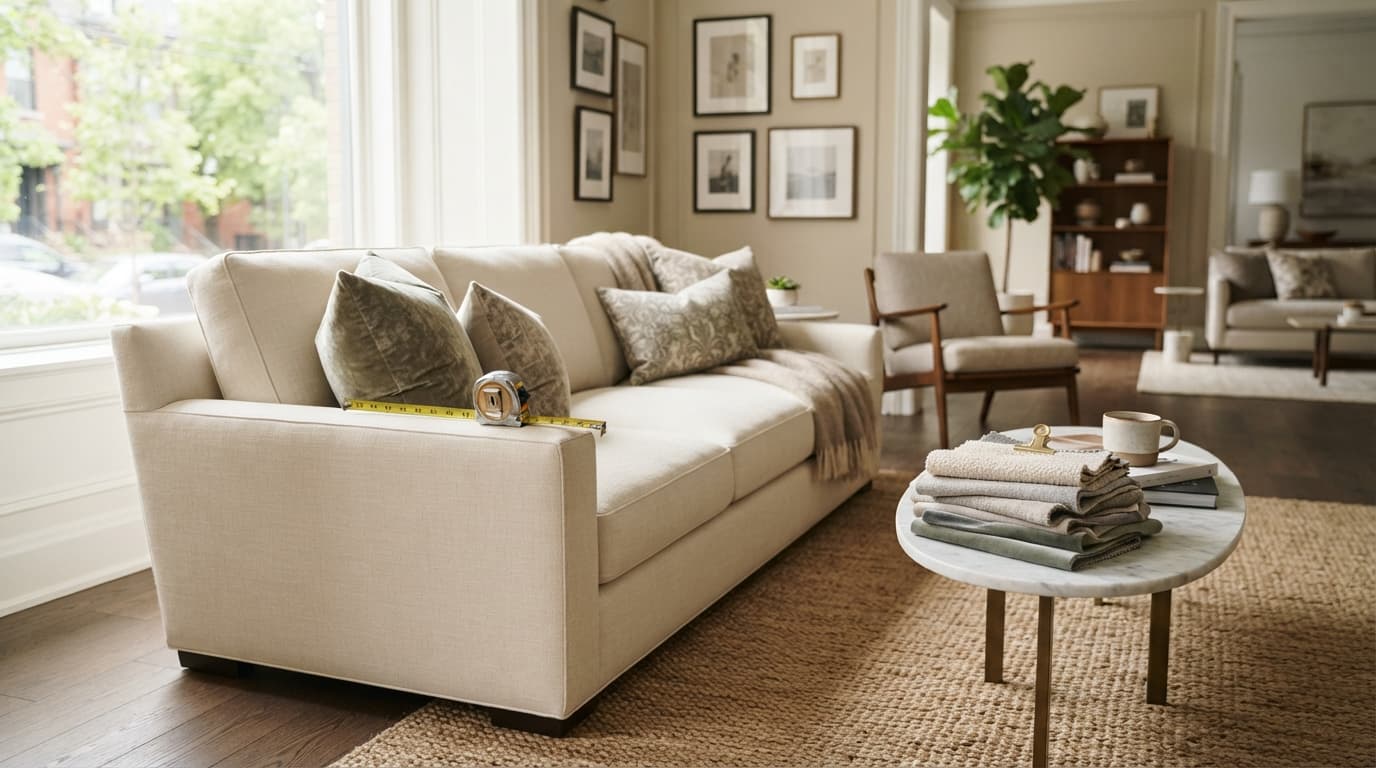
- Give full dimensions, including seat height and depth, and a short guide to measuring doorways and stairs.
- Show scale with a person or a familiar object in at least one photo.
- Offer fabric swatches so shoppers can see the color in their own light.
- Let shoppers see it in their own room. Roomellow takes a photo of the shopper's room and renders it furnished with your real products, using the product photos you already have. Every piece in the image is from your catalog and links to your own product page, so the sale stays with you. A shopper who has seen your sofa in their living room has one less reason to wait.
4. The Price Needs a Second Thought
Furniture is expensive, and many purchases are shared decisions. The shopper wants to check with a partner, compare a few options or wait for payday. That's a pause, not a no, but each pause is a chance to lose the sale.
What to do:
- Show financing on the product page. Buy now, pay later is common for furniture: in a 2025 Numerator survey of buy-now-pay-later users, 26% had used it for furniture and home decor in the past year. A monthly price next to the full price helps shoppers decide now.
- Make the cart easy to share and come back to. Saved carts and wish lists that work across devices help, because shoppers often browse on a phone and buy on a laptop.
5. They're Worried About Returning It
13% of shoppers in Baymard's research abandoned because the return policy wasn't satisfactory. For furniture, the worry is bigger: returning a sofa means arranging a pickup, and maybe paying for it. In a 2024 BigCommerce survey, more than 60% of shoppers said they're more likely to buy from a home furnishings brand that offers free return shipping.
What to do: Write the return policy in plain language and link it from the product page and the cart. If there's a restocking or pickup fee, state it clearly up front. A fee the shopper finds out about later costs you more trust than the fee is worth. And the fewer surprises your product pages leave, the fewer returns you'll need to offer; our guide to reducing furniture returns covers how.
6. Checkout Got in the Way
The rest of Baymard's list is about checkout itself. Among shoppers who abandoned:
- 19% didn't trust the site with their card details.
- 18% were asked to create an account.
- 17% found checkout too long or complicated.
- 9% didn't see enough payment methods.
What to do: Offer guest checkout, ask only for the fields you need, show the payment methods and security badges your shoppers recognize, and test the whole checkout on a phone.
Win Back the Ones Who Leave
Even with all of the above, some shoppers will leave. Abandoned-cart emails bring a share of them back. In Klaviyo's 2026 abandoned-cart benchmarks, the average abandoned-cart email earned $6.77 per recipient, and the top 10% of home and garden brands earned $28.76 per recipient. These are Klaviyo's own figures across its customers.
For furniture, the best reminder answers the question that made the shopper pause:
- Show the product with a clear photo, not just its name.
- Add the delivery window and cost for their zip code if you know it.
- Offer a free swatch for upholstery.
- Mention financing if the cart is large.
- Save the discount for later in the sequence, if you use one at all. Often the shopper needed an answer, not a deal.
What to Measure
Littledata's October 2026 benchmark for Shopify home and furniture stores gives a useful comparison point: a median add-to-cart rate of 5.0%, checkout completion of 51% and conversion of 1.0%. Track your own numbers for each step, and change one thing at a time, so you know which fix worked.
See Your Products in Shoppers' Rooms
Roomellow works with Shopify and other store platforms, and starts from the product photos you already have. Watch the short walkthrough, read how it works for retailers, or book a demo and we'll show it with your catalog.
Further Reading
See it with your own products
Shoppers upload a photo of their room, see your products in it, and buy from your store. We'll show you how it would work with your catalog.