How to Reduce Furniture Returns: 8 Fixes for Online Furniture Stores
Why furniture gets returned, what each return really costs, and 8 practical fixes online furniture stores can make to their product pages, delivery and policies.
By Afroja Akter / Founder, Roomellow
Every furniture return costs you twice: once in the refund, and again in the freight, the pickup, the inspection and the piece that may never sell as new again. And returns are common. The National Retail Federation and Happy Returns expected 19.3% of online sales to come back in 2025, across all categories.
The good news: most furniture returns start on the product page, long before the box ships. This guide covers why furniture comes back and eight fixes that stop many returns before they happen.
What a Furniture Return Really Costs
Retailers in a Pitney Bowes survey said an online return costs them about 21% of the order value on average. That figure covers all kinds of products. Furniture is usually worse:
- Freight runs both ways. A sofa that took a truck to deliver takes a truck to collect.
- Pickup takes people. Bulky items often need a two-person team and a scheduled time slot.
- Resale is uncertain. An unboxed, assembled or sat-on piece may have to be sold as open-box, discounted or written off.
- The relationship takes a hit. A shopper who had to arrange a bulky return has a reason to try another store next time.
That makes preventing returns one of the most direct ways to protect your margins.
Why Furniture Comes Back
Return reasons fall into three groups. In a 2025 YouGov survey of US shoppers who had returned items:
- 44% said the item didn't meet expectations on quality, color or size.
- 39% said it didn't fit.
- 34% said it arrived damaged or defective.
That survey covers every category, but furniture has its own version of each. "It's bigger than I thought." "The gray is more blue." "It's firmer than it looked." "It arrived with a cracked leg." Damage is a real furniture problem: in a Consumer Reports member survey of more than 38,000 furniture purchases, 10% of pieces bought online arrived damaged or missing parts, compared with 6% bought in store.
Most of these are information problems, not product problems. The shopper bought something different from what they pictured.
8 Fixes That Reduce Furniture Returns
1. Put the dimensions where nobody can miss them
Don't hide measurements in a specifications tab. Show a dimension image: the product with width, depth and height marked on it, which Baymard Institute recommends for furniture. Add the measurements shoppers actually need: seat height, seat depth, arm height, and the size of the box it ships in.
2. Help shoppers measure before they buy
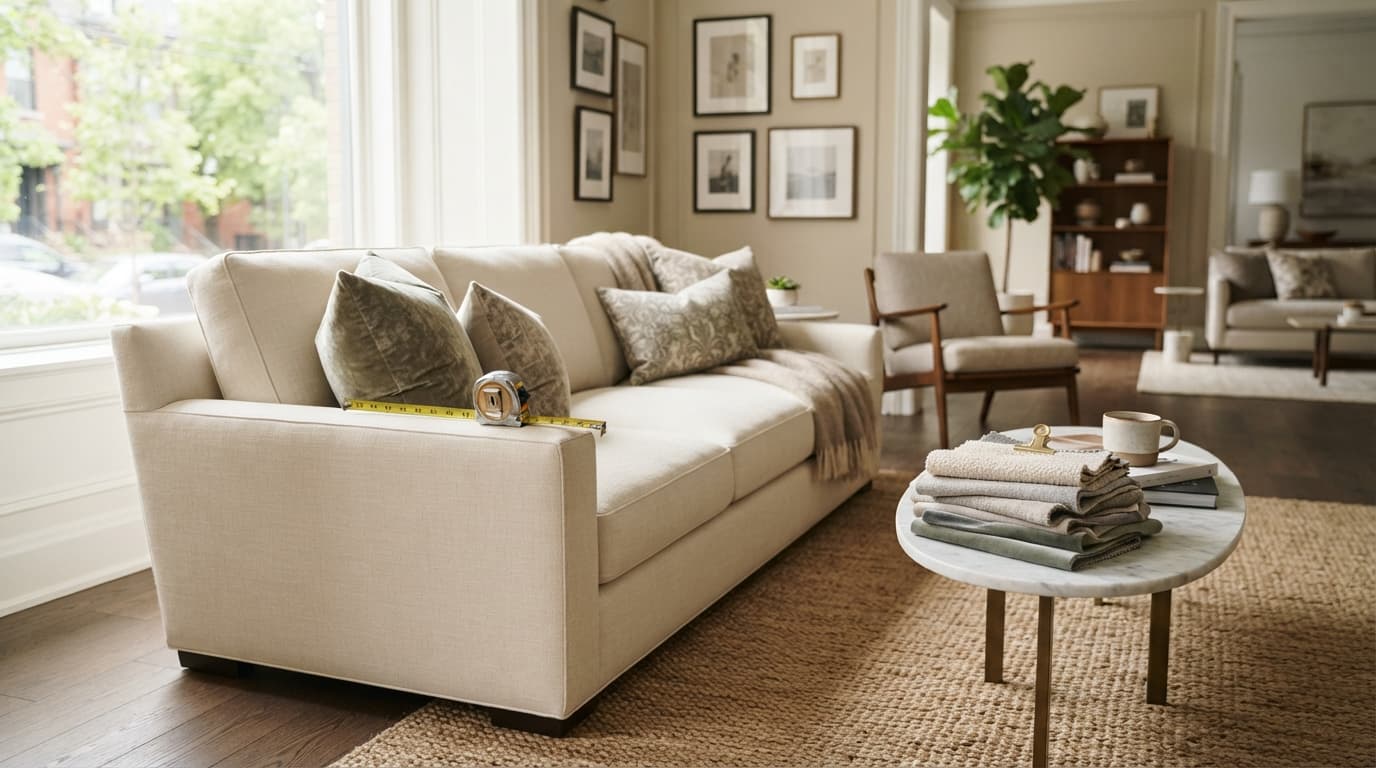
"Will it fit?" covers more than the room. It's also the front door, the stairwell, the hallway corner and the elevator. A short "measure before you buy" guide on every large item, with the doorway and diagonal depth spelled out, prevents the most expensive return of all: the sofa that never made it inside.
3. Show scale in photos
Baymard found that 42% of shoppers try to judge a product's size from its images. Give them something to judge by: a person sitting on the sofa, or a chair next to a table of known height. One honest scale photo answers what a list of numbers can't.
4. Get color and texture right
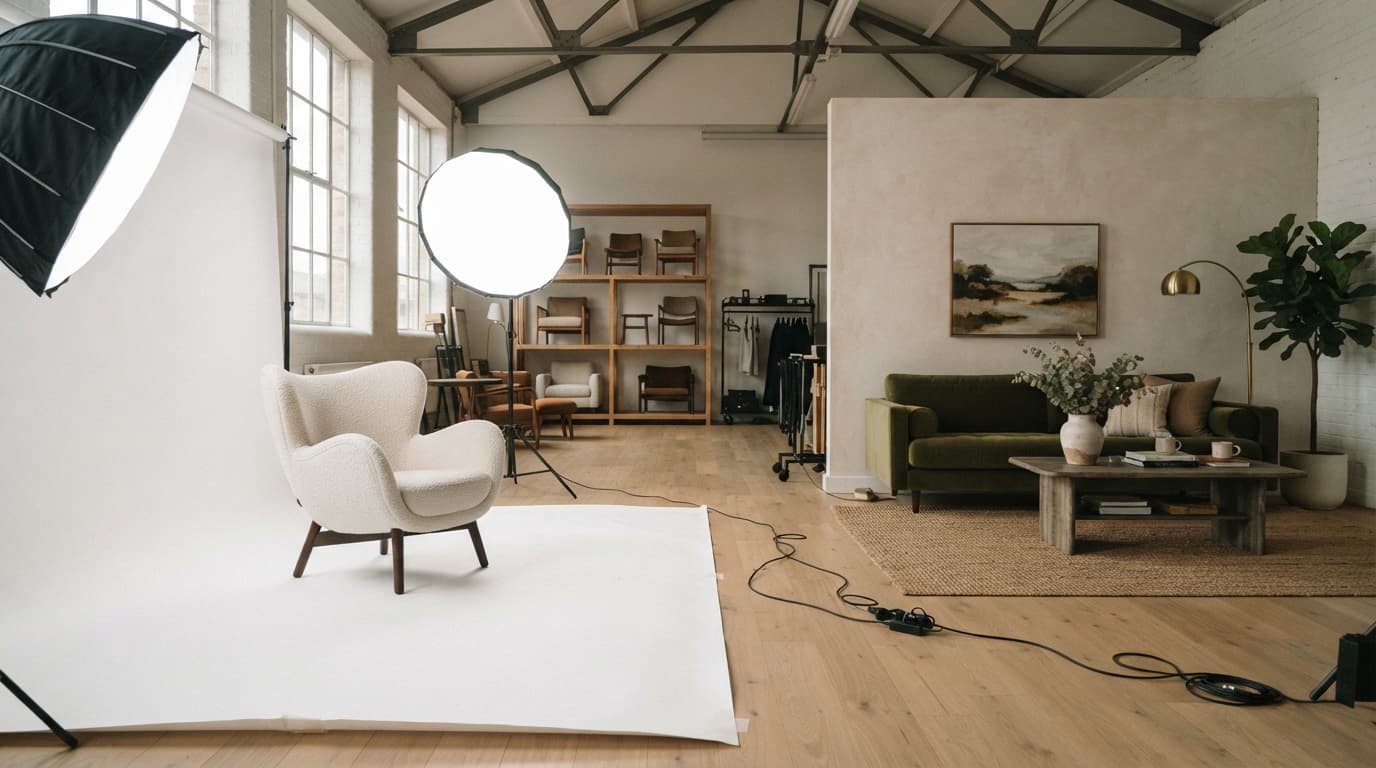
Shoot in neutral light, set white balance with a gray card, and compare every edited photo with the real piece before you publish. Then go a step further and offer fabric swatches, free or at a small cost that's refunded with the order. A shopper who has held the fabric in their own light knows what color is arriving. Our furniture product photography guide covers the photo side in detail.
5. Describe comfort honestly
Comfort is the hardest thing to judge online, so say it plainly: "a firm, upright seat" or "deep and soft, made for lounging." Give the cushion fill and how it changes over time ("feels firm at first, softens over a few weeks"). A shopper who wanted a sink-in sofa and got a firm one will send it back, however good it looks.
6. Show reviews with customer photos
Customer photos show your product in real rooms, real light and next to real furniture, which is exactly what a shopper is trying to picture. Ask for a photo in your review request, and show those photos near the top of the page.
7. Cut damage before and during delivery
Damage returns are partly a packaging problem and partly a process problem:
- Test your packaging on the pieces that come back damaged most often.
- Ask customers to inspect the piece before the delivery team leaves, and make reporting damage easy.
- Fix small things without a full return. A missing bolt or a scratched leg should mean shipping a part or sending a repair kit, not collecting the whole sofa.
8. Let shoppers see it in their own room
The return reasons above all come back to the same moment: the shopper couldn't picture the piece in their home. A product page can describe size, color and style, but it can't show their living room.
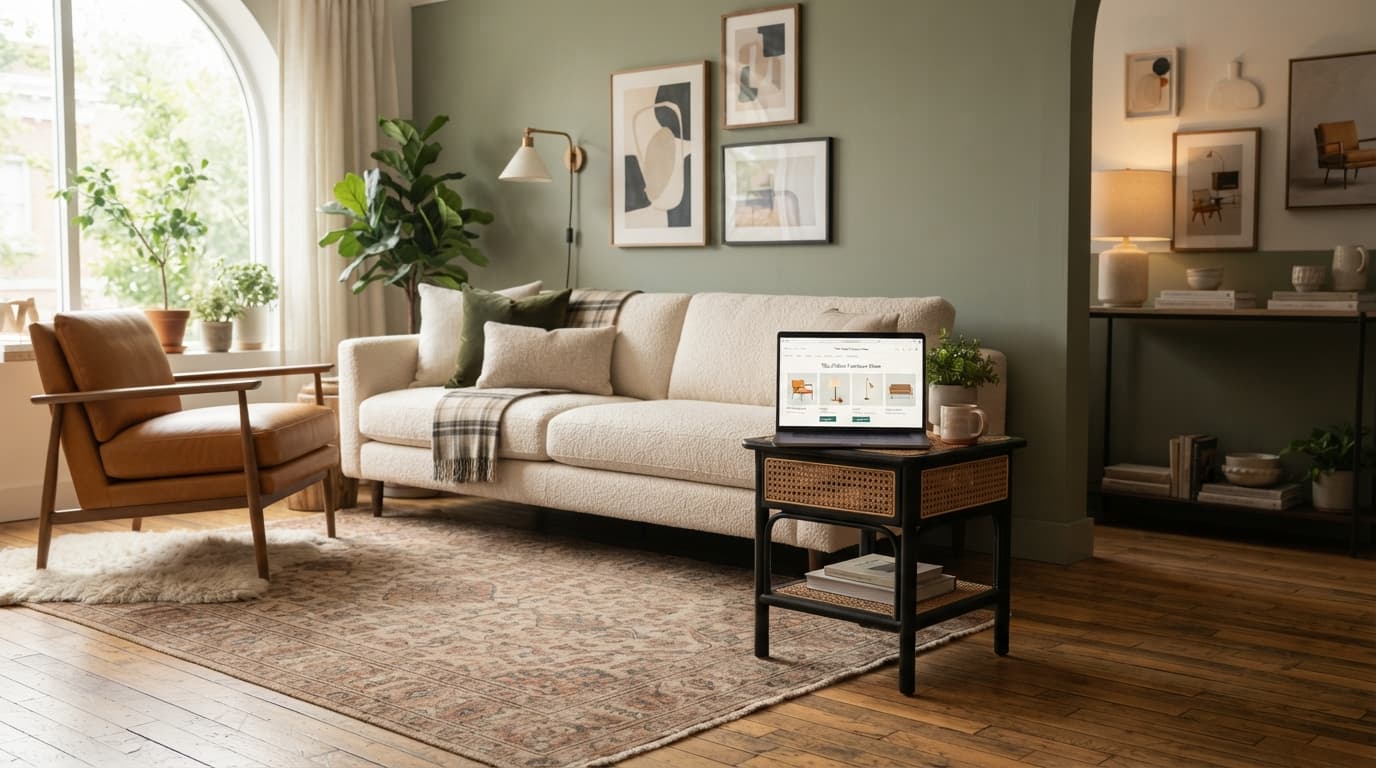
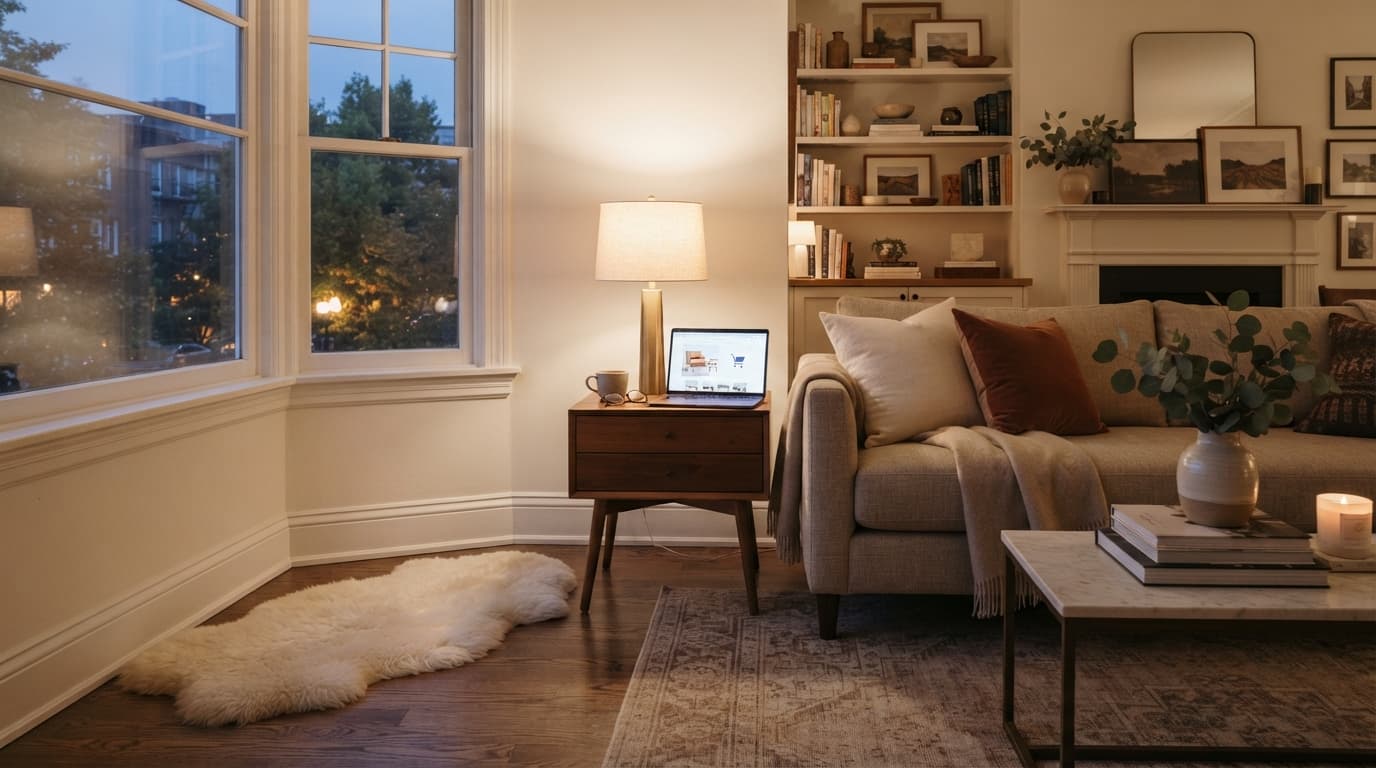
That's what Roomellow does. A shopper uploads a photo of their room, and Roomellow renders it furnished with your real products, using the product photos you already have. They see your sofa against their walls, next to your rug and side table. Every piece in the render is a real product from your catalog and links to your own product page, so the sale stays with you.
It's a photorealistic visualization, not a measuring tool, so it works alongside fixes 1 and 2, not instead of them. It answers the question the tape measure can't: "Will this look right in my room?"
Read Your Return Reasons
The fastest way to cut returns is to find out which products cause them and why:
- Use specific return reasons. "Too big," "too small," "color looks different," "less comfortable than expected," "arrived damaged," "missing parts" and "changed my mind" each point to a different fix. "Other" points to nothing.
- Rank products by return rate, not just by number of returns. A slow seller that comes back one time in five needs attention before a bestseller with a low rate.
- Fix the page first. If one sofa keeps coming back as "smaller than expected," add a scale photo and a dimension image before you blame the product.
A Word on Return Policies
Restocking fees and short return windows do reduce returns, but they also reduce sales. Shoppers read the return policy before they buy a big-ticket item, and a harsh one is a reason to buy somewhere else. Most stores do better spending the effort on fixes 1 to 8, so that fewer shoppers want to return anything at all, and keeping a policy that feels fair.
See It With Your Own Products
Roomellow works with Shopify and other store platforms, and starts from the product photos you already have. Watch the short walkthrough, read how it works for retailers, or book a demo and we'll show it with your catalog.
Further Reading
See it with your own products
Shoppers upload a photo of their room, see your products in it, and buy from your store. We'll show you how it would work with your catalog.