Multifunctional Furniture for Small Spaces: 7 Pieces That Earn Their Footprint
Seven multifunctional furniture pieces for small spaces, what to check before you buy each one, and how to fit them into a room without crowding it.
By Roomellow Team
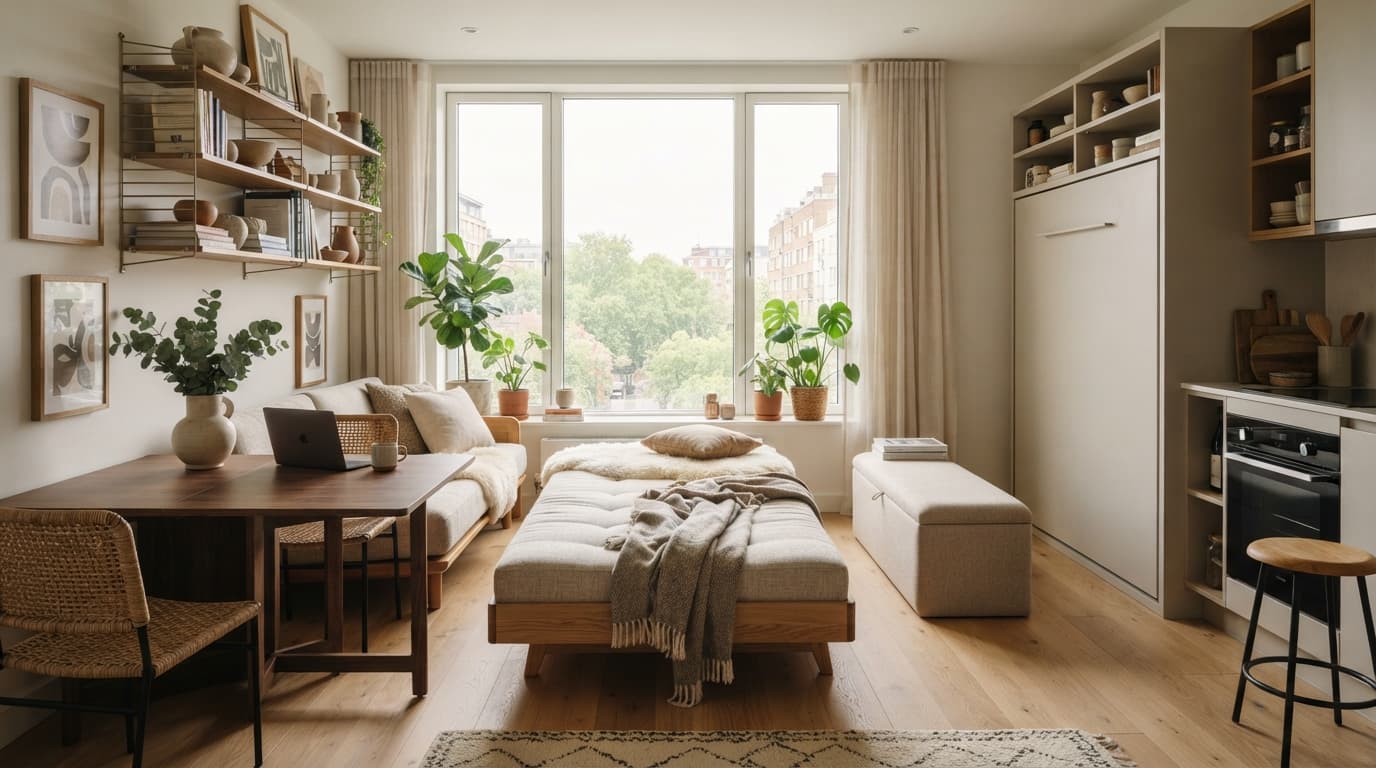
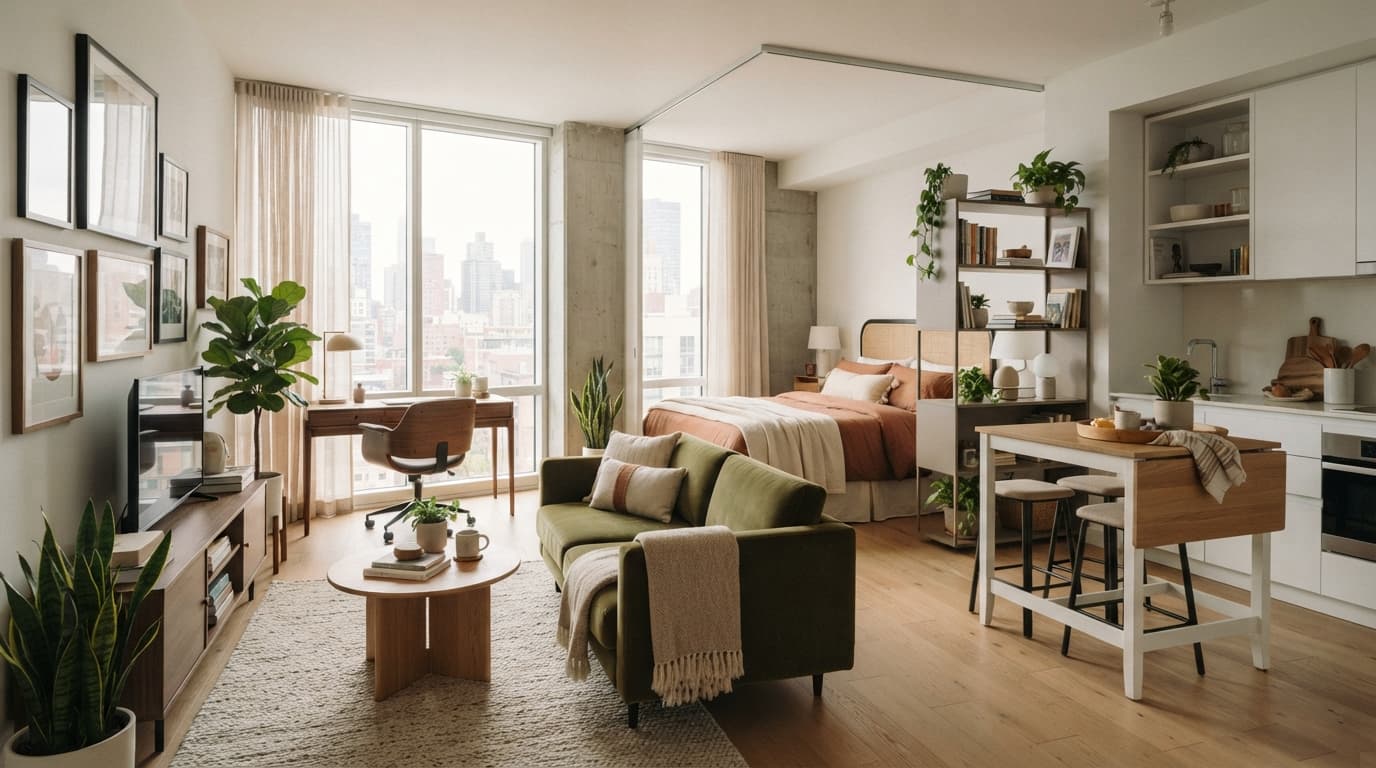
A new, smaller living space, whether it's a studio apartment, a cozy townhouse or a spare room you're trying to get more out of, is always a thrilling challenge. You want a beautiful, functional home that reflects your style, and you're up against the reality of limited square footage. This isn't just about fitting things in; it's about making every inch count. Our rule for small spaces is simple: if a piece doesn't serve at least two purposes, it probably doesn't belong. That's where multifunctional furniture for small spaces shines.
It's a common misconception that a small room means sacrificing style or comfort. Rooms no bigger than a generous walk-in closet can feel organized, chic and surprisingly spacious. The secret is intentionality, and a carefully chosen set of pieces that pull double (or even triple) duty. We're not just talking about a sofa and a bed; we're talking about a sofa that becomes a bed, a coffee table that stores blankets, or an ottoman that offers extra seating and a hidden compartment for board games.
Why Multifunctional Furniture Isn't a Compromise – It's an Upgrade
Before we get to specific pieces, let's talk about the mindset. Multifunctional furniture isn't about settling for less; it's about making your space more efficient and flexible:
- Space Optimization: Every piece earns its footprint. Instead of a dedicated guest bed and a sofa, you have one piece. That frees up floor space and makes the room feel more open.
- Reduced Clutter: Less furniture generally means less visual clutter. When pieces serve multiple roles, you need fewer individual items. A storage ottoman means you don't need a separate basket for throws.
- Enhanced Functionality: Your room adapts to different needs through the day or week. The living room becomes a guest bedroom, the dining table expands for dinner parties, the desk disappears when it's time to relax.
- Cost-Effectiveness: Some good multifunctional pieces cost more up front, but they often save money overall by replacing two separate purchases.
When a small room feels overwhelming, start with two questions: "What are the must-have functions for this space?" and "How can we cover them with the fewest pieces?" That's the core of successful small space design, and it's why pieces that do more than one job matter so much. If you're just getting started, our guide on how to design a small living room covers the foundations.
Essential Multifunctional Furniture Pieces to Consider
These are the workhorses we recommend again and again for rooms that need to do it all.
1. The Mighty Sofa Bed (or Daybed)
This is the quintessential multifunctional piece. A good sofa bed turns a living room into an occasional guest room, or gives a studio apartment distinct "day" and "night" zones.
- Our take: Not all sofa beds are created equal. Prioritize comfort in both forms: a cheap, flimsy sofa bed is usually uncomfortable as a sofa and as a bed. Look for a smooth, sturdy mechanism, and expect a comfortable, well-built one to cost noticeably more than a standard sofa. Don't rule out a daybed either: a twin daybed with a trundle offers two separate sleeping spaces, and styled with throw pillows it reads as a regular sofa.
- What to Look For:
- Mattress Quality: For frequent use, a memory foam mattress is far better than a thin spring mattress.
- Mechanism: Test it in the store if you can. It should open and close easily, without sticking or excessive force.
- Dimensions: Measure your room, then measure the sofa bed in both its sofa and bed configurations, and make sure there's clearance when it's open. A queen sofa bed can extend 85-90 inches from the wall.
- Trade-offs: Sofa beds are heavier and bulkier than a standard sofa. Fabric matters: a performance linen or a tightly woven polyester stands up better to daily sitting and occasional sleeping. Bouclé, while trendy, isn't the most practical for a piece with such heavy, varied use.
2. Storage Ottomans: Beyond Just a Footrest
An ottoman, at its most basic, is a footrest. A storage ottoman is extra seating, a makeshift coffee table (just add a tray) and hidden storage in one compact piece.
- Our take: In a small living room, this is close to non-negotiable. We like a large, rectangular storage ottoman that can stand in for the coffee table; around 36" x 24" suits many smaller sofas.
- Uses: Stow throw blankets, remote controls, magazines, kids' toys or seasonal decor.
- What to Look For:
- Lid Mechanism: Hinged lids are usually easier to open and close than fully removable ones.
- Durability: People will sit on it, so make sure the frame is sturdy.
- Material: Leather or faux leather wipes clean if it doubles as a coffee table. Fabric adds softness and texture.
- Budget: Smaller fabric ottomans start around $150; larger leather versions often run $500 or more.
3. Coffee Tables That Go the Extra Mile
In a small space, a coffee table has to do more than hold your drink.
- Lift-Top Coffee Tables: The top lifts to a comfortable height for eating or working on the sofa, and there's storage underneath.
- Our take: Ideal for studio apartments and living rooms without a dining area. Make sure the lift mechanism is smooth and sturdy.
- Nesting Coffee Tables: A larger table with one or two smaller tables that tuck underneath. Pull them out for guests, push them back for floor space.
- Our take: They look lighter than a single large coffee table and are far more versatile. Look for sturdy construction if you'll move them often.
- Storage Coffee Tables: Like a storage ottoman in traditional coffee table form, often with drawers or cubbies.
- What to Look For: Height relative to your sofa. A coffee table should sit about level with your sofa seat, or 1-2 inches lower.
4. Expandable Dining Tables
If you love to entertain but don't have a dining room (or even a large dining nook), an expandable dining table is a must.
- Our take: Don't settle for a small table that always feels cramped. A good extending table takes you from a cozy table for two to dinner for six or eight. Many have leaves that store inside the table.
- What to Look For:
- Ease of Extension: Can one person extend it easily?
- Leaf Storage: Do the leaves store inside the table, or will you need closet space for them?
- Size: Check both the collapsed and extended dimensions. A round table feels less intrusive when collapsed and still seats a good number when extended.
- Budget: Simpler models start around $400; solid wood tables often cost $1,500 or more.
For a deeper look at this one piece, see our guide to the extendable dining table for small spaces.
5. Bookshelves & Shelving Units with Built-In Desks
Vertical space is your best friend in a small room. A tall shelving unit stores books, decor and keepsakes, and when it also has a pull-out or fold-down desk, it becomes a compact home office.
- Our take: This works especially well in a bedroom or living room that sometimes has to be a workspace. It separates "work" from "relax" without a desk taking up permanent floor space. Modular systems tend to integrate most cleanly.
- What to Look For:
- Stability: Make sure it's secure, especially if you lean on the desk. Wall-mounting is often a good idea.
- Ergonomics: Is the desk height comfortable to work at?
- Aesthetics: Will it blend in when the desk is closed? A clean, minimal design usually works best.
- Alternative: A narrow console table (around 14-16 inches deep) with drawers can double as a desk when paired with a slim chair. It's a common strategy for furniture for a studio apartment.
6. Storage Benches & Window Seats
In an entryway, a dining area or at the foot of a bed, a storage bench adds both seating and discreet storage.
- Our take: In an entryway, it's the place to put on shoes and stash gloves or bags. In a dining nook, it creates banquette seating, which sits closer to the wall than individual chairs and saves space. At the foot of a bed, it's a spot to sit and a home for extra linens or off-season clothing.
- What to Look For:
- Lid Type: Hinged or removable.
- Comfort: For regular seating, choose upholstery or add cushions.
- Dimensions: Make sure it doesn't block a walkway. A depth of 16-18 inches is comfortable for sitting.
7. Nesting Tables & Stools
These are the flexible sidekicks of multifunctional furniture. A set of nesting tables gives you extra surfaces when you entertain, then tucks away. Small stools work as extra seating, side tables or plant stands.
- Our take: They let you scale your furniture to what you need right now. In a small living room, one large coffee table can overwhelm the space; a few nesting tables do a similar job with far more flexibility.
- What to Look For:
- Stackability: Do they really nest neatly?
- Weight: If you'll move them often, they shouldn't be too heavy.
- Material: Metal or solid wood holds up to frequent use.
How to Choose and Fit Multifunctional Furniture
Choosing the right pieces is about more than how they look. It's about practicality, durability and how they fit into your daily life.
1. Measure Everything, Twice (Then Measure Again)
This can't be overstated. Know your room's length, width and ceiling height. Then measure every piece you're considering in all its configurations (a sofa bed both closed and open). Check doorframes and hallways too, so delivery isn't a nightmare. A good trick: map each piece's footprint on the floor with painter's tape.
2. Prioritize Your Primary Needs
Identify the most important function of each piece. If you host overnight guests often, the comfort of the sofa bed comes first. If you work from home in your living room every day, the desk in your shelving unit has to be ergonomic. Don't compromise the primary use to gain a secondary one.
3. Quality Over Quantity, Always
This matters most for pieces with heavy, varied use. A cheap sofa bed that breaks after a few uses isn't a saving, and a wobbly lift-top coffee table is a daily frustration. You don't need to break the bank, but be realistic about what a $300 sofa bed can offer compared with a $1,500 one. For more on smart choices, see our guide to the best furniture for small apartments.
4. Design for Flow and Visual Cohesion
Even with fewer pieces, a small space can feel cluttered without a clear path through it, or when styles clash.
- Visual Weight: Choose pieces that don't look heavy. Open shelving, furniture with exposed legs and lighter colors help a room feel more spacious.
- Color Palette: Stick to a cohesive palette. Neutrals are your friend, with pops of color in accessories.
- Scale: A massive, deep sectional will swallow a small living room, even if it has storage.
5. Embrace Verticality
When floor space is limited, look up. Wall-mounted shelves, floating desks and tall, slender storage units draw the eye upward and make the room feel larger. This is also where Murphy beds (wall beds) come in, though they're a more permanent commitment.
6. Smart Styling
Functional pieces can still look beautiful. Use trays on storage ottomans and coffee tables to corral small items. Style bookshelves with a mix of books, plants and decorative objects. Throw pillows and blankets instantly dress up a sofa bed. The goal is a beautiful, functional home, not a storage unit.
Designing a small space with multifunctional furniture is an exercise in creativity and intentional living: a home that works hard for you, adapts to your needs and reflects your style without feeling cramped. Chosen well, these pieces become the unsung heroes of your home.
Multifunctional pieces are also the hardest to judge from a product page. A storage ottoman that looks compact on a white background can still block the path between your sofa and the door, and a daybed that seems slim online can fill a studio. With Roomellow, you upload a photo of your own room and see real pieces from furniture stores placed in it, with links to the exact items shown. Check the scale and the walkway in your actual room first, then decide. You can also browse ideas for your living room or bedroom.
Ready to redesign your room?
Upload a photo of your room and get a professional AI redesign with real furniture you can buy. Free to try — no credit card required.
Try Roomellow free