Extendable Dining Table for Small Spaces: Maximize Your Home
How to choose an extendable dining table for small spaces: butterfly, removable and drop-leaf mechanisms, the clearances to measure, and seating that tucks away.
By Roomellow Team
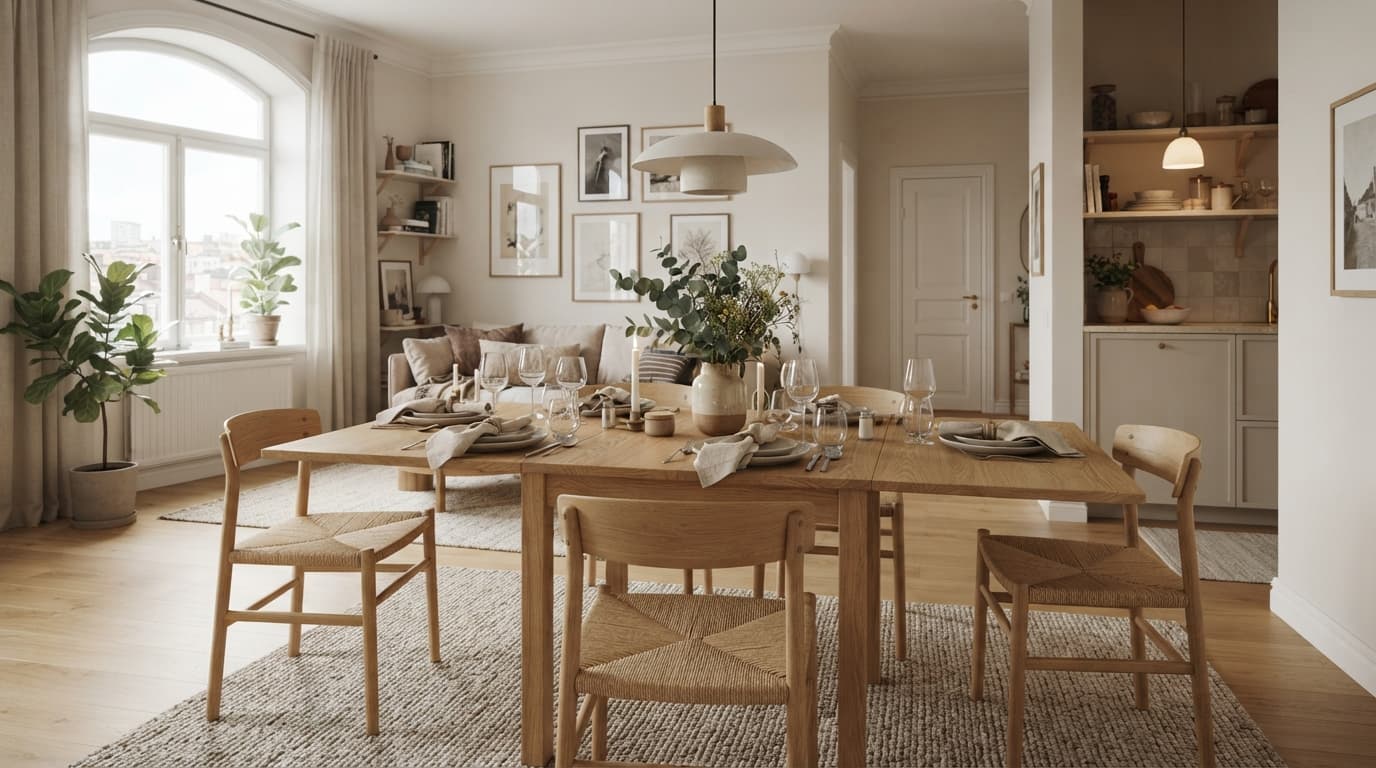
Living in a small space shouldn't mean sacrificing the joy of hosting or the functionality of a proper dining area. Too often the choice comes down to squeezing a too-large table into a cramped room or giving up on a dining table and eating on the sofa. Neither is ideal. The truth is, most homes, especially apartments and smaller houses, need their furniture to work harder, to be more adaptable. This is precisely why we think the extendable dining table is one of the smartest pieces of furniture for modern living. It’s the ultimate space-saving chameleon, giving you a compact footprint for daily meals and the generous surface area for those occasional dinner parties or family gatherings.
When you're dealing with a smaller footprint, every inch counts. A fixed-size table that’s perfect for six people will perpetually clutter a space where only two people eat daily. An extendable table gives you that necessary flexibility without compromising on style or quality. But choosing the right one isn’t just about finding a table that grows; it’s about understanding the mechanics, the materials, and how it truly integrates into your home.
How Extendable Dining Tables Work: The Three Mechanisms
Not all extendable tables are created equal. The way a table expands impacts its aesthetics, ease of use, and even its longevity.
-
Butterfly Leaf: This is our favorite for most smaller spaces. The leaf (or leaves) fold in half and tuck neatly underneath the tabletop when not in use. You simply pull the table ends apart, the leaf unfolds and pops up, and you push the ends back together.
- Pros: It’s incredibly neat and tidy. No need to store leaves in a closet or under a bed. The transformation is quick and typically a one-person job.
- Cons: The mechanism can sometimes be a bit more complex, potentially leading to issues if not well-made. The seam where the leaf meets the main table can be more noticeable if the craftsmanship isn't top-notch.
- Our take: If your budget allows, opt for a butterfly leaf. It’s the most elegant and convenient solution, especially when you're short on storage for extra leaves.
-
Removable Leaf/Leaves: These are separate pieces that insert into the middle or at the ends of the table. You store them elsewhere when not in use.
- Pros: Often the most sturdy option, as the main table frame is usually continuous. The table can often accommodate multiple leaves, allowing for various lengths.
- Cons: You must have a place to store those leaves. This is a deal-breaker for many in small apartments. They can also be heavy and cumbersome to move.
- Our take: Only consider this if you have dedicated, accessible storage (e.g., a specific cabinet or a sturdy under-bed box) and don't plan to extend the table very frequently. Otherwise, you’ll end up with leaves leaning against a wall, which defeats the purpose of decluttering.
-
Drop-Leaf: The side panels (leaves) hinge downward from the main tabletop.
- Pros: Fantastic for truly tiny spaces where you need a table that can virtually disappear against a wall or be a very slim console. Some even have a central drawer for extra functionality.
- Cons: The seams are always visible, and the overall look can be a bit more casual. The surface area might still be limited even when fully extended, usually maxing out at four diners comfortably.
- Our take: Perfect for studio apartments or as a secondary dining surface. It’s a workhorse for efficiency, but maybe not your show-stopping centerpiece.
Sizing Up Your Space (Not Just the Table)
Before you even think about table dimensions, you need to measure your actual room and understand how people move within it. This is where most people go wrong – they buy a table they love without considering the critical clearances.
Here's the non-negotiable math:
- Chair Pull-Out Space: You need at least 24-30 inches from the edge of the table to the nearest wall or furniture piece for someone to comfortably pull out their chair and sit down. If that space is less, every meal will feel like an obstacle course.
- Walkway Clearance: For a primary pathway, you need a minimum of 36 inches. If it's a secondary pathway (e.g., to a window), you can sometimes get away with 30 inches, but it will feel tighter. This means you need to account for this after chairs are pushed in.
- Tabletop Depth: For comfortable dining, each place setting needs about 18-20 inches of depth. A typical dining table is 36-40 inches deep, allowing people to face each other comfortably. Anything less than 30 inches deep feels cramped.
Our take: Draw out your room with masking tape on the floor. Seriously. Outline the table (in both its smallest and largest configurations), the chairs, and the clearance zones. This visual aid will save you from making an expensive mistake. Remember, the goal isn't just to fit the table; it's to create a dining experience that feels comfortable and accessible.
If your dining area is truly tiny, consider round or oval extendable tables. Their lack of sharp corners makes traffic flow easier, and they often feel less imposing in a small footprint. For ideas on optimizing overall space, check out our guide on how to make a small room look bigger.
Style & Material: More Than Just Good Looks
An extendable table for a small space needs to do more than just expand; it needs to look good and stand up to daily life. The material and style you choose will profoundly impact the feel of your room.
- Wood: Always a classic. Solid wood (oak, walnut, teak) is durable and develops a beautiful patina over time, but it’s often pricier. Veneer over engineered wood can be more affordable and stable against humidity changes.
- Pros: Warm, timeless, versatile.
- Cons: Can scratch or dent. Solid wood is heavy. Some woods (like oak) can feel visually heavy in a small space if not designed with a lighter touch.
- Our take: For small spaces, we lean towards lighter wood tones (like white oak or ash) or designs with slender legs to maintain an airy feel. A beautiful walnut piece can work if the base is minimalist.
- Metal & Glass: Modern and sleek. Metal bases (black, brushed brass) paired with a glass top.
- Pros: Glass tops are visually light, helping a small room feel more open. Metal bases can be very sturdy.
- Cons: Glass shows fingerprints and scratches easily. Metal can look cold if not balanced with warmer elements.
- Our take: A glass-top extendable table is a legitimate secret weapon for small dining areas. The transparency tricks the eye into seeing more floor space. Just be prepared for regular cleaning.
- Laminate/MDF with Finish: More budget-friendly. These often mimic wood or concrete.
- Pros: Affordable, easy to clean, often quite durable against scratches and spills.
- Cons: Can look cheap if the finish isn't good quality. Edges can chip over time.
- Our take: Don't dismiss these entirely, especially for high-traffic homes or if you're on a tight budget. Look for options with a matte finish and clean lines; they tend to hold up better visually.
When it comes to style, minimalist, Scandinavian, and mid-century modern designs tend to shine in smaller spaces. They often feature clean lines, lighter wood tones, and slender legs, which contribute to an uncluttered feel. Think about the overall vibe of your home; you want the table to complement it, not fight it. For inspiration, check out our modern dining room makeover where we prioritized clean lines and functional pieces.
Beyond the Table: Seating for the Small Dining Space
The table is just one piece of the puzzle. Your choice of seating can make or break the functionality and aesthetics of your small dining area.
- Armless Chairs: A non-negotiable for most small spaces. Armless chairs tuck completely under the table, saving precious inches of walkway clearance. They also look lighter and less bulky.
- Our take: Prioritize comfort over arms. Armless chairs mean fewer bumped elbows and chairs that actually push in.
- Benches: Can be excellent for maximizing seating, especially if one side of your table is against a wall. A bench can often seat more people than individual chairs in the same footprint.
- Pros: Space-saving when pushed in. Can provide a more casual, communal feel.
- Cons: Less comfortable for longer sittings for some. People have to slide in and out.
- Our take: Use a bench strategically, perhaps on one side with individual chairs on the others. It's fantastic if you have a built-in banquette or if your table is against a wall.
- Stackable Chairs: While not always the most stylish, having a couple of stackable chairs on hand for when you extend your table is a smart move. They can be stored in a closet or even hung on a wall when not needed. For more ways to add seats only when you need them, see our extra seating ideas for small living rooms.
- Our take: Don't make these your primary dining chairs unless absolutely necessary. Use them for overflow.
- Upholstered vs. Wood/Metal Chairs: Upholstered chairs can add comfort and warmth but tend to be bulkier. Wood or metal chairs with slim profiles generally work better in tight spaces.
- Our take: If you want upholstered chairs, choose ones with very lean silhouettes and perhaps an open back to keep them from feeling too heavy.
How to Choose an Extendable Dining Table for Small Spaces
When we compare extendable dining tables for small spaces, we look for four things:
- Seamless Integration: When the table is in its compact form, you want it to look like a solid, well-designed piece of furniture, not something that's missing parts. The butterfly leaf mechanism usually excels here.
- Sturdy Mechanism: This is where budget often plays a role. A cheap mechanism will wobble, stick, and eventually break. Look for smooth glides and secure locking mechanisms.
- Visual Lightness: This means slender legs, lighter wood tones, or glass tops. Avoid chunky pedestal bases or very thick aprons, as these will visually weigh down a small room.
- Appropriate Scale: The table, even when extended, should not completely overwhelm the room. It should still allow for those critical clearances we discussed.
You'll find extendable tables at almost every price point. Laminate and veneer designs cost the least, solid wood the most, and the quality of the extension mechanism is often where the price difference shows. Whatever you spend, open and close the table in person if you can, or read reviews that mention the mechanism specifically.
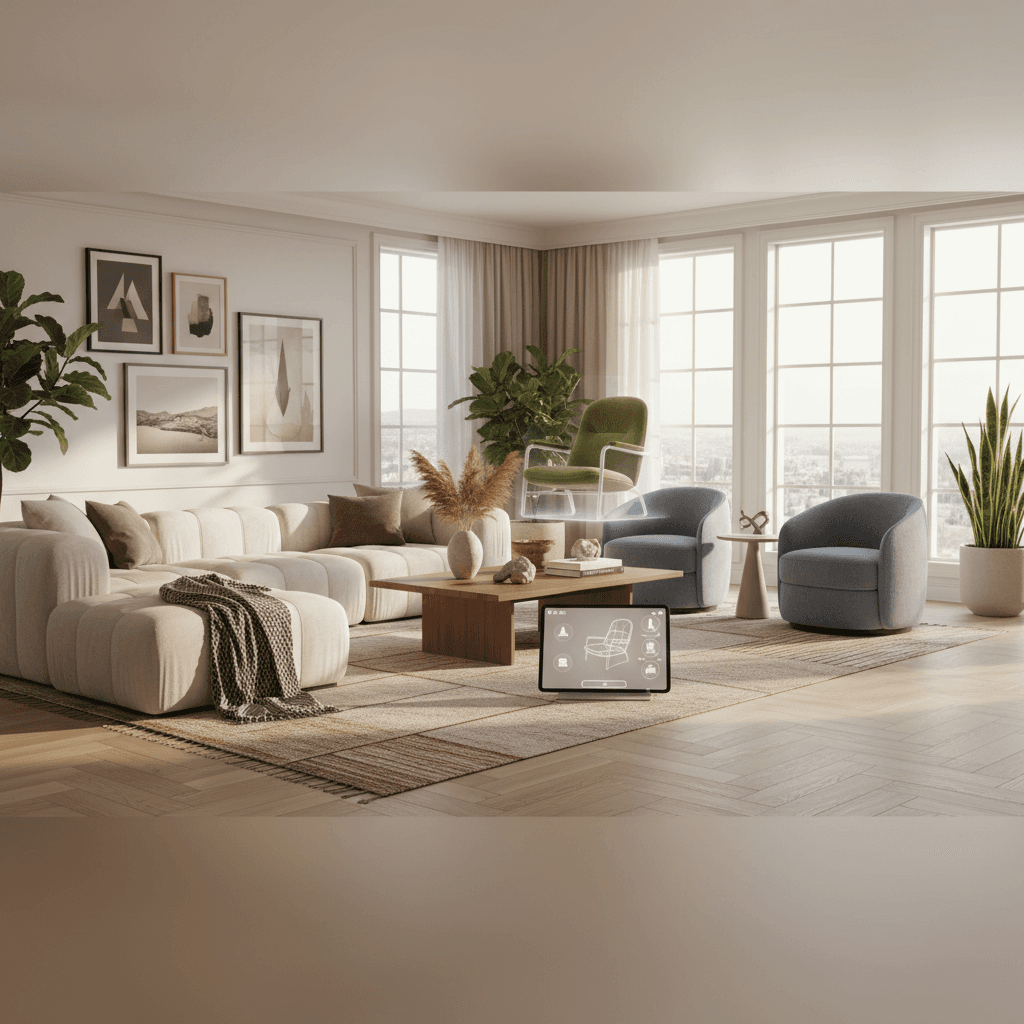
Measuring tells you whether a table fits; it doesn't tell you how it will look. That's the part Roomellow helps with: upload a photo of your dining area and see real tables from real furniture stores placed in it, each with a link to buy, so you can compare a round table against a rectangular one in your own room. Keep the masking tape for the measurements, and use the photo to judge the look. Here's how to design your room with real furniture.
Common Pitfalls to Avoid
- Buying for the "One-Off": Don't buy a table that's always extended to accommodate your once-a-year holiday feast. Buy for your everyday needs, and let the extension serve the occasional demand.
- Ignoring Chair Compatibility: Ensure your chosen chairs (and any future overflow chairs) can tuck under the table apron comfortably. Measure from the floor to the bottom of the table's apron to be sure.
- Forgetting About Lighting: If the table extends from the center (most butterfly and center-leaf designs), its middle stays put, so a pendant centered over it works at every size. If it extends from one end, hang the light for the size you use most, or choose a fixture you can reposition.
An extendable dining table for small spaces isn't a compromise; it's a strategic design choice. It allows your home to adapt to your life, whether you're enjoying a quiet meal alone or hosting a lively dinner party. With careful planning and attention to detail, you can create a dining area that is both beautiful and incredibly functional.
Ready to redesign your room?
Upload a photo of your room and get a professional AI redesign with real furniture you can buy. Free to try — no credit card required.
Try Roomellow free