Studio Apartment Ideas: Transform Your Small Space with Style
Discover clever studio apartment ideas to maximize space and style. Learn how to zone, choose smart furniture, and make your small home shine. Read more now!
By Roomellow Team
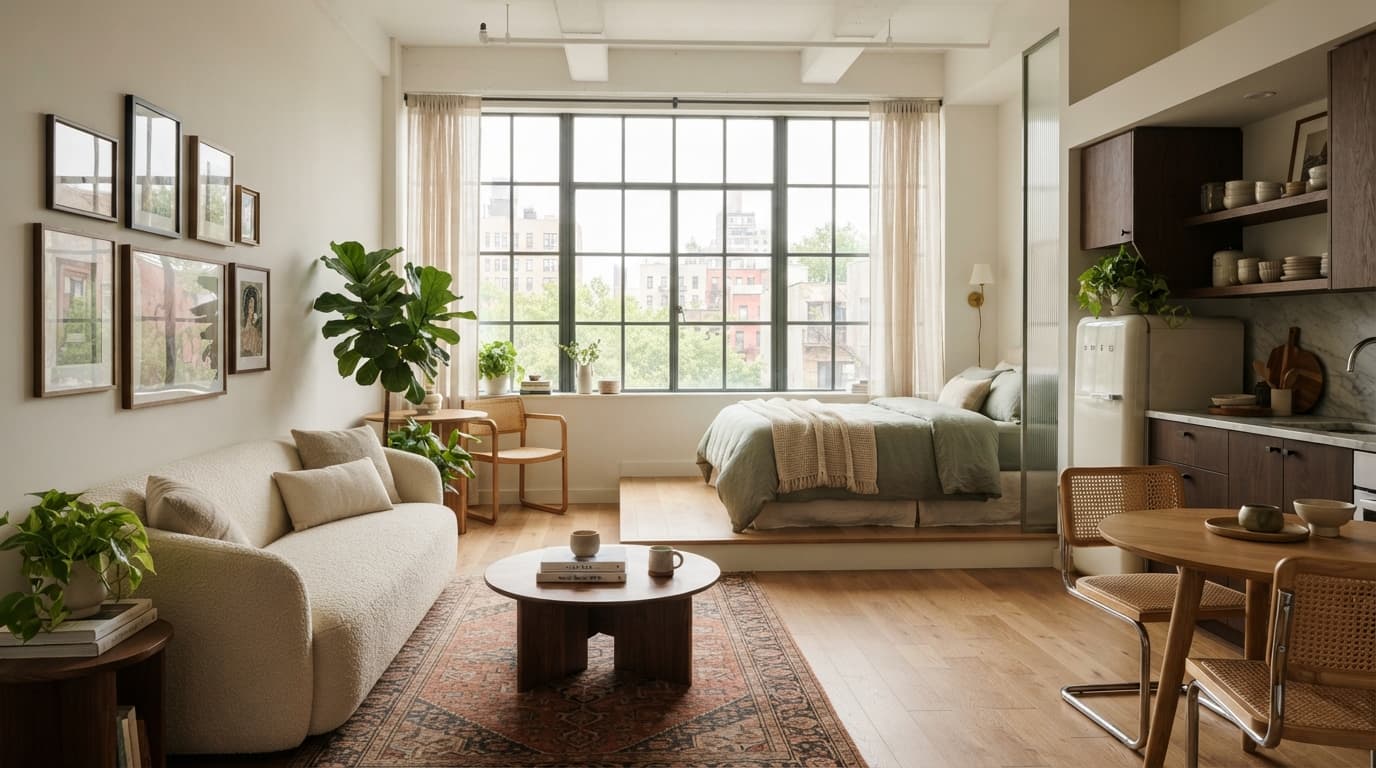
Living in a studio apartment often gets a bad rap. People picture cramped spaces, a bed right next to the kitchen, and a perpetual struggle for privacy. We see studios differently. We see potential. A studio isn't just a small box; it's an opportunity for incredibly intentional design, a chance to truly understand how you live and curate every single item in your home. It forces you to be smart, creative, and utterly ruthless with what you bring in. And honestly? Some of the most stylish, functional homes we’ve ever seen have been studios. The trick is to approach it with a clear strategy, focusing on defining zones, maximizing every inch, and making thoughtful furniture choices.
Master the Art of Zoning
The biggest challenge in a studio is that everything happens in one open space. Your first mission is to delineate distinct areas for sleeping, living, dining, and working. You don't have walls, so you need to create "visual walls."
Define with Rugs
This is non-negotiable. A rug acts as an anchor for a zone. For your living area, choose a rug large enough so that at least the front two feet of all primary furniture pieces (sofa, accent chairs) sit on it. A 9x12 rug under a sectional is often ideal, even in a smaller studio, as it clearly defines that entire space as the living room. For the sleeping area, a smaller rug (perhaps 5x7 or 6x9) partially under the bed can cozy up the space without overwhelming it. One rule we stand by: don't skimp on rug size. A postage stamp rug floating in the middle of the room will make the space feel smaller and disjointed.
Use Furniture to Create Boundaries
A sofa isn't just for sitting; it can be a divider. Position your sofa with its back to your sleeping area, facing your TV or window. This immediately creates a barrier without blocking light or flow. A console table behind the sofa can further enhance this separation and provide extra surface area. Similarly, a bookshelf (open or closed back) can be a fantastic room divider. Just remember, if you use a tall bookshelf, ensure it’s anchored to the wall for safety.
Vertical Dividers
For a softer separation, consider sheer curtains on a ceiling-mounted track or a slatted screen. These offer a degree of visual privacy for your sleeping zone without completely closing it off. These beat solid folding screens, which can feel bulky and block light.
Embrace Multi-Functional Furniture
In a studio, every piece of furniture needs to pull its weight. If it only does one thing, it needs to be really good at that one thing, or it might not earn its spot.
- Ottomans with Storage: This is a studio dweller's secret weapon. Use them as a coffee table, extra seating, or simply a place to prop your feet up, all while stashing blankets, books, or seasonal decor inside.
- Sofa Beds (with a caveat): While a sofa bed seems like a no-brainer, many are surprisingly uncomfortable for daily sleeping. If this is your primary bed, invest in a high-quality one with a proper mattress. Brands like Room & Board or American Leather offer options that genuinely feel like a real bed. A better alternative for many might be a good quality daybed that can function as a sofa during the day and a comfortable twin or full bed at night.
- Nesting Tables: These are fantastic for flexible surfaces. Pull them out when guests arrive, or keep them tucked away when you need more floor space.
- Wall-Mounted Desks or Fold-Down Tables: If you only need a desk occasionally, a unit that folds flush against the wall is an ingenious solution.
For more ideas on smart furniture choices, check out our guide on the best furniture for small apartments.
Go Vertical, Always
When square footage is limited, the only direction to go is up.
- Tall Bookshelves: Don't just think about books. These are perfect for displaying decor, storing dishes, or even housing a small entertainment setup.
- Wall Shelving: Floating shelves above a desk or even your bed can hold essentials and decorative items without taking up precious floor space.
- Wall-Mounted Storage: Think about kitchen organization, coat racks by the door, or even wall-mounted planters.
- Floor-to-Ceiling Curtains: While not storage, hanging curtains high and wide makes your windows appear larger and your ceilings taller, tricking the eye into perceiving more space. It's one of the most reliable tricks for making a small room feel grander.
Storage is Your Best Friend
Clutter is the enemy of a small space. Every item needs a home, and that home needs to be smart.
- Under-Bed Storage: Lift your bed on risers or opt for a bed frame with built-in drawers. This is prime real estate for seasonal clothes, extra linens, or bulkier items.
- Closed Storage: Whenever possible, choose furniture with doors or drawers. An open shelf might look pretty with a few curated items, but it can quickly look messy if it’s overflowing. A media console with closed cabinets will always look tidier than one with open cubbies.
- Hidden Storage: Look for opportunities in unexpected places, like benches with lift-up lids or storage tucked away in a coffee table.
- Drawer Organizers: Inside drawers, use dividers to keep things from becoming a jumbled mess. This is especially true for kitchen utensils and bathroom toiletries.
The Power of Light and Color
These elements can dramatically alter the perception of space.
Layered Lighting
You need more than just one overhead light.
- Ambient Light: A ceiling fixture or a floor lamp for general illumination.
- Task Light: A desk lamp for working, a reading lamp by your sofa or bed.
- Accent Light: Small table lamps or wall sconces to highlight artwork or create a cozy mood. Strategically placed lamps can also help define zones. A tall, elegant floor lamp in your living area draws the eye up, enhancing the perception of height.
Strategic Color Palettes
While light, neutral colors are often recommended for small spaces, don't feel constrained to white walls.
- Monochromatic Schemes: Using varying shades and textures of the same color can create a cohesive and sophisticated look that makes a space feel larger because there are fewer visual breaks.
- Punchy Accents: If you love color, use it strategically. A bold throw pillow, a piece of art, or a colorful accent chair can add personality without overwhelming the space. We're big proponents of painting one wall a deeper, richer color (if your landlord allows it!) to create an accent wall that can define a zone, like the wall behind your bed. This can add depth without shrinking the room.
- Consistent Finishes: Try to keep your larger furniture pieces (sofa, bed frame) in a consistent tone or material family to maintain visual continuity.
Want to explore more ways to manipulate perception? Read our tips on how to make a small room look bigger.
Navigating the Zones: Specific Ideas
Let's break down some specific considerations for each functional area in your studio.
The Sleeping Zone
This is often the most personal and private area, even if it's open-concept.
- The Right Bed: A queen bed is usually the maximum for most studios without overwhelming the space. If you're really tight on space, a full or even a twin XL (especially if you're single) might be a smarter choice. Consider a platform bed with built-in storage drawers beneath; it's a huge space saver.
- Headboard Choices: A slim, upholstered headboard adds comfort and style without adding bulk. Skip anything too ornate or deep. A wall-mounted headboard is also an excellent option.
- Nightstands: Floating shelves or small, wall-mounted tables serve as nightstands without occupying floor space. If you need storage, a slim drawer chest (12-18 inches wide) can double as a nightstand and dresser.
- Privacy Hacks: As mentioned, a sheer curtain on a ceiling track or an open-back bookcase can provide a visual barrier. If you opt for a bookcase, make sure it’s sturdy and anchors securely to the wall. This trick also works great if you're trying to achieve a more distinct bedroom look within your studio.
The Living Zone
This is where you relax, entertain, and often spend the most waking hours.
- Sofa Selection: A compact love seat (around 60-70 inches wide) or a small apartment-sized sectional is often the best choice. Make sure the armrests aren't too bulky. Lean towards clean lines and elevated legs to keep the space feeling open. Don't be afraid to try out a few options in person, or at least measure carefully.
- Accent Chairs: Instead of a second sofa, opt for one or two smaller, lightweight accent chairs that can be easily moved. Swivel chairs are excellent for studios as they allow you to face different zones. A slim profile barrel chair or a cantilever chair works especially well for small spaces.
- Coffee Tables: Look for pieces with built-in storage, or nesting tables as mentioned before. A round or oval coffee table can also be beneficial in a tight space as there are no sharp corners to bump into.
- Media Console: Choose a console that is long enough to ground your TV but shallow enough not to protrude too much into your living area. Closed storage is paramount here to hide electronics and wires.
For a deeper dive into choosing the perfect centerpiece for your relaxation zone, read our guide on how to choose the right sofa for your living room.
The Dining/Kitchenette Zone
Even if you primarily eat on your sofa, having a dedicated spot for meals or morning coffee is essential.
- Small Dining Tables: A 24-inch to 30-inch round table is perfect for one or two people. A drop-leaf table that can be extended for guests is another smart choice.
- Bar Seating: If your studio has a kitchen island or peninsula, counter-height stools can provide a dining solution that tucks away neatly.
- Foldable Chairs: Keep a couple of foldable dining chairs stored away and pull them out only when needed. Look for sleek, modern designs that don't scream "folding chair."
- Bar Carts: These aren't just for drinks; a stylish bar cart can provide extra counter space, storage for dishes, or even function as a small coffee station.
The Work Zone
In our increasingly remote world, a dedicated workspace is crucial.
- Wall-Mounted Desks: These save significant floor space. Look for options with built-in shelving.
- Slim Desks: A narrow console table (16-18 inches deep) can double as a desk when paired with a comfortable chair.
- Closet Office: If you have an extra closet, consider turning it into a "cloffice", a mini office that can be closed off when not in use. This provides incredible visual decluttering.
- Ergonomic Chair: Don't sacrifice comfort for size. A good ergonomic chair is an investment in your well-being, even if it's a compact model.
Cohesion and Personalization
While zoning is important, you still want your studio to feel like one harmonious home.
- Consistent Palette: Stick to a core color palette throughout the entire space. You can introduce variations in saturation or add pops of accent colors, but maintaining a sense of consistency will tie everything together.
- Material Mix: Don't be afraid to mix materials (wood, metal, fabric, glass) but ensure they complement each other. For example, a warm walnut dresser pairs beautifully with a black metal bed frame and soft linen bedding.
- Art & Decor: Use art to reflect your personality and define zones. A large piece over your sofa grounds the living area, while a gallery wall near your dining table can make that space feel special. But be selective; less is often more in a studio.
- Plants: Greenery brings life and freshness to any space. Choose plants that fit your lighting conditions and won't outgrow your space too quickly.
An Honest Take on Trade-offs
Living in a studio means making choices, and not every choice will be perfect.
- Pet Considerations: If you have pets, acknowledge that light-colored bouclé might look incredible, but it's a nightmare for shedding and muddy paws. Consider durable, performance fabrics or leather.
- Entertaining: While you can host, large dinner parties might be a stretch. Focus on more intimate gatherings or leverage communal spaces if your building has them.
- Privacy: Complete privacy is hard to achieve without solid walls. Learn to embrace the open concept and use those clever dividers when you need them.
- Storage vs. Aesthetic: Sometimes, a beautiful open shelf just isn't practical when you desperately need closed storage. Be honest with yourself about your actual storage needs. Prioritize function first, then find beautiful pieces that meet those functional requirements.
Designing a studio apartment isn't about limitations; it's about smart design. It's about making every choice count, from the smallest decorative item to the largest piece of furniture. It’s a chance to truly reflect your style in a highly efficient and beautiful way.
If you’re struggling to visualize how these ideas might come to life in your own space, try uploading a photo of your studio to Roomellow. We can help you experiment with furniture layouts, color schemes, and even specific products from various furniture stores to find the perfect setup for your compact home. It’s an invaluable tool for seeing your ideas before you commit.
Ready to redesign your room?
Upload a photo of your room and get a professional AI redesign with real furniture you can buy. Free to try — no credit card required.
Try Roomellow free