Sectional Sofa for Small Living Room: Smart Design Solutions
Think a sectional sofa for a small living room is impossible? Think again! Discover expert tips to maximize space, seating, and style. Read on to transform your home.
By Roomellow Team
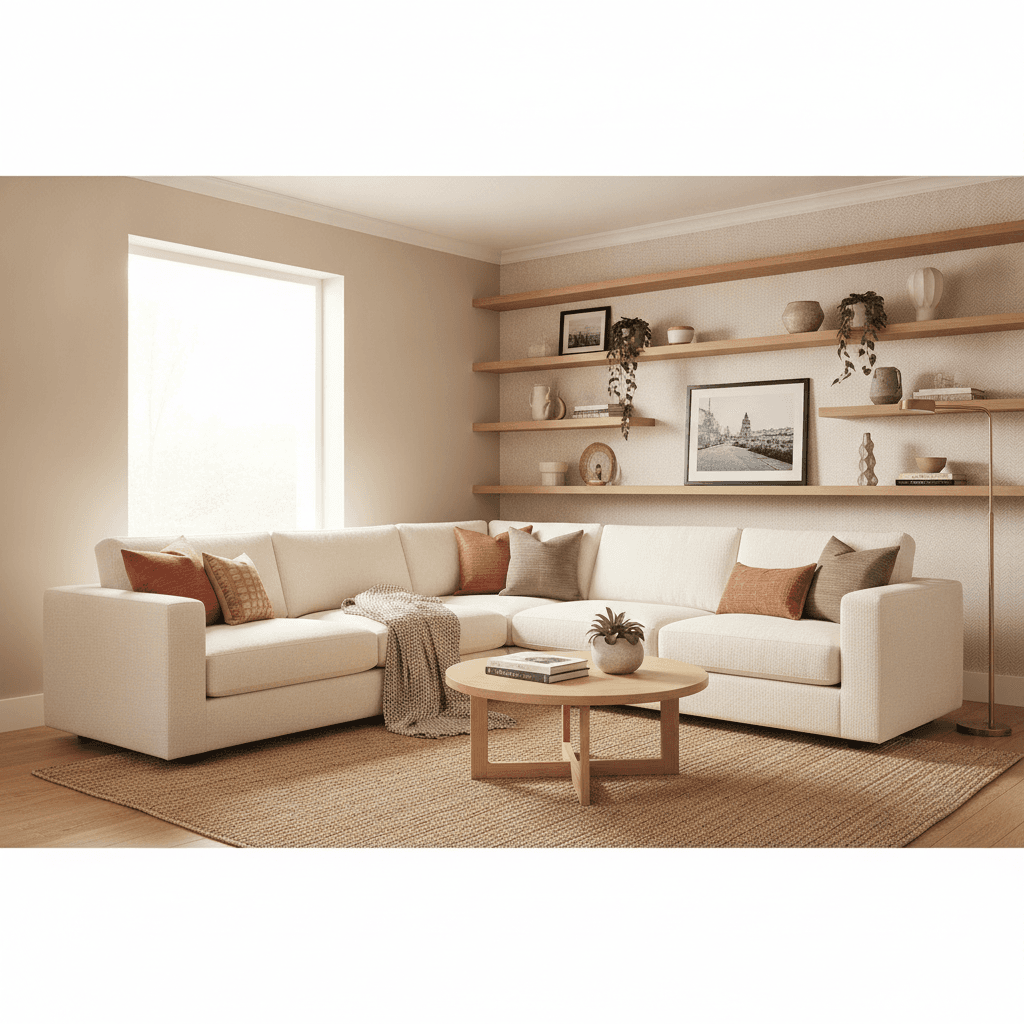
If you've got a small living room, the idea of squeezing in a sectional sofa probably sounds like a design sin. I get it. We've all seen those sprawling, U-shaped beasts that eat up an entire great room. But here's the honest truth: a sectional for a small living room isn't just possible, it can actually be the smartest design decision you make.
As someone who spends way too much time obsessing over furniture dimensions and spatial flow, I'm here to tell you that the right sectional can transform a cramped, awkward layout into a cohesive, comfortable, and surprisingly spacious-feeling area. It's all about making informed choices and being ruthless with your measuring tape.
Why a Sectional in a Small Space? The Unexpected Benefits
You might be thinking, "Why bother? Why not just a regular sofa and a couple of chairs?" And for some very specific layouts, that might be the answer. But a well-chosen sectional offers some undeniable advantages in tighter quarters:
- Maximizes Seating: This is the big one. A sectional typically offers more continuous seating than a sofa and an accent chair combination would in the same footprint. No wasted space between pieces, just uninterrupted lounging. Think about how many people you can truly get on a 7-foot sofa versus an 8-foot sectional with a chaise. It's a significant difference.
- Defines the Space: In open-concept homes or small rooms without clear architectural boundaries, a sectional acts as a natural room divider. Its L-shape creates a clear zone for relaxation, making the room feel more organized and purposeful.
- Streamlines Furniture Count: Instead of two or three individual pieces (sofa, chair, ottoman), you have one cohesive unit. This can actually make a small room feel less cluttered because there are fewer "legs" and distinct objects visually breaking up the floor plan. Fewer visual breaks equals more perceived space.
- Optimizes Lounging: Let's be real, sometimes you just want to stretch out. A chaise lounge on a sectional offers prime real estate for kicking up your feet without needing a separate ottoman, which can then be an obstacle or take up additional floor space when not in use.
The #1 Rule: Measure, Measure, Measure (and Measure Again)
Before you even think about browsing furniture websites, you need to become intimately familiar with your living room's dimensions. I mean intimately. This isn't just about the length and width of the room itself, but also:
- Doorways: Will the sectional (or its component pieces, if modular) fit through your front door? Up your stairs? Through narrow hallways? Measure the diagonal width of the largest piece. This is where dreams often die, so be realistic.
- Wall Space: How much solid wall space do you have for the "back" of the sectional?
- Walkways: How much space do you need to comfortably walk around the sectional? I recommend a minimum of 30 inches for primary walkways and 18-24 inches for secondary paths.
- Windows and Vents: Make sure the back height of the sectional won't obstruct windows or block heating/cooling vents.
My Go-To Trick: Use painter's tape to mark out the exact dimensions of the sectional you're considering on your living room floor. Live with it for a day or two. Walk around it. Pretend to sit on it. This visualization technique is invaluable and will save you from costly mistakes. Trust me, I've seen too many people fall in love with a sofa online only to have it dwarf their room upon arrival. If you want a more advanced visualization, you can always upload your room to Roomellow to see how different sectionals look in your actual space before you buy.
Choosing the Right Configuration: It's Not One-Size-Fits-All
Not all sectionals are created equal, especially when space is a premium. The configuration you choose is arguably the most important decision after taking your measurements.
The L-Shaped Sectional with a Chaise
This is your best bet for a small living room. Instead of a full L-shape with a backrest on both sides, opt for one where one side is a chaise lounge.
- Why it works: The chaise often lacks a full backrest on one side, making it feel lighter and less bulky than a traditional L. It's essentially a sofa with a built-in ottoman. This open end prevents the space from feeling too "blocked off."
- Key dimensions to look for: Look for options where the overall length (the long side) is typically 80-95 inches, and the chaise depth extends out around 60-68 inches. Anything longer than 95 inches on the main sofa side will likely feel overwhelming unless your room is particularly long and narrow.
- Reversible Chaise: A godsend! Many brands offer sectionals where the chaise can be configured on either the left or the right side. This provides incredible flexibility for future room rearrangements or if you move. Brands like Burrow and Article often have excellent reversible chaise options.
Modular Sectionals
These are the ultimate chameleons of the furniture world. Modular pieces allow you to connect individual seats, corner pieces, and armless chairs to create a custom configuration.
- Why it works: You can design it to fit your exact space, adding or subtracting pieces as needed. If you move to a bigger place later, you can expand it. If you have an awkward corner, you can sometimes make a modular system work.
- The downside: More seams, which some people don't like aesthetically. Also, individual pieces can sometimes shift if they're not securely connected.
- Best for: Super tricky layouts or those who anticipate needing maximum flexibility. Albany Park's Kova is a great example of a highly configurable, cozy modular option.
Armless Sectionals (or those with very slim arms)
Armrests, while comfortable, take up valuable real estate. In a small living room, every inch counts.
- Why it works: An armless sectional or one with very thin arms (think 3-5 inches wide) can save 6-12 inches of width compared to a bulkier-armed alternative. This often means the difference between "fits" and "doesn't fit."
- Consider: If you really need an armrest for comfort, look for a single-arm sectional with a chaise, or choose one with arms that are integrated into the design rather than bulky add-ons.
Scale and Proportions: Avoiding the Elephant in the Room
Beyond just the footprint, the visual weight of your sectional dramatically impacts how it feels in a small space.
- Depth is Key: A super deep sectional (40+ inches) can feel like it's eating your entire room. Aim for a depth in the range of 34-38 inches. This is still comfortable for most people but doesn't project as far into the room.
- Low Profile: A lower back height makes a room feel more open and less imposing. If the back of your sectional is higher than your window sills or blocks a clear sightline, it will shrink the room. Look for backs around 30-34 inches high.
- Exposed Legs: Sectionals with exposed, tapered, or slim metal legs create visual lightness. When you can see the floor underneath, the piece feels less heavy and creates the illusion of more open space. Avoid chunky, floor-grazing sectionals unless they are extremely compact.
- Back Cushions: Integrated, tight-back cushions or those with fewer, larger cushions often look tidier and less cluttered than multiple small, loose cushions.
Material Matters: Practicality and Aesthetics
The fabric you choose for your sectional impacts not just its look, but also its durability and how "heavy" it feels in a small room.
- Performance Fabrics: My number one recommendation for families, pet owners, or anyone who actually lives on their sofa. Polyester blends, treated fabrics, and even some acrylics are designed to resist stains, fading, and wear. They come in a huge range of textures and colors now, so you don't have to sacrifice style for practicality. Brands like Crate & Barrel and West Elm have excellent performance fabric selections.
- Linen Blends: Offer an airy, relaxed, and sophisticated look. They drape beautifully and generally come in light, neutral tones that help a small room feel brighter and more open. However, they can be prone to wrinkling and may not be as durable as performance fabrics if you have active pets or kids.
- Velvet: Adds a touch of luxury and softness. In a small space, a rich, deep jewel-toned velvet can be a bold statement, but lighter velvets (like a soft grey or blush) can also work. Velvet needs careful consideration for maintenance, especially with pets, as it can show marks easily.
- Bouclé: Currently trending and looks incredibly inviting. It adds texture and warmth. But here's the honest trade-off: bouclé is a nightmare if you have pets with claws (snags!) or small children (stains can be tough to get out of its textured loops). It’s beautiful, but be realistic about your lifestyle.
- Leather: Durable, easy to clean, and gains character over time. However, leather can feel visually heavier than fabric, especially in darker tones. If you love leather, opt for a lighter color (cognac, light grey) and a slim-profile sectional to keep the room from feeling too dense.
Smart Features for Small Spaces
A few clever design elements can make a huge difference in maximizing functionality.
- Storage Sectionals: Many chaises or ottomans within a sectional now lift to reveal storage space. This is invaluable for stashing blankets, remote controls, magazines, or even extra throw pillows. Look for gas-lift mechanisms for easy opening.
- Sleeper Sectionals: If you occasionally host overnight guests but don't have a dedicated guest room, a sleeper sectional is a fantastic dual-purpose solution. Just ensure the pull-out mechanism doesn't require too much clearance or awkward maneuvering in your tight space.
- Removable/Washable Covers: For families with kids or pets, having removable and washable covers (like those on IKEA's Söderhamn) is a game-changer for keeping your sectional looking fresh without expensive professional cleaning.
The Supporting Cast: What Else Goes with Your Small Sectional?
A sectional is just one piece of the puzzle. The surrounding furniture and decor are just as important in making a small living room function and feel good.
- Rugs: A 9x12 rug under a sectional is non-negotiable for grounding the space. It helps define the living area and prevents the sectional from looking like it's floating. Make sure all front legs of the sectional are on the rug. Choosing a lighter-colored rug can also help expand the perceived size of the room.
- Coffee Tables: Ditch the giant, clunky square coffee table. Instead, opt for:
- Round coffee tables: Softer lines, easier to navigate around in a tight space.
- Nesting tables: Offer flexibility – pull out smaller tables when you need them, tuck them away when you don't.
- Ottoman with a tray: Doubles as a footrest and a surface for drinks or books. Look for one with internal storage for extra credit.
- Small, slim side tables: Instead of a large coffee table, a couple of small, C-shaped or round side tables can provide drink surfaces without obstructing the flow.
- Accent Chairs: If you really need additional seating, choose wisely.
- Slim profile: Armless or very thin-armed chairs are best.
- Swivel chairs: Allow for easy conversation in different directions without needing to physically move the chair, which is great in a small space.
- Transparent chairs: Acrylic chairs, for example, take up very little visual space.
- I often advocate for skipping the extra chair entirely in a truly tiny room and letting the sectional be the star. If you do add one, make sure it's thoughtfully chosen, like those discussed in accent chair modern living room makeover.
- Lighting: Wall-mounted sconces or slim floor lamps (like an arc lamp that curves over the sectional) are better than chunky table lamps on bulky end tables.
- Wall Decor: Keep it streamlined. A large mirror can work wonders in reflecting light and making a room feel larger. Gallery walls can be effective, but avoid too much clutter. For more tips on expanding your space, check out how to make a small room look bigger.
Our Top Picks for Small Space Sectionals
Here are a few real-world examples of sectionals that typically work well in smaller living rooms, along with their general characteristics and price points:
-
Article Sven Sectional:
- Why it works: It has a relatively slim profile and elegant, tapered wooden legs that keep it from feeling too heavy. The chaise option is perfect for lounging.
- Dimensions: Typically around 88-91 inches wide on the sofa side, with the chaise extending about 67 inches deep.
- Materials: Comes in beautiful velvet, leather, and fabric options. The leather is particularly popular.
- Price Range: ~$2000-$3500.
-
Burrow Range Sectional:
- Why it works: Highly modular and customizable. You can start with a 3-seat sofa with a reversible chaise and add on later. The arms are slim, and the overall aesthetic is modern and light.
- Dimensions: Very flexible, but a typical chaise configuration might be around 85 inches wide and 61 inches deep.
- Materials: Durable olefin fabric (performance fabric), various colors.
- Price Range: ~$1500-$2800 depending on configuration.
-
IKEA Söderhamn Sectional:
- Why it works: Exceptionally lightweight, airy design with a low profile and exposed metal legs. The removable and washable covers are a huge plus for practicality. It’s surprisingly comfortable for the price.
- Dimensions: A 3-seat section with a chaise is often around 78 inches wide and 59 inches deep on the chaise side, making it one of the most compact options.
- Materials: Various polyester fabrics, some with velvet texture.
- Price Range: ~$700-$1100.
-
West Elm Harmony Modular Sectional:
- Why it works: While Harmony can be quite deep, it comes in "apartment" or "studio" depth options, often with a reversible chaise. The clean lines and wide range of performance fabrics make it adaptable.
- Dimensions: Look for the smaller depth options (around 38 inches) and total widths under 95 inches.
- Materials: An extensive selection of fabrics, including performance velvet and linen blends.
- Price Range: ~$2500-$4000+.
When you're trying to decide between these or any other options, remember that seeing how they fit in your actual room is game-changing. This is where tools like Roomellow really shine. You can upload a photo of your living room and then virtually place different sectionals from various furniture stores to see how they look and fit, allowing you to visualize your living room ideas before making a purchase. It takes all the guesswork out of the equation.
An Honest Take on Trade-offs
Choosing a sectional for a small living room means making some compromises. It's important to be honest with yourself about what you're willing to give up:
- Lounging Depth: You might have to sacrifice some of that super-deep, sink-in lounging experience for a shallower sectional that doesn't overwhelm the room.
- Armrests: Bulky, plush armrests are often the first thing to go in favor of slim or armless designs.
- Guest Seating vs. Lounging: While a sectional maximizes seating, it might not offer as many individual seats as a sofa + two chairs, if that's a priority. It's more about comfortable, communal lounging.
- Bouclé & Pets: I'll say it again – bouclé looks incredible, but if you have a cat that likes to scratch or a dog with rough paws, it's going to show wear quickly. Opt for a tightly woven performance fabric instead.
Ultimately, designing a small living room with a sectional is about smart planning, realistic expectations, and a dash of creativity. Don't be afraid to challenge the notion that big furniture belongs only in big spaces. With the right choice, your small living room can feel expansive, inviting, and perfectly tailored to your life.
Ready to redesign your room?
Upload a photo of your room and get a professional AI redesign with real furniture you can buy. Free to try — no credit card required.
Try Roomellow free