Mastering Contemporary Living Room Style: Your Essential Guide
Transform your home with a stunning contemporary living room! Discover key elements, expert tips, and stylish choices to create an elegant, functional space.
By Roomellow Team
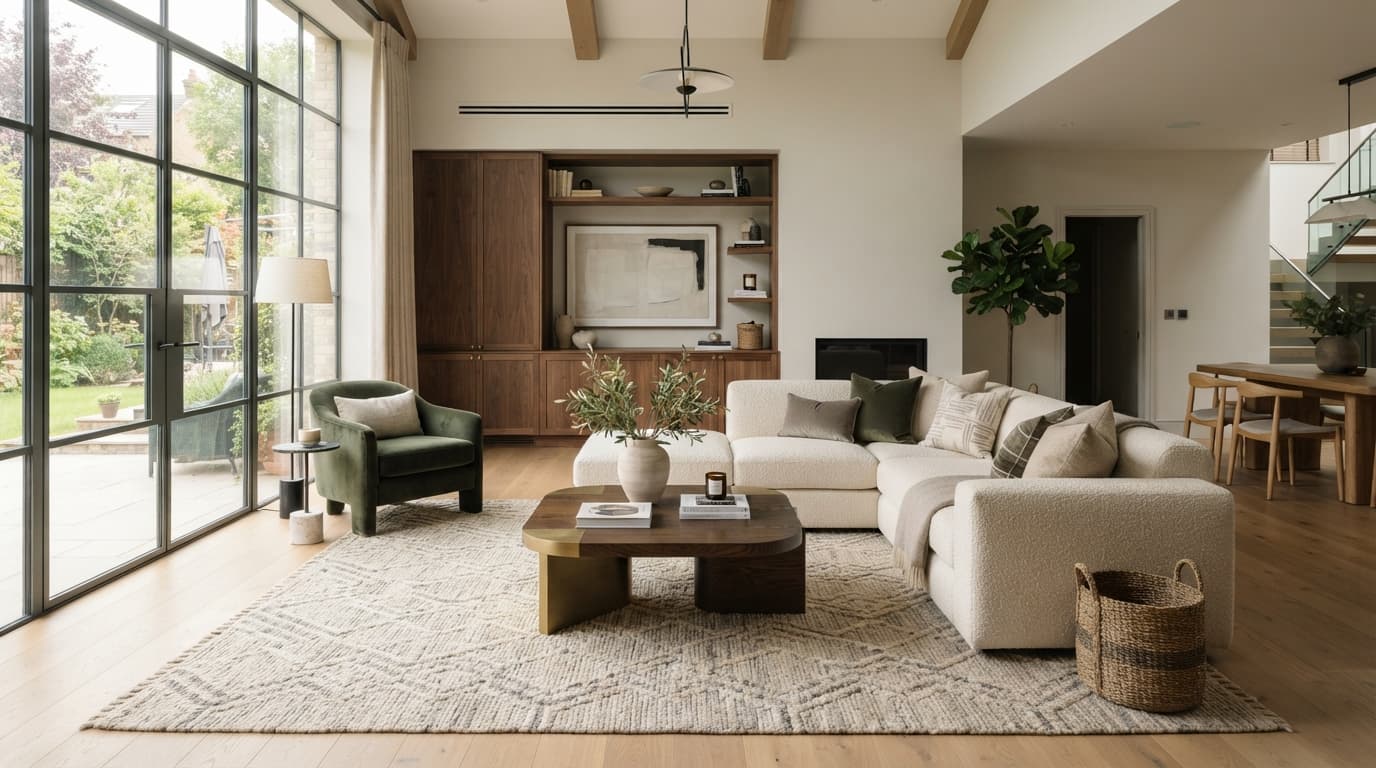
The term "contemporary living room" often gets thrown around interchangeably with "modern," but there's a subtle yet important distinction. While modern design refers to a specific period (roughly the 1920s to 1950s), contemporary design is always evolving, reflecting what's current and trending right now. Think clean lines, sophisticated neutrals, organic shapes, and a focus on comfort and functionality. It's about creating a space that feels fresh, elegant, and utterly livable without being overly stark or cold.
If you're looking to infuse your living room with that sought-after contemporary vibe, you're in the right place. I'm going to walk you through the key elements, offer my honest opinions, and arm you with the knowledge to make smart, stylish choices that stand the test of time (or at least, the next few years of trends).
Defining Contemporary: What It Is (and Isn't)
Before we dive into furniture and finishes, let's nail down what contemporary truly means. It’s less about strict rules and more about a feeling:
- Clean lines and understated elegance: No fussy ornamentation, heavy carvings, or excessive detailing.
- Neutral palette with pops of color: Greys, whites, blacks, and creams form the base, often punctuated by rich jewel tones, deep blues, or earthy greens.
- Emphasis on texture: Because the color palette is often subdued, texture becomes a hero. Think bouclé, velvet, nubby wool, smooth leather, concrete, wood grain.
- Openness and light: Furniture is often raised on slender legs, creating a sense of airiness. Large windows and thoughtful lighting are paramount.
- Curated, not cluttered: Each piece should feel intentional, with breathing room around it.
It's not country farmhouse, nor is it strictly minimalist (though it often borrows from minimalism). It's also not exclusively industrial, though it can incorporate industrial elements like raw concrete or exposed metal in a refined way. For a deeper dive into style distinctions, you might find our guide on Scandinavian vs. Minimalist Interior Design helpful.
The Foundation: Sofa & Seating
Your sofa is the undisputed anchor of your living room, so choose wisely. For a contemporary space, I generally recommend steering clear of overstuffed, bulky designs or anything with excessive tufting.
Sofa Style & Material
Look for sofas with:
- Sleek Silhouettes: Low profiles, track arms (straight and slim), or gently rounded, organic forms are hallmarks. Legs should be exposed, often in metal or light wood.
- Comfortable but Structured: The goal is inviting comfort without a "sink-in-and-never-get-out" look. Cushions should hold their shape.
- Quality Upholstery: This is where you invest. Think textured neutrals like a performance linen-blend, a sophisticated grey tweed, or even a rich, muted velvet. Leather can work beautifully, especially in a deep charcoal, taupe, or a classic saddle tone, but ensure the design is still sleek, not rustic.
My Honest Take on Sectionals: A well-chosen sectional can be fantastic for a contemporary living room, especially for maximizing seating in an open concept. I love a deep, low-slung sectional with clean lines. For a typical living room, an 8-foot by 8-foot L-shape is a good starting point, but measure your room carefully! I'd never suggest pushing a massive sectional right up against every wall; you need breathing room.
Cost Expectation: A good quality, durable contemporary sofa or sectional typically ranges from $1,500 to $5,000, depending on size, brand, and material. Performance fabrics are worth the extra cost if you have pets or kids. For more guidance, check out our post on how to choose the right sofa for your living room.
Accent Chairs: The Perfect Complement
This is your opportunity to introduce different textures, forms, and even a subtle pop of color. I almost always recommend skipping a matching armchair to your sofa. It flattens the design and feels less curated.
- Material Play: If your sofa is fabric, consider a leather or boucle accent chair. If your sofa is leather, a fabric chair in a contrasting texture (like a woven or velvet) works well.
- Shape Contrast: A structured sofa can be softened by an accent chair with more organic, rounded lines, or vice-versa.
- Examples: A sculptural lounge chair in walnut and leather, a sleek swivel chair in a soft bouclé, or a cantilevered chair with a minimalist frame.
Cost Expectation: Accent chairs can range from $300 for a simple, stylish design to $1,500+ for a truly iconic piece from a high-end furniture store.
The Coffee Table Conundrum
The coffee table is often a central visual element. For contemporary design, focus on materials and geometric forms.
- Materiality: Glass, metal (blackened steel, polished chrome, brushed brass), concrete, marble, or lighter wood tones (oak, ash, walnut) are excellent choices.
- Shape: Rectangular and circular tables are timeless. Consider an oval for a softer look or nesting tables for versatility. I'm a big fan of two smaller, identical square or circular tables placed side-by-side instead of one large one, especially if your sectional is quite large. It offers more flexibility.
- Scale: Ensure it's proportionate to your sofa. The general rule is that the coffee table should be about two-thirds the length of your sofa and no more than 18 inches from the sofa's edge.
My Honest Take: Skip the overly distressed wood or anything with heavy carvings. We're looking for clean and refined. A solid marble slab coffee table can be a real statement piece, but remember it's heavy and can be pricey (expect $800-$3000). A well-designed glass and metal option offers a lighter visual footprint for a smaller budget ($200-$800).
Rugs: Anchoring Your Space
A rug is non-negotiable in a contemporary living room. It defines the zone, adds warmth, and introduces crucial texture and color.
Size is Everything: This is where people often go wrong. A rug that's too small makes the entire room feel disjointed.
- The Golden Rule: For a contemporary living room, all front legs of your main seating pieces (sofa, sectional, accent chairs) must be on the rug. Ideally, your sofa sits with all four legs on the rug, or at least the front two with significant overhang.
- Specifics: A 9x12 rug under a standard-sized sectional is often non-negotiable. For a smaller sofa with two accent chairs, an 8x10 might suffice, but if in doubt, go bigger.
- My Honest Take: If you have to choose between a smaller, higher-quality rug and a larger, lower-quality one, go for the larger size within your budget. The impact of the correct size is visually more significant than a slight upgrade in material. For more detailed advice, read our guide on how to pick a rug for your living room.
Material and Texture:
- Wool: Durable, soft, natural, and comes in many textures (flatweave, cut pile, shag).
- Jute/Sisal: Adds organic texture but can be rough underfoot. Often better for layering or in lower-traffic areas.
- Viscose/Rayon: Has a beautiful sheen but is less durable and harder to clean.
- Synthetic (e.g., Polyester, Polypropylene): Great for high traffic, pets, and spills, often at a lower price point.
- Consider a subtle pattern: A geometric pattern or a tone-on-tone textured rug can add visual interest without overwhelming the space.
Cost Expectation: A quality 8x10 or 9x12 rug can range from $300 to $1,500+, depending on material and weave.
Lighting: More Than Just Brightness
Contemporary lighting is often sculptural in itself. Think beyond basic lamps; consider fixtures that double as art.
- Layering is Key: You need at least three layers of light:
- Ambient: General room illumination (recessed lights, a statement ceiling pendant).
- Task: For specific activities (a floor lamp next to an accent chair for reading, a table lamp for focused light).
- Accent: To highlight features (picture lights, spot lighting on art, LED strips).
- Fixture Styles:
- Floor Lamps: Arc lamps, tripod lamps, or minimalist pole lamps in black, brass, or chrome.
- Table Lamps: Ceramic bases with clean lines, sculptural glass, or metal designs.
- Pendants: If you have an open floor plan, a single, striking pendant over the coffee table can be a showstopper.
My Honest Take: Dimmers are your best friend. They allow you to control the mood and adapt the lighting for different times of day or activities. Warm light (2700K-3000K) is generally more inviting for living spaces than harsh, cool light. Expect to spend $100-$500 per fixture, with statement pieces potentially much higher.
Storage & Display: Form Meets Function
Clutter is the enemy of contemporary design. Every item should have a place, or it doesn't belong.
- Media Consoles: Choose a sleek, low-profile media console or credenza. Walnut, oak, or lacquered finishes are common. Hidden storage is a bonus. Look for minimal hardware or push-to-open doors.
- Shelving: Floating shelves or an open-back bookshelf can provide display space for curated objects, but don't overload them. Keep styling simple and intentional. Use books, small sculptures, and a few personal items.
- Side Tables: These should complement your coffee table and seating. Think simple forms in materials like marble, concrete, glass, or metal.
Cost Expectation: A good media console can run from $400 to $2,000. Side tables range from $100 to $500.
Art & Decor: The Finishing Touches
This is where personality truly shines through, even in a refined contemporary space.
- Art: Abstract art, large-scale photography, or minimalist geometric prints work incredibly well. Consider a gallery wall, but keep the frames consistent (e.g., all black, all wood, or a mix of just two complementary finishes) and the spacing clean. I'm a big proponent of oversized art – one large piece can have more impact than several smaller ones.
- Pillows & Throws: Layering these adds comfort and softness. Choose fabrics like velvet, linen, textured cotton, or faux fur in your accent colors or complementary neutrals. Don't go overboard; two or three pillows per sofa are usually enough.
- Sculptural Objects: Look for vases, bowls, or small figurines with interesting shapes and textures. These should feel like art pieces themselves.
- Greenery: Plants bring life to any space. Large floor plants (Fiddle Leaf Fig, Bird of Paradise) or smaller, sculptural plants (Snake Plant, ZZ Plant) in modern planters add organic softness.
My Honest Take: Avoid cluttering every surface. "Less is more" is a powerful mantra here. Let your key pieces breathe. When styling shelves or tables, group items in odd numbers (threes or fives) for a more visually appealing arrangement.
Color Palette: Serene & Sophisticated
A contemporary living room thrives on a sophisticated color palette.
- Foundation: Start with a base of neutrals: crisp white, warm cream, various shades of grey (from light silver to deep charcoal), or even a soft greige. These provide a calm backdrop.
- Accent Colors: Introduce color through pillows, throws, art, or a single accent chair.
- Cool Tones: Deep navy, teal, emerald green can feel incredibly refined.
- Warm Tones: Muted terracotta, ochre, or a rich rust can add warmth without being overwhelming.
- Metallics: Brushed brass, matte black, or polished chrome can add sparkle and definition.
My Honest Take: Don't try to cram too many accent colors into one space. Pick one to two main accent colors and use them thoughtfully. For example, a grey sofa with pillows in deep emerald green and a brushed brass coffee table creates a cohesive, elevated look. If you're struggling to visualize, our guides on living room color schemes and combinations can help.
Bringing it All Together
Designing a contemporary living room is about balance: balancing clean lines with inviting textures, neutrals with subtle pops of color, and functionality with aesthetic appeal. It’s about creating a space that feels fresh and current, yet comfortable and personal.
The key is to select pieces that feel intentional and harmonious. If you're having trouble visualizing how all these elements will look in your own space, remember that Roomellow lets you upload a photo of your room and get redesigns using real furniture from various furniture stores. It’s an incredibly useful tool for seeing your contemporary vision come to life before you commit to purchases. Try it yourself.
Ready to redesign your room?
Upload a photo of your room and get a professional AI redesign with real furniture you can buy. Free to try — no credit card required.
Try Roomellow free