Transform Your Space: AI Interior Design with Real Furniture
Bridge the gap between inspiration and reality! Discover how AI interior design uses real, purchasable furniture to transform your home confidently. Start designing today!
By Roomellow Team
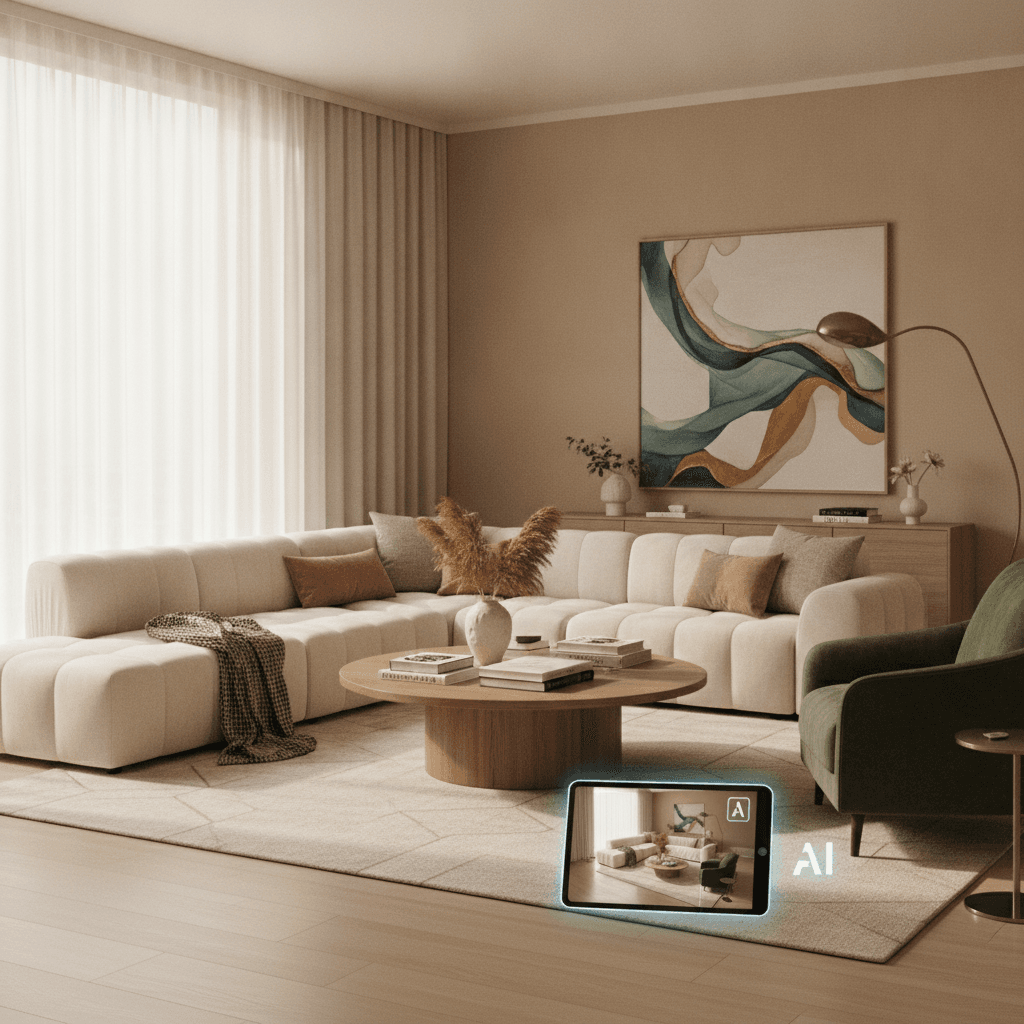
You know that feeling when you scroll through Pinterest or Instagram, heart-eyeing a gorgeous living room, only to snap back to reality and stare at your own mismatched sofa and the blank wall that's been taunting you for months? We've all been there. Design paralysis is real, and it often stems from the overwhelming gap between inspiration and implementation. How do you translate that dreamy image into something tangible, something that actually works in your room with real pieces of furniture you can actually buy?
For years, interior design felt like a luxury reserved for those with bottomless budgets or an innate "eye" for design. Tools existed, sure, but they were often clunky, hard to use, or generated fantasy furniture that didn't exist in the real world. That’s why I'm so genuinely excited about the shift we're seeing in how we approach home redesign, especially with the rise of AI interior design that focuses on real, purchasable furniture.
This isn't about robots taking over creativity; it's about giving you a powerful new lens to visualize your space and make confident decisions. It's about bridging that gap and turning "someday" into "let's do this."
The Old Way vs. The Smart Way: Why AI is a Game-Changer
Before AI, redesigning a room typically involved a lot of guesswork, tape measures, and hopeful trips to furniture stores. You might try to sketch things out, or maybe even drag boxes around to simulate furniture placement. The problem? It's incredibly hard to visualize how a new sofa, a different rug, or even a new paint color will look in your specific room until it's actually there. And who has the time or budget for all that trial and error?
This is where AI steps in. Imagine being able to upload a photo of your current living room, and within moments, seeing it transformed with an entirely new layout, different color schemes, and actual furniture pieces from your favorite stores – all without lifting a single piece of existing furniture. That's the core promise of AI interior design with real furniture, and it’s a promise that Roomellow delivers on. It takes the abstract "what if" and makes it concrete.
The "why" behind this is simple: confidence. When you can see a realistic rendering of your room with a new velvet sectional, a Scandinavian-inspired coffee table, and a set of modern dining chairs, you’re no longer guessing. You're making informed decisions about items you can actually click and buy. This reduces costly mistakes and, frankly, a lot of stress.
How AI Interior Design Works (And Why "Real Furniture" Matters)
At its heart, using AI for interior design is surprisingly straightforward. You start by uploading a clear, well-lit photo of the room you want to redesign. Think of it as giving the AI a blueprint of your space. Then, you tell it what you're looking for – maybe you want a "modern minimalist living room" or a "bohemian bedroom" with a specific color palette. The more detail you provide, the better the AI can understand your vision.
The magic happens next. The AI processes your photo and your preferences, then generates design concepts. But here's the crucial differentiator: instead of just generic 3D models, platforms like Roomellow pull from extensive catalogs of real furniture available from various furniture stores.
This means when you see a plush sofa in a deep emerald green, it's not just a placeholder; it's a specific sofa you can find at West Elm, or a similar style from Crate & Barrel. This focus on "real furniture" is what makes AI design practical and actionable. It eliminates the frustration of falling in love with a digital rendering only to find that the perfect armchair doesn't exist outside the virtual world.
You're not just getting pretty pictures; you're getting a shoppable design plan. This is particularly valuable when you're trying to figure out how to mix and match furniture styles, or whether that bold geometric rug will actually clash with your existing pieces.
From Concept to Reality: Specifics Matter
Let's get into the nitty-gritty. What does "real furniture" mean for your design process?
1. Accurate Sizing and Scale
This is, in my opinion, the absolute biggest benefit. My general rule of thumb: an 8x10 rug under a standard three-seater sofa usually works, but if you have a larger sectional, a 9x12 is non-negotiable to anchor the space properly. Trying to eyeball that in an empty room is nearly impossible. With AI, you can see how different rug sizes interact with your furniture and the overall room dimensions. The AI understands scale and proportion in a way our human eyes often struggle with, especially when looking at a flat image.
For example, I recently helped a friend who was convinced her small living room needed a compact, two-seater sofa. But after uploading her room to Roomellow and playing with a few options, the AI showed her that a slightly larger, slimmer-profile sofa from Joybird, paired with a narrow console table instead of a chunky credenza, actually made the room feel more spacious. It was about smart choices, not just small ones. If you're struggling with a tight space, check out our guide on how to design a small living room.
2. Material and Finish Visualization
A linen sofa looks and feels very different from a leather one. A walnut coffee table brings warmth, while a glass-top table feels more modern and airy. AI design with real furniture lets you see these material variations directly in your space. You can swap out a bouclé accent chair for a woven rattan one and immediately assess the impact on the room's texture and overall style.
I'm pretty opinionated about materials: bouclé looks incredible but it's a nightmare if you have pets or small children – it snags and stains easily. For high-traffic areas, I often lean towards performance fabrics or quality leather. Being able to visualize these trade-offs before you buy is invaluable.
3. Budgeting and Sourcing Made Easy
One of the most common pitfalls in redesign is falling in love with an aesthetic that's wildly out of budget. When the AI pulls from real furniture stores, it means you're seeing pieces that have actual price tags. This allows you to realistically plan your spending.
Maybe you love the look of a $3,000 mid-century modern credenza, but your budget is closer to $1,000. The AI can help you find a similar style from a different store that fits your financial parameters, without compromising the overall aesthetic. It's about smart substitutions, not sacrifices.
Beyond the Big Pieces: AI for Every Design Element
AI isn't just for placing sofas and dining tables. It's incredibly versatile for refining every layer of your design.
Color Palettes and Paint Colors
Choosing paint colors is notoriously tricky. A swatch looks one way in the store, another in your home's lighting, and completely different when paired with your furniture. AI can render your room with various paint colors, showing you exactly how a subtle gray-green or a bold navy will play with your chosen furniture and lighting. This is especially helpful for spaces like bedrooms, where the mood is heavily influenced by color. Consider reading up on bedroom color ideas to get some inspiration before you start designing.
Layout and Flow
A well-designed room has a natural flow that guides you through the space. AI can help you experiment with different furniture arrangements, ensuring clear pathways and functional zones. Can your sectional comfortably accommodate two side tables and a floor lamp without feeling cramped? Will that console table obstruct the doorway? The AI can answer these questions visually. My personal rule for living rooms: always ensure at least 18 inches between your sofa and coffee table for comfortable movement, and try to keep walking paths at least 3 feet wide.
Accessorizing and Styling
While the large furniture pieces set the stage, it's the accessories that truly bring a room to life. AI can show you how different art pieces, throw pillows, lamps, and even plants affect the overall vibe. This is where you can refine your style and add personality without the commitment of buying everything first. Maybe a gallery wall above your sofa, or a large abstract piece – you can see it before you nail a single hook into the wall.
Overcoming Design Roadblocks with AI
Got a particularly challenging room? AI can be your secret weapon.
- Small Spaces: We touched on this, but AI is exceptional for optimizing layouts in tight quarters. It helps you see how multi-functional furniture, like a storage ottoman or a sleeper sofa, can truly work in your specific footprint.
- Mixing Styles: Trying to blend your partner's industrial preferences with your bohemian leanings? AI can generate designs that creatively combine elements, showing you how a distressed leather sofa can coexist with a macrame wall hanging and a carved wooden coffee table.
- Decision Fatigue: Sometimes, there are just too many choices. AI can provide focused options, narrowing down the field of possibilities based on your initial input, helping you make a decision faster and with more confidence.
Our Take: Use AI as a Tool, Not a Replacement
Look, AI isn't going to replace the human element of interior design entirely. It won't feel the sunlight in your room at different times of day, or intuitively know your sentimental attachment to that quirky flea market find. What it will do, incredibly well, is act as an unparalleled visualization and planning tool.
Think of it as your super-powered mood board, your hyper-accurate floor planner, and your personal shopper, all rolled into one. It empowers you to explore more options, make bolder choices, and ultimately create a home that truly reflects you, without the stress and financial risk of traditional methods.
My advice? Don't just accept the first AI-generated design. Play with it! Tweak the styles, swap out pieces, change the colors. Use it to push your own creative boundaries and discover looks you might never have considered. It’s an iterative process, and the more you engage with the tool, the closer you'll get to your dream space. If you're ready to jump in, you can learn how to redesign your room with AI right now.
The future of home design is here, and it's looking pretty good—and remarkably tangible.
Ready to redesign your room?
Upload a photo of your room and get a professional AI redesign with real furniture you can buy. Free to try — no credit card required.
Try Roomellow free