Design a Room from Scratch: A Beginner's Step-by-Step Guide
Feeling stuck on how to design a room? Our step-by-step guide helps you define purpose, vibe, and plan your perfect space. Start your dream room now!
By Roomellow Team
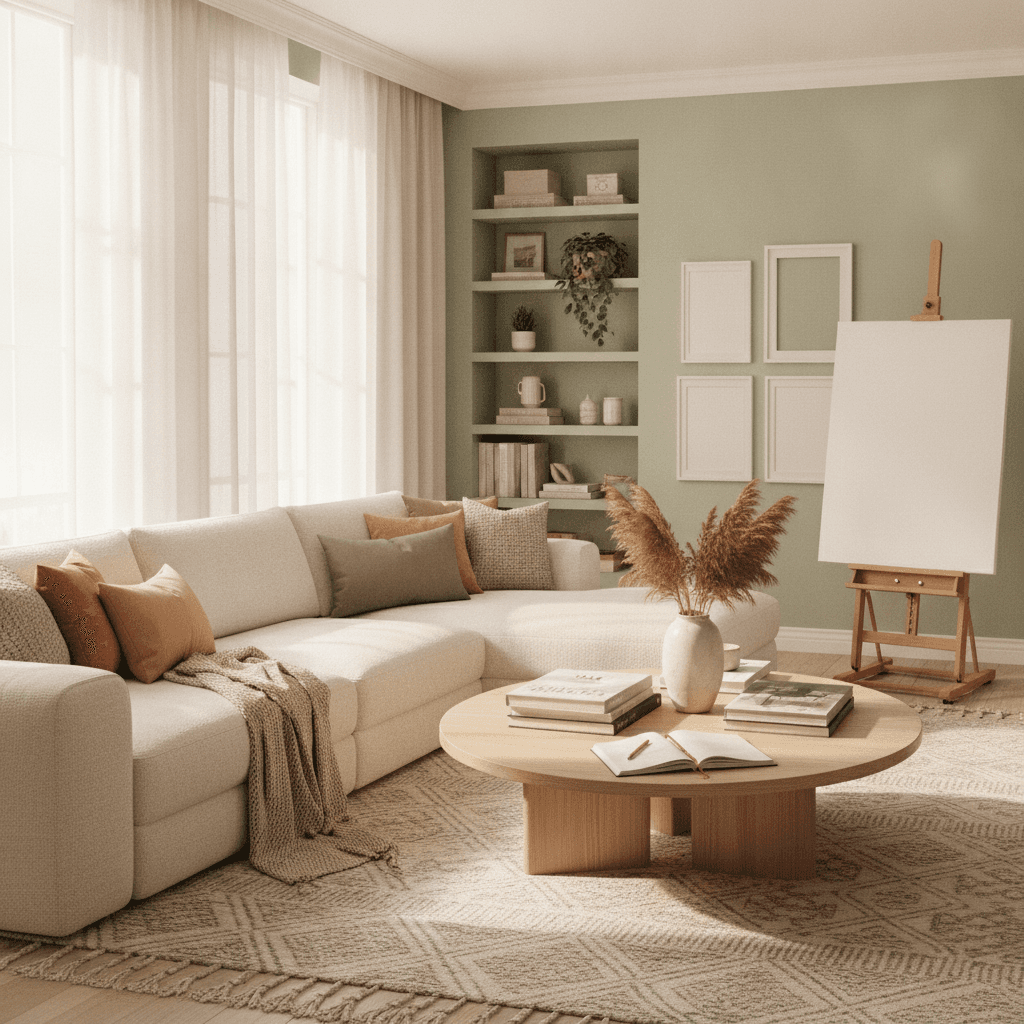
That blank canvas feeling – it’s a familiar mix of excitement and absolute paralysis. You know you want a room that feels good, functions well, and reflects you, but figuring out where to even begin can feel like staring at a puzzle with no edge pieces. I've been there, countless times, both in my own home and helping friends navigate their spaces. The good news? Designing a room isn't about magical instinct; it's a process, and a surprisingly logical one at that.
It's less about having an immediate, perfect vision, and more about breaking it down into manageable steps. Think of it like cooking a complex meal: you don't just throw everything in at once. You prep ingredients, follow a recipe, and taste as you go. Your room design journey is similar.
Step 1: Start with the "Why" – Define Your Room's Purpose and Vibe
Before you even think about buying a single item, ask yourself: What is this room truly for? This seems obvious, but it's often overlooked. A living room for a family with young kids will have different needs than one for a single professional who entertains frequently. A bedroom that’s purely for sleep and unwinding will differ from one that doubles as a home office.
-
Functionality First:
- Living Room: Is it for cozy nights in, big family gatherings, movie marathons, or sophisticated cocktail parties? This dictates seating arrangement, durability of fabrics, and storage needs.
- Bedroom: Is it purely for sleep and relaxation, or do you need a quiet reading nook, a vanity, or even a discreet workspace? Explore more bedroom ideas here.
- Home Office: Is it a full-time workspace needing ergonomic solutions, or an occasional desk for checking emails? Get inspired with home office setup ideas.
-
How Do You Want it to Feel? (The Vibe) This is where mood boards come in. Forget elaborate Photoshop skills; a Pinterest board or even a physical collage of magazine clippings works wonders. Don't limit yourself to just furniture. Include images of landscapes, art, fashion, textures, and colors that resonate with you.
Do you gravitate towards the clean lines and muted tones of Scandinavian design? The warmth and organic shapes of Mid-Century Modern? The layered textures and global influences of Bohemian? Or perhaps something crisp and contemporary, like Modern?
Pay attention to the feel these images evoke. Is it calm, energizing, sophisticated, playful, cozy? This emotional connection is your guiding star. I always tell people to pick 3-5 adjectives that describe how they want the room to feel. For example: "cozy, airy, natural, inviting." This makes decision-making much easier down the line. If a piece doesn't fit those adjectives, it's probably not right.
Step 2: Measure Everything (Yes, Everything!)
This is the least glamorous part, but arguably the most critical. You cannot design effectively if you don't know the precise dimensions of your space and the items you're considering.
-
Measure the Room: Get out a tape measure and note down the length and width of every wall. Don't forget ceiling height, window dimensions (width, height, and distance from floor/ceiling), doorway widths, and the placement of any outlets, vents, or architectural features (like fireplaces or built-ins). Sketch a rough floor plan on graph paper or use a simple online tool.
-
Measure Existing Furniture: If you're keeping anything, measure it. A hand-me-down dresser, a cherished armchair – know its footprint.
-
Measure for Future Furniture: This is where many people go wrong. It’s not just about fitting a sofa into a wall; it’s about ensuring it can get into the room, through hallways, stairwells, and doorways. Measure the narrowest point of your entry path.
And once it's in, will it allow for comfortable traffic flow? A common mistake is buying a sofa that's too deep for a narrow living room, leaving no space for a coffee table or walk-around room. A standard sofa is typically 36-40 inches deep. In a smaller space, something closer to 30-34 inches might be a better fit. You can even use painter's tape on the floor to map out potential furniture footprints and literally walk through your new layout. This visualization step saves you from costly mistakes, and it’s where tools like Roomellow, which let you design your room with real furniture, become invaluable.
Step 3: The Foundation – Anchor Pieces and Layout
With your room's purpose and measurements in hand, it's time to place the biggest, most impactful pieces. These are your anchors, the items that define the room's function and layout.
-
The Big Three (or Four):
- Living Room: Sofa/sectional, area rug, coffee table.
- Bedroom: Bed, dresser, nightstands.
- Dining Room: Dining table, chairs.
- Home Office: Desk, chair.
-
Start with the Largest Item: In a living room, this is almost always the sofa. Place it first, considering focal points like a fireplace or TV. In a bedroom, it's the bed – typically centered on the longest wall without windows or doors, or on the wall opposite the door for a grand entrance.
-
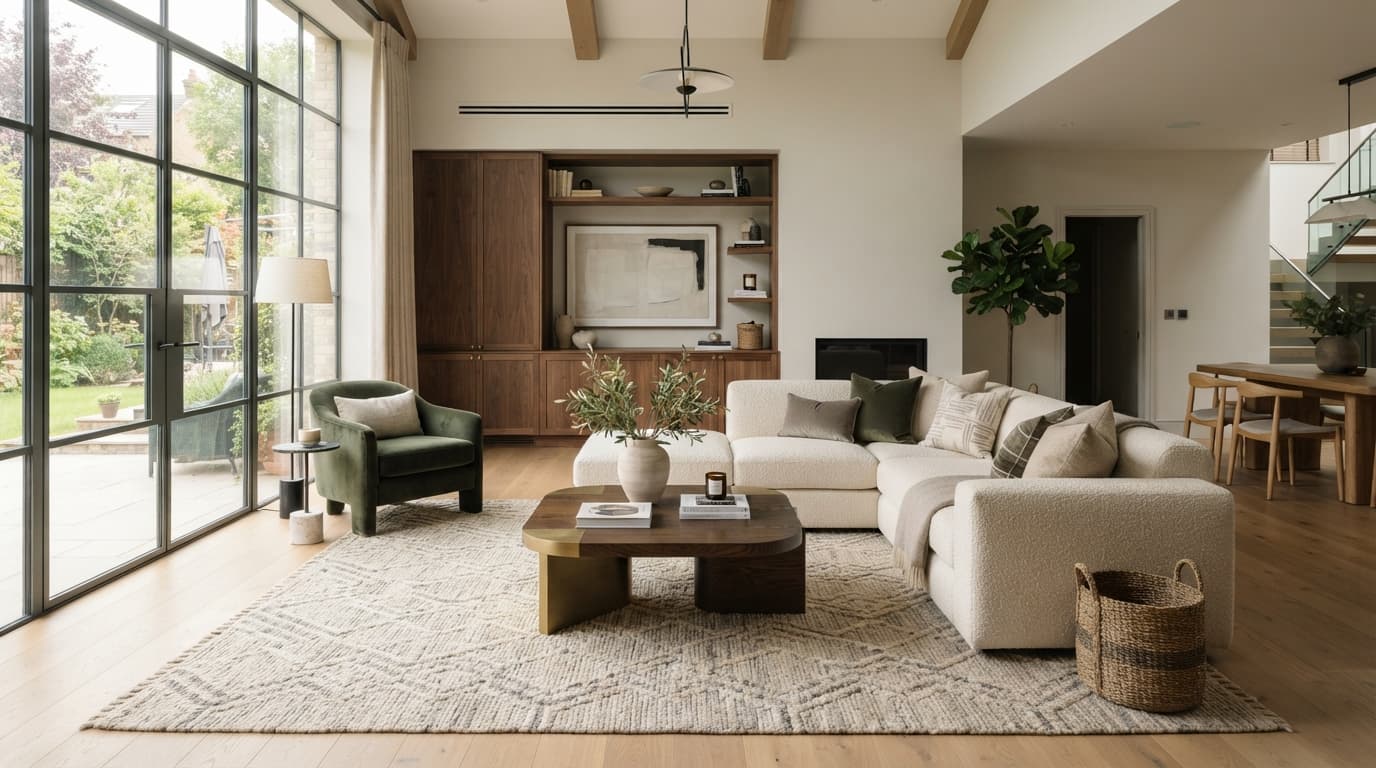
Rugs are Non-Negotiable (and Sizing Matters): I'm a firm believer that an area rug is the unsung hero of any room. It defines zones, adds warmth, absorbs sound, and grounds your furniture. And here's my strong opinion: A rug should be large enough to at least have the front two legs of your main seating pieces on it. For a standard 80-90 inch sofa, you're usually looking at an 8x10 foot rug. For a large sectional, a 9x12 foot rug is non-negotiable. Anything smaller makes the room feel disjointed and your furniture look like it's floating. If your budget is tight, save up for the right-sized rug; a small rug is worse than no rug. For help choosing the right sofa for your space, check out this guide on how to choose the right sofa.
-
Choosing Your Anchor Pieces:
- Sofa: Consider material (velvet for luxury, linen for casual, performance fabric for durability with pets/kids), color (neutrals are versatile, but a bold color can be a statement), and style (track arm for modern, rolled arm for traditional, tufted for classic glam). A well-made sofa from a reputable store like Article or Pottery Barn can range from $1,500 to $4,000, and it's worth the investment for comfort and longevity.
- Bed Frame: A simple upholstered frame in a neutral fabric is timeless, or a solid wood frame (oak, walnut) brings warmth and texture. Don't skimp on a good mattress; it's an investment in your well-being.
- Dining Table: Decide on shape (round for intimacy in smaller spaces, rectangular for seating more people) and material (solid wood like mango or oak for durability, glass for an airy feel, stone for a luxurious look).
Once you have your key pieces mentally or physically placed, you can start to see the room take shape.
Step 4: Layer in Personality – Secondary Furniture and Decor
Now that the big pieces are in, it's time to fill out the room with functional and decorative items that truly reflect your style.
-
Secondary Seating:
- Living Room: Add an accent chair or two, maybe a storage ottoman. I'd skip the matching sofa and armchair set. Instead, mix a leather accent chair with a fabric sofa, or a rattan armchair with a performance fabric sectional. This adds visual interest and depth.
- Bedroom: A small bench at the foot of the bed, a comfortable armchair in a corner if space allows.
-
Coffee and Side Tables:
- Coffee Table: Choose a coffee table that complements your sofa in style and scale. A rule of thumb is that it should be roughly two-thirds the length of your sofa and within a couple of inches of its seat height. Don’t be afraid to think outside the box – a collection of smaller nesting tables can offer flexibility. Need ideas? We have plenty for coffee tables.
- Side Tables: Essential for holding drinks, lamps, and books. Ensure they're at a comfortable height next to your seating.
-
Lighting – The Mood Maker: This is often an afterthought, but it shouldn't be. A well-designed room has layers of light:
- Ambient Light: General overhead light (ceiling fixture).
- Task Light: Specific lighting for activities (table lamp for reading, desk lamp for working).
- Accent Light: To highlight art or architectural features (picture lights, wall sconces). Aim for 3-5 light sources in a main room like a living room or bedroom. Dimmer switches are your best friend for creating different moods.
-
Storage Solutions: Every room needs storage. Whether it's a sleek credenza, a bookcase, a decorative basket, or a cabinet, think about what you need to store and how it can be integrated beautifully. Clutter quickly detracts from any design.
-
Art and Mirrors: These are powerful tools for personalizing a space and influencing its perceived size.
- Art: Choose pieces you genuinely love. They don't have to be expensive. Flea market finds, photography, or even your own creations can work. Hang art at eye level (center of the piece roughly 57-60 inches from the floor) for comfortable viewing.
- Mirrors: Strategically placed, a large mirror can make a small room feel bigger and brighter by reflecting light and views. Learn more tips on how to make a small room look bigger.
-
Textiles: Pillows, Throws, Curtains: These are the soft layers that add warmth, texture, and pops of color.
- Pillows: Mix and match sizes, textures (velvet, linen, knit), and patterns. A good starting point for a standard sofa is two 20x20 inch pillows and one smaller lumbar or square pillow.
- Throws: Drape one over an armchair or sofa for an inviting touch.
- Curtains: Choose floor-length curtains, hung wide and high (at least 6-12 inches above the window frame) to make windows appear larger and ceilings taller. This is a common design trick that makes a huge difference.
-
Greenery: Plants bring life, color, and a sense of calm to any space. Choose varieties that suit your light conditions and commitment level (a low-maintenance snake plant or ZZ plant is great for beginners).
How to Make It Look Expensive (Without Spending Like It)
Here's a question I get constantly: "How do I make my room look expensive?" The honest answer is that it has almost nothing to do with budget and everything to do with discipline. Pick one palette and commit — three or four colors, max. Nothing reads "cheap" faster than a room pulling in five directions at once. Buy fewer, larger pieces instead of a scatter of small ones: one oversized piece of art beats a wall of tiny frames, and a single great floor lamp beats three forgettable table lamps. Then hide the tells — bundle the cords, swap builder-grade switch plates, and upgrade cabinet or door hardware (a $40 change that reads like a renovation). Hang curtains floor-to-ceiling and wide, lean on real materials where your hand actually lands (a solid wood or stone surface, a wool rug), and keep surfaces edited. Expensive-looking rooms aren't full — they're considered.
Step 5: The Details Make the Design – Styling and Editing
You've got your furniture, your lighting, your textiles. Now it's time for the final polish.
- Styling Surfaces: Group items on coffee tables, shelves, and side tables in odd numbers (rule of three is classic). Vary heights, textures, and materials within these groupings. Think books, candles, small sculptures, a vase with flowers. Don't overcrowd.
- Edit Relentlessly: This is where transparency comes in. We all accumulate stuff. Go through your decor and ask: "Does this serve a purpose, or bring me joy?" If the answer is no, consider letting it go. A less-is-more approach often leads to a more sophisticated and serene space.
- Live with it, then Adjust: Design isn't static. Live in your newly designed room for a few weeks. What feels off? Do you need more light in a certain corner? Is the flow awkward? Don't be afraid to move things around, swap out accessories, or even paint a wall a different color. Your home should evolve with you.
Designing a room when you don't know where to start can feel like a Herculean task, but by breaking it down into these manageable steps – from defining purpose to layering details – you create a roadmap. Trust your instincts, but lean on proven design principles and tools to guide you.
If you're still feeling stuck, or want to visualize how real furniture from various stores would look in your actual room before you buy, give Roomellow a try. You can upload a photo of your room and get redesign ideas with shoppable products, allowing you to experiment with different styles and layouts virtually. It takes the guesswork out of the process, helping you move from "don't know where to start" to "ready to transform."
Frequently Asked Questions
Can AI design my room? Yes. AI design tools read a photo of your actual room and generate a finished redesign — furniture, layout, even color — in seconds. Roomellow goes a step further: every piece it places is a real, purchasable product, so what you get isn't just inspiration, it's shoppable.
Is there an app that designs your room for you? There is. With Roomellow you upload a photo of your room, pick a style, and get a photorealistic redesign back — then click any item to buy it. It's the fastest way past the blank-canvas paralysis: instead of guessing, you see a real option in your own space. You can redesign your room with AI in a couple of minutes.
How do I know if furniture will fit my space? Measure the room and the entry path — doorways, hallways, and stairwells are where deliveries actually get stuck. Then map the footprint on your floor with painter's tape before you buy. Better still, visualize it in place first: here's how to visualize furniture in a room.
How do I make a room look expensive on a budget? Limit your palette to three or four colors, buy fewer but larger pieces, hang art and curtains high, upgrade the small hardware, and keep surfaces edited. Restraint reads as expensive; clutter reads as cheap.
Ready to redesign your room?
Upload a photo of your room and get a professional AI redesign with real furniture you can buy. Free to try — no credit card required.
Try Roomellow free