Bookshelf Styling Ideas: How to Curate Shelves Like a Designer
Transform your cluttered shelves into a stunning display! Discover expert bookshelf styling ideas, from editing to mixing objects, to create a personalized, beautiful space. Get started today!
By Roomellow Team
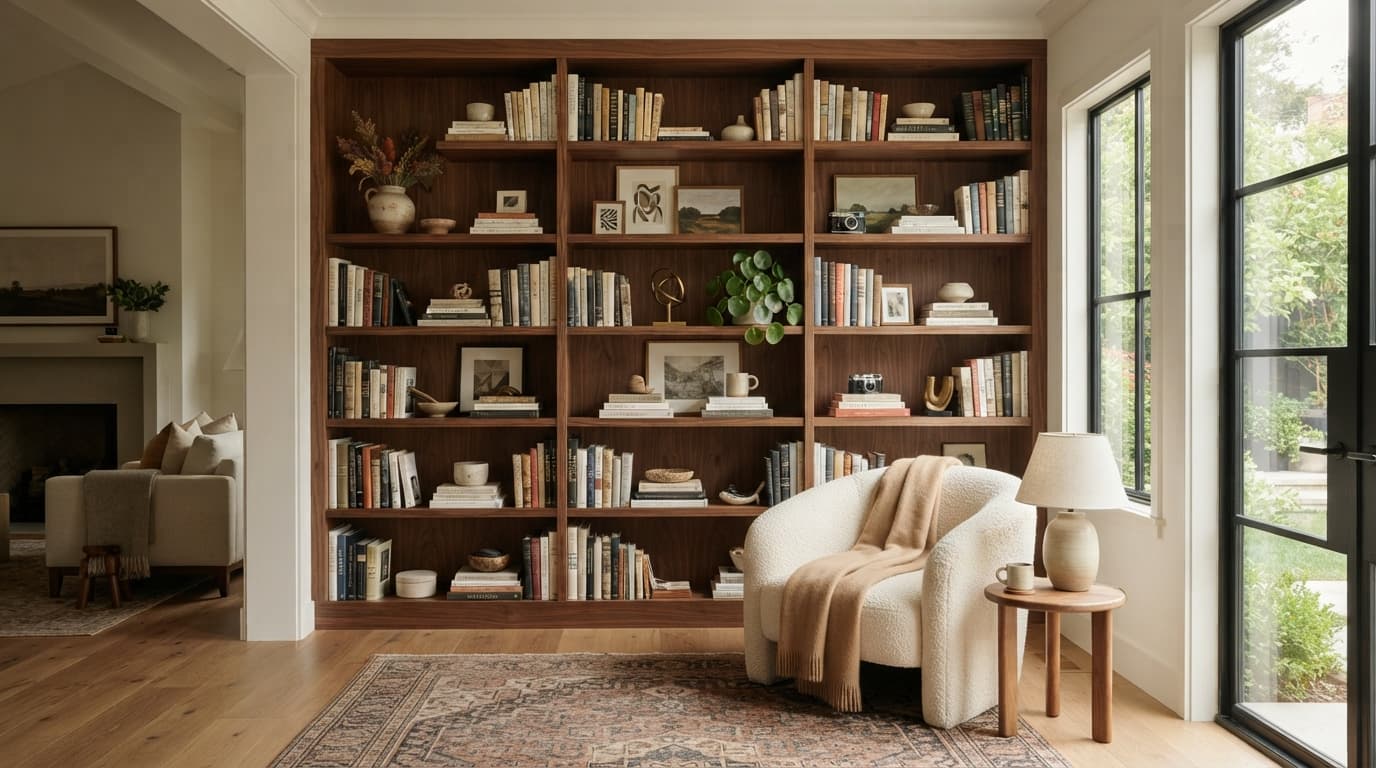
A bookshelf can be one of the most intimidating pieces of furniture to style. You bought it, you assembled it (or paid someone else to, no judgment here!), and now it's just... there. A blank canvas, often looking more like a storage unit than a thoughtfully curated display. We get it. We’ve all been there, staring at an empty shelf or, worse, a shelf overflowing with a chaotic mix of paperbacks, forgotten souvenirs, and a stray charging cable.
But a well-styled bookshelf can truly anchor a room, reflecting your personality, interests, and an intentional design sensibility. It can tell a story without saying a word, adding warmth and depth to a living room, bedroom, or home office. The secret isn't about having a massive budget or an endless supply of designer objects; it's about understanding a few key principles and applying them with a bit of patience and a willingness to play around. Think of it less like a rigid display and more like a living installation that evolves with you.
1. The "Edit First, Then Curate" Rule: Embrace the Blank Slate
Before you even think about placing an item, clear everything off your shelves. Yes, everything. This is non-negotiable. You need a truly blank canvas to see the potential and avoid merely shuffling existing clutter. Once cleared, sort through what you took off. Ask yourself:
- Does this spark joy? (Yes, Marie Kondo was on to something!)
- Does it fit my current aesthetic?
- Is it genuinely functional or beautiful?
- Do I have multiples of similar items? Keep the best, donate the rest.
This initial purge is crucial. You're aiming for a curated look, not a storage overflow. Don't be afraid to leave some items out for another spot in the house, or even to let them go entirely.
2. Beyond Books: The Power of Mix and Match
This is where many people get stuck. They see "bookshelf" and think "books only." While books are certainly central, a truly dynamic display incorporates a variety of objects. We're aiming for a balanced visual narrative that includes books, decorative objects, art, and even a touch of nature.
Our general rule of thumb is the 60/40 split: roughly 60% books, 40% decorative elements. This ratio gives you enough room to show off your literary taste while also bringing in personality and varied textures. If you have fewer books, you can lean more towards a 50/50 or even 40/60 split, just ensure your decor isn't overwhelming the shelves.
3. Mastering Book Placement: Stacks, Rows, and Color Play
Books are the foundation, so let's get them right.
- Vertical Stacks: This is your bread and butter. Place most books vertically, using bookends to keep them neat. We often use interesting objects as bookends – a small sculpture, a heavy geode, or even a couple of weighty vintage cameras. This instantly adds character.
- Horizontal Stacks: Break up the monotony by stacking a few books horizontally. This creates instant height variation and a flat surface on top for a small object, like a delicate ceramic bowl, a coaster for a cup of tea, or a small plant. We usually aim for stacks of 2-4 books. Don't go too high, or it looks precarious.
- Varying Directions: The most visually appealing shelves usually have a mix of vertical and horizontal arrangements on different shelves. This prevents a rigid, library-like feel.
- Color-Blocking (Our Take): Arranging books by color can look incredibly cohesive and artistic, especially if your room has a specific color palette. However, it’s not for everyone. If you're a serious reader who needs to find books quickly, this can be frustrating. We often suggest a subtle approach: group similar tones together within a section, rather than a strict rainbow. Or, if you have a lot of beautiful hardcovers, pull the dust jackets off to reveal a more uniform, often neutral, spine color underneath. It can be a surprisingly effective trick.
- Size Matters: Place taller books towards the back or on the outer edges of a vertical stack to create a more pleasing silhouette.
4. Integrating Decorative Objects: The Art of the Vignette
Now for the fun part: bringing in those non-book items. These pieces add depth, texture, and visual interest.
- Vases and Bowls: Look for pieces with interesting shapes or textures, even if they're empty. A matte black ceramic vase (think something 8-10 inches tall) next to a stack of horizontal books can ground a section. A small, handcrafted wooden bowl (4-6 inches wide) is perfect for holding trinkets or simply sitting pretty.
- Sculptural Elements: Small abstract sculptures, a piece of coral, a unique paperweight, or a found object from your travels can be conversation starters. We love a polished brass object contrasted against a more rustic wooden bookshelf.
- Framed Art and Photos: Don't hang them! Lean them against the back of the bookshelf. This adds an informal, layered look. Vary the sizes – a larger 8x10 frame behind a smaller 5x7 creates depth. Choose art that complements your room's color scheme or personal style. For a bohemian bedroom, perhaps a macrame-framed mirror; for a mid-century modern living room, a graphic print.
- Small Boxes and Trays: These are fantastic for hiding clutter (like remote controls, spare keys, or even loose change) while looking stylish. A decorative lidded box in wood or lacquer can be both beautiful and functional. A small marble tray can corral a couple of smaller items, like a candle and a matchbox.
When selecting objects, think about varying materials: mix metal with ceramic, wood with glass, rough textures with smooth. This creates a more dynamic and engaging display.
5. The "Triangle" Method for Visual Flow
This is our go-to technique for ensuring a shelf doesn't look cluttered or unbalanced. When placing objects on a single shelf or across a few shelves, imagine invisible triangles connecting similar items.
- Varying Heights: Group items of different heights together. For example, a tall vase, a medium-height stack of books, and a smaller decorative object. This creates peaks and valleys, guiding the eye across the shelf.
- Negative Space: This is arguably the most important element. Resist the urge to fill every single inch. Open space allows the eye to rest and highlights the items you have chosen to display. A beautifully styled shelf often looks like it has room to breathe. We often leave 20-30% of a shelf empty.
- Depth: Don't line everything up perfectly at the front. Pull some items forward, push others back. Lean a picture frame, place a small plant in front of a stack of books. This layering adds dimension.
Think about how items relate to each other not just on one shelf, but vertically across the entire unit. You want to create a sense of movement and connection throughout. Maybe a large vase on the bottom shelf, a smaller one two shelves up, and a tall candle holder on the very top, forming a subtle diagonal.
6. Color Cohesion and Texture Play
Even with a varied collection, aiming for a general color palette will make your bookshelf feel cohesive.
- Dominant Neutrals: Start with a base of neutrals – whites, creams, blacks, greys, natural wood tones. Most books and many decorative objects fit into this.
- Pops of Color: Introduce 1-2 accent colors that complement your room's overall scheme. This could be through a colorful book spine, a vibrant ceramic vase, or a small piece of abstract art. For example, if you're working on a modern living room redesign, you might opt for sleek black and white objects with an occasional metallic accent.
- Texture, Texture, Texture: This is where things get interesting. Imagine a smooth glass vase next to a rough concrete bookend, with a stack of linen-bound books and a small, polished wooden sculpture. The contrast in textures adds so much visual richness and makes the display feel curated and luxurious. Don't forget to consider the material of the bookshelf itself – a dark walnut shelf will offer a different backdrop than a light oak or white metal one.
7. Greenery: A Breath of Fresh Air
Plants bring life to any space, and bookshelves are no exception.
- Small Potted Plants: A Pothos or a trailing String of Pearls can spill beautifully over a shelf edge. Just be mindful of light and watering needs. We often opt for small succulents or cacti for low-maintenance options.
- Faux Greenery: No shame in the faux game! High-quality artificial plants have come a long way. They're perfect for shelves that don't get much natural light or if you're simply not a green thumb. A small faux fern or a couple of eucalyptus stems in a narrow vase can do wonders.
- Branches or Dried Flowers: For a more natural, organic feel, a single sculptural branch or a small bunch of dried flowers (like bunny tails or pampas grass) in a vase adds texture and height without the commitment of live plants.
8. Lighting It Up
Don't underestimate the power of subtle lighting on a bookshelf. It adds warmth and highlights your carefully chosen items.
- Puck Lights or LED Strips: Battery-operated puck lights (often with remote controls) can be discreetly placed on the underside of shelves to illuminate the items below. LED strip lights can be run along the back edges for a soft glow.
- Small Table Lamps: If your bookshelf has a deeper shelf or a built-in console, a small task lamp or a decorative accent lamp can be a beautiful addition, especially in an office or bedroom. Look for options around 10-14 inches tall.
- Picture Lights: Miniature picture lights can be mounted above a particular shelf to highlight a piece of art or a favorite display.
9. Roomellow's Take: Visualize Before You Buy
Styling a bookshelf, like designing any part of your home, is about visualizing how pieces will come together before you spend a dollar. That's where Roomellow comes in. Instead of buying a bunch of items and hoping they work, you can upload a photo of your room and experiment with real, purchasable furniture and decor from the stores we support, right in your space.
A bookshelf never lives alone — it sits next to a sofa, a reading chair, a rug. Our AI home design app lets you restyle the whole room around your shelves virtually, so you can see how a new accent chair or side table plays off your display before you commit to a purchase. It’s a great way to avoid buyer's remorse and truly design your room with real furniture.
10. The Ongoing Edit: Your Bookshelf Is a Living Space
Finally, remember that your bookshelf isn't a static display. It's meant to evolve with you. As you acquire new books, art, or decorative pieces, don't be afraid to rearrange, swap items out, or even completely restyle a shelf. We like to do a quick "shelf refresh" every few months, just moving things around to keep the look fresh.
The goal isn't perfection, but rather a reflection of your evolving taste and interests. Embrace the process, have fun with it, and create a display that truly feels like you.
Ready to redesign your room?
Upload a photo of your room and get a professional AI redesign with real furniture you can buy. Free to try — no credit card required.
Try Roomellow free