The Top Room Design Mistakes You're Making (And How to Fix Them)
Are you making common room design mistakes? Discover expert advice on scale, proportion, and furniture placement to create a perfectly balanced room. Learn more!
By Roomellow Team
We've all been there: scrolling through endless Pinterest boards, buying that "perfect" sofa on a whim, only to find our room still feels… off. It’s a common misconception that great interior design is some innate talent, but the truth is, it’s often about understanding and avoiding common pitfalls that can derail even the most well-intentioned decorating efforts.
We spend our days thinking about how spaces function and feel, and we've seen firsthand how easily a room can go from "almost there" to "what was I thinking?" The good news? Most of these missteps are completely fixable, and understanding them is the first step toward creating a space you truly love.
Here are some of the most frequent room design mistakes we see, along with our honest take on how to dodge them and create a room that feels intentional, balanced, and perfectly you.
1. Ignoring Scale and Proportion (The "Too Big, Too Small, Just Right" Conundrum)
This is, hands down, the biggest culprit behind awkward-feeling rooms. Picture a massive sectional crammed into a tiny living room, or a postage-stamp-sized rug floating aimlessly in the middle of a sprawling open-concept space. When your furniture pieces don't relate to each other or to the room's dimensions, everything feels off-kilter.
Our take: Think of your room as a stage. Every piece of furniture is an actor, and they all need to fit comfortably without bumping into each other or disappearing entirely.
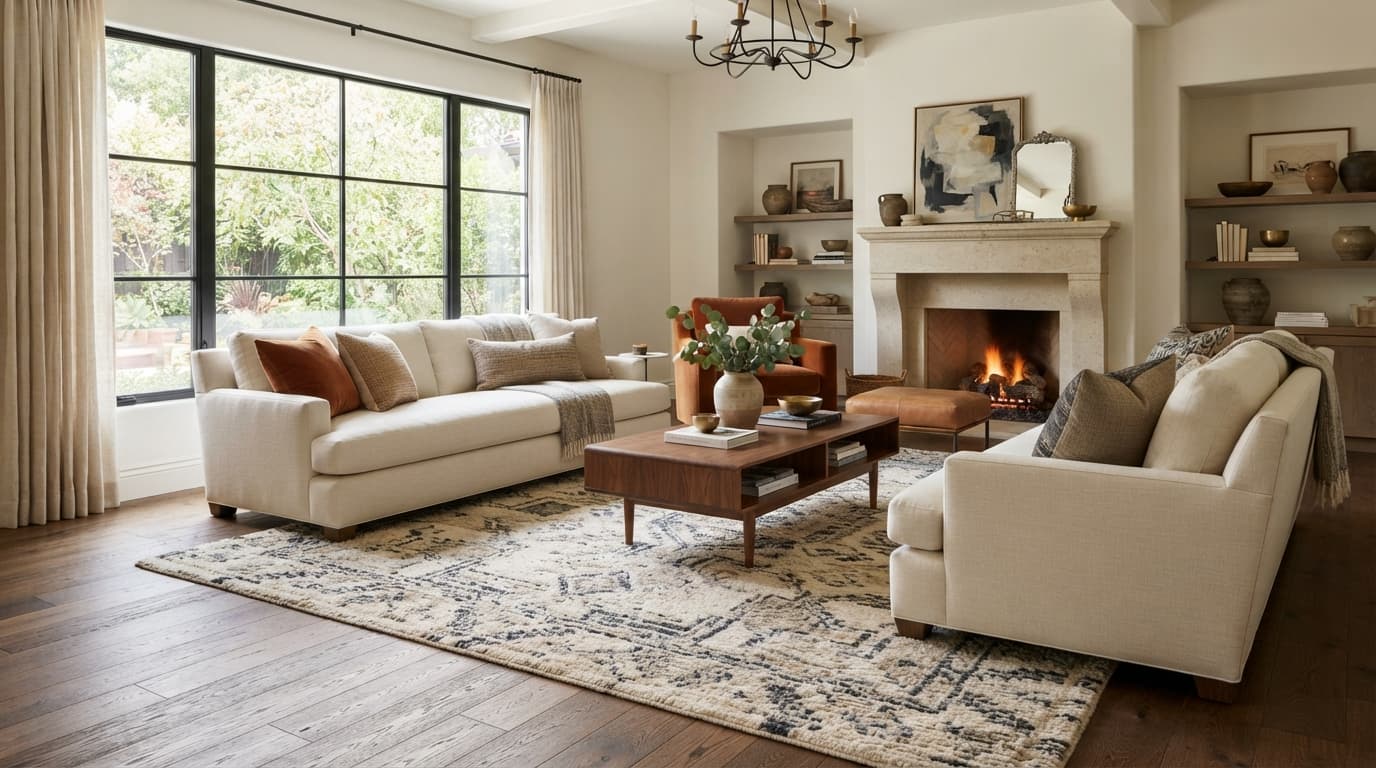
- Rugs: This is a non-negotiable for us. A rug should anchor your seating area, not just sit under a coffee table. For most living rooms, that means the front two legs of all major seating pieces (sofa, accent chairs) should sit on the rug. If you have a large sectional, a 9x12 rug is often the minimum to make it feel grounded. For smaller rooms, an 8x10 might work, but you need to measure carefully. A good rule of thumb: leave 12-18 inches of bare floor between the rug's edge and the walls. A rug that's too small makes the entire room look smaller and less cohesive. For more specific guidance, check out our deep dive on how to pick a rug for living room.
- Sofas and Seating: Before you fall in love with that dreamy velvet sofa, measure your space! Not just the wall it will sit against, but the entire room, including doorways and circulation paths. A deep sofa (think 40+ inches) can eat up a lot of floor space, making a small room feel cramped. Conversely, dainty furniture in a grand room can look lost. Consider your lifestyle too – a plush, deep sofa might be perfect for movie nights, but a more upright, tailored piece might be better for formal entertaining or a smaller living area. Need help visualizing? Roomellow allows you to design my room with real furniture to see how pieces fit before you buy.
- Coffee Tables: These often fall victim to poor scaling. A coffee table should be roughly two-thirds the length of your sofa and within 18 inches of the sofa's depth for comfortable reach. Too big, and you can’t walk around it; too small, and it looks like a toy.
2. Neglecting Layered Lighting (The Single Overhead Dome Light Syndrome)
If your room relies solely on one harsh overhead light fixture, it’s missing out on a huge opportunity for warmth, ambiance, and functionality. Think about how hotels or well-designed restaurants use light – it’s never just one source. Flat lighting makes everything look… flat.
Our take: Lighting is mood-setting. It creates depth, highlights features, and makes a room feel welcoming.
- Ambient Light: This is your general, overall illumination. It can come from recessed lighting, a statement pendant, or a flush-mount fixture. But it shouldn't be your only light source. Always put this on a dimmer switch! It's worth the small investment.
- Task Light: This is focused light for specific activities. A floor lamp next to an armchair for reading, a desk lamp in your home office, or under-cabinet lighting in the kitchen. For a cozy reading nook, we love a pharmacy-style floor lamp or a sleek arc lamp with a warm bulb.
- Accent Light: This is all about highlighting architectural features, artwork, or creating dramatic shadows. Picture lights, sconces flanking a mirror, or small uplights behind plants fall into this category.
- Why it matters: Combining these layers ensures you have the right light for every time of day and every activity. It adds visual interest and prevents a room from feeling like a sterile waiting room. It’s also a powerful tool for how to make a small room look bigger by drawing the eye to different areas.
3. Buying Matching Furniture Sets (The Showroom Look)
We'll be blunt: please, for the love of good design, do not buy a sofa, loveseat, and armchair that all match perfectly from the same collection. While convenient, it results in a room that feels bland, uninspired, and dated. It screams "I bought everything at once from one place."
Our take: Your home should tell a story, and that story isn't "I visited a furniture showroom and pointed."
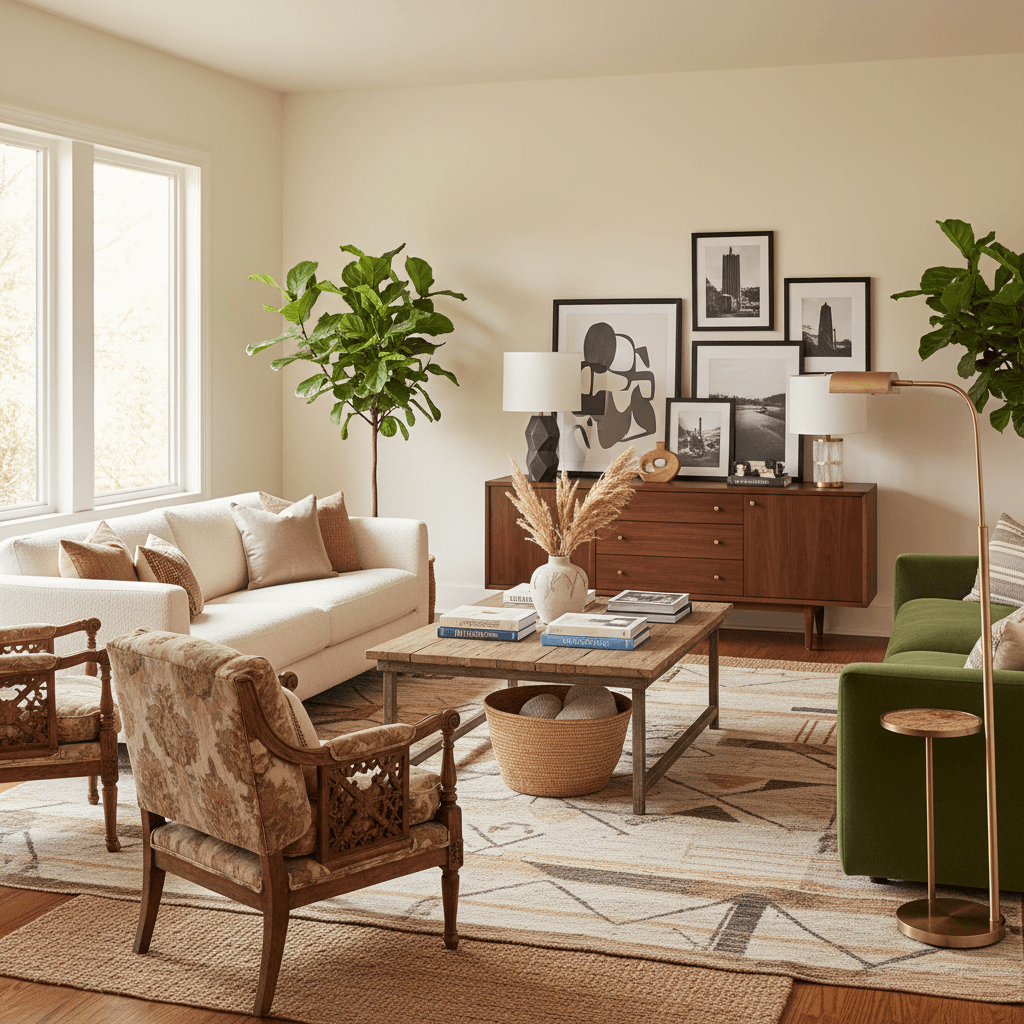
- Mix and Match: The most interesting rooms are those that feel collected over time. This means mixing textures, materials, and even different styles. Pair a linen sofa with a leather accent chair. Combine a clean-lined modern coffee table with an antique side table found at a flea market. This creates visual depth and personality. Learn more about how to mix and match furniture effectively.
- Vary Materials: If your sofa is fabric, consider an accent chair in a different fabric (like bouclé – though warning, it's a nightmare if you have pets!) or a rich wood. Add a metal floor lamp, a stone coffee table, and soft textiles. This interplay of hard and soft, smooth and textured, is what gives a room soul.
- Consider a Foundation Piece: Start with one key piece you love, like a sofa, and then build around it by introducing complementary but distinct elements. This thoughtful approach makes a huge difference.
4. Hanging Art Too High or Too Small
This is such a common mistake, and it instantly throws off the balance of a room. We frequently see artwork practically touching the ceiling or a tiny print drowning on a vast wall. It makes the art feel disconnected from the rest of the decor and floats awkwardly in space.
Our take: Art needs to relate to the furniture it’s near and be hung at a comfortable viewing height.
- Eye Level is Key: The general rule of thumb for hanging art on a bare wall is to center the artwork's midpoint at about 57-60 inches from the floor. This is average eye level for most people in a gallery setting.
- Relate to Furniture: When hanging art above a sofa, console table, or headboard, the bottom of the frame should be about 6-8 inches above the top of the furniture piece. This creates a visual connection and keeps everything grounded.
- Scale, Scale, Scale: A small piece of art will look lost above a substantial sofa. If you have a large wall to fill, either invest in one large piece (think 48x60 inches or bigger for a standard sofa) or create a gallery wall with multiple pieces grouped together. Don’t be afraid to go big; a single large piece can make a statement without feeling cluttered. For gallery wall inspiration, check out our bookshelf styling ideas – many principles apply to walls too!
- Groupings: If you're doing a gallery wall, lay out your arrangement on the floor first. Treat the entire grouping as one large piece of art, and then apply the 57-60 inch rule to the center of the entire collection. Leave about 2-4 inches between individual frames.
5. Neglecting Storage (The Clutter Conundrum)
A beautifully designed room can quickly lose its charm if it’s drowning in clutter. Remotes, mail, kids' toys, charging cables – these everyday items have a way of accumulating and making even the most stylish space feel chaotic and unrelaxing. Ignoring storage needs is a fundamental design mistake.
Our take: Good design isn't just about aesthetics; it's about functionality. Every room needs storage, whether visible or hidden.
- Dual-Purpose Furniture: This is a lifesaver, especially in smaller spaces. Think ottomans with lift-top storage, coffee tables with drawers, or benches with cubbies. A simple storage ottoman can hide blankets, magazines, or extra throw pillows in plain sight.
- Closed Storage is Your Friend: While open shelving is lovely for curated displays, a healthy mix of closed storage (cabinets, drawers, media consoles with doors) is essential for stashing away the less-than-picturesque realities of daily life. A media console with doors can hide all your electronics and their accompanying wires, keeping your living room feeling calm.
- Baskets and Bins: These are your best friends for corralling smaller items. Think woven baskets for throws, decorative boxes for remotes, or labeled bins in a kid's room. They add texture and keep things tidy.
- Vertical Space: Don't forget walls! Floating shelves, tall bookcases, or wall-mounted cabinets can provide much-needed storage without taking up precious floor space. This is particularly relevant when thinking about furniture for studio apartment living.
6. Forgetting the Importance of Texture and Layers
Have you ever walked into a room and it just felt… flat? Like a two-dimensional image? That's often because it's missing texture and layers. A room filled with all smooth surfaces, all the same color, or all one material lacks depth, warmth, and visual interest. It just doesn't invite you to sit down and stay a while.
Our take: Texture is the secret sauce that makes a room feel rich, inviting, and truly finished. It adds a tactile dimension that photos often miss.
- Mix Your Textiles: Don't just use one type of fabric. Combine a chunky knit throw with smooth velvet pillows. Layer a natural jute rug under a softer, patterned rug for a dynamic effect (we cover this in how to layer rugs in living room). Consider different curtain materials – a linen sheer over a heavier blackout drape.
- Introduce Different Materials: Beyond fabric, bring in elements like:
- Wood: A raw edge coffee table, a polished credenza, wicker baskets.
- Metal: A sleek brass floor lamp, a wrought iron side table, a black matte picture frame.
- Stone/Ceramic: A marble tray, a textured ceramic vase, concrete planters.
- Glass: A clear glass vase, a mirrored surface.
- Natural Elements: Don't underestimate the power of plants, dried florals, or even a bowl of polished stones. They introduce organic textures and life.
- Why it matters: These different surfaces catch the light differently, create shadows, and add a sensory experience to the room. It’s what differentiates a beautiful photo from a space you want to live in.
7. Impulse Buys Without a Plan (The "Ooh, Shiny!" Mistake)
It's easy to get swept up in the excitement of a sale or fall in love with a piece you see online. But buying furniture or decor without a cohesive plan is a recipe for a disjointed, frustrating, and often expensive outcome. You end up with a collection of beautiful individual pieces that don't quite sing together.
Our take: A well-designed room starts with a clear vision, not a shopping spree.
- Start with a Vision: Before you buy anything, spend some time defining the style, color palette, and overall feeling you want for your room. Create a mood board (Pinterest, physical cutouts, or even a simple document). What vibe are you going for? Modern? Bohemian? Scandinavian? This initial step helps you focus. If you're stuck, our post on how to design a room when you dont know where to start is a great resource.
- Measure Everything, Twice: We touched on this with scale, but it bears repeating. Measure your room, measure your doorways, and measure the furniture you're considering. There’s nothing worse than a gorgeous sofa that won’t fit through your front door or looks absurdly large in your living room.
- Prioritize: Decide what's most important for the room's function and aesthetic. Is it a comfortable sofa? A functional desk? A beautiful piece of art? Allocate your budget accordingly.
- Test Before You Invest: This is where Roomellow comes in. Instead of guessing, upload a photo of your room and see real, buyable furniture from the stores we support placed in your actual space — your walls, your light, your layout. If the sectional overwhelms the room, you find out in a render, not after delivery. A minute of visualizing costs a lot less than a returned sofa.
Designing a room is an exciting journey, and making a few missteps along the way is completely normal. The key is to learn from them, understand the underlying principles, and approach your space with intention. By avoiding these common design mistakes, you're well on your way to creating a room that not only looks stunning but feels perfectly right for you.
Ready to redesign your room?
Upload a photo of your room and get a professional AI redesign with real furniture you can buy. Free to try — no credit card required.
Try Roomellow free