Maximalist Interior Design: How to Layer Color, Pattern and Pieces You Love
Maximalist interior design is curated, not cluttered. How to layer bold color, mixed patterns, rich textures and collected pieces into a room that feels like you.
By Roomellow Team
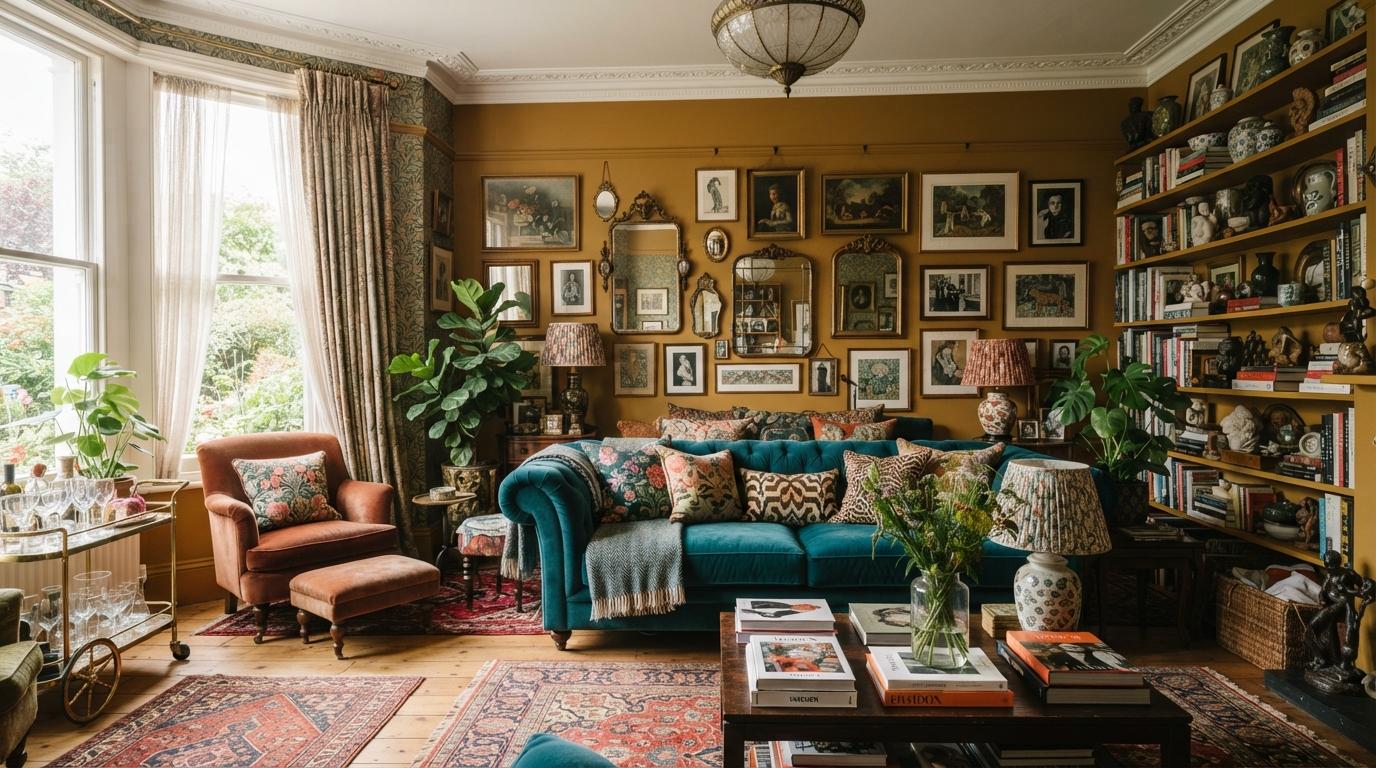
For years, design leaned hard toward paring down: clean surfaces, quiet palettes, nothing out of place. Minimalism can be beautiful, but plenty of people want rooms that tell a richer story, with color, pattern, texture and a generous mix of pieces they love. That's maximalism.
Maximalist interior design isn't clutter. It's a room with personality in every corner, where each layer was chosen on purpose. If your space feels a little too quiet or too safe, this might be the direction for you.
What Maximalism Really Means
Maximalism isn't just "more stuff." It's a deliberate, curated and personal style. Think of an orchestra rather than noise: every color, pattern, texture, artwork and piece of furniture has a part to play, and together they create depth instead of chaos.
At its core, maximalism celebrates personal expression and comfort. It means surrounding yourself with things you love: objects that hold memories, art that moves you, and furniture with character. A good maximalist room invites you to linger and look around.
The Pillars of a Maximalist Room
A maximalist room looks spontaneous, but it's built with care. These are the elements that make it work.
Bold Color and Pattern
This is where maximalism shines, and where most people get nervous. Set the safe neutrals aside. Maximalism thrives on rich, saturated color: jewel tones like emerald, sapphire, ruby and amethyst, or brighter pairings like mustard with cerulean, or coral with teal.
Our take on color: instead of one bold accent wall, consider painting all four walls in a deep, moody shade, such as a dark navy or a forest green. Then bring in a contrasting color through your larger furniture, like a camel velvet sofa or a pair of chartreuse armchairs. The magic happens when colors play off each other around the room.
Patterns are your friend, and they can mix. Floral wallpaper can sit happily with a geometric rug and striped pillows. The trick is to vary the scale: a large botanical print on the walls, a smaller geometric on an ottoman, and a tight stripe on a cushion. A good way to start is with one bold rug: pull two or three colors from it for the walls, the sofa and the accents.
Layered Textures
If color is the melody, texture is the harmony. A maximalist room should make you want to touch everything, so bring in a wide range of materials:
- Velvet: a velvet sofa adds instant depth and luxury, and the way light catches the pile is hard to beat.
- Warm woods: dark walnut, mahogany or a burl-wood coffee table ground the space. An antique cabinet or console mixed with modern pieces works especially well.
- Woven materials: rattan, cane and jute add an organic note that keeps the room from feeling too formal.
- Metals: brass, chrome or antique gold on lighting, hardware and objects add sparkle.
- Cozy fabrics: bouclé, shearling, chunky knits and faux fur throws invite you to settle in. One honest caution: bouclé is hard to live with if you have pets that shed or small children. A performance velvet or a tight microfiber holds up better on pieces you use every day, and bouclé is perfect for a pillow or throw.
Picture a tufted velvet sofa with a faux fur throw, on a Persian-style rug, beside a dark wood side table with a brass lamp and a plant in a textured ceramic pot. Each piece adds its own texture, and together they build depth.
Collections and Art
This is the heart of maximalism: showing your passions, memories and stories. Maximalist rooms are full of objects, but they're your objects, things you've collected, inherited or care about.
Our take on collections: display them with intention rather than scattering them.
- Gallery walls: mix sizes, frames and subjects: original art, vintage prints, photographs, mirrors, even textiles. Skip perfect symmetry for a looser arrangement. Lay everything out on the floor first to find the composition before you hang anything. Thrift-store frames work well, either painted one color for cohesion or left mismatched for charm.
- Styled bookshelves: mix books with small sculptures, souvenirs, plants and framed photos. Stack some books horizontally and some vertically, and leave a little breathing room. For more ideas, see our bookshelf styling ideas.
- Vignettes: create small groupings on coffee tables, consoles and sideboards. A stack of books topped with a sculpture, a candle and a small plant tells a mini story. Vary the heights, shapes and textures within each group.
Furniture With Personality
Skip the matching sets. Maximalism wants furniture that feels collected and a little unexpected.
- Statement pieces: a sofa in an unexpected color or fabric, an armchair with a dramatic silhouette, or an ornate vintage bar cart. Instead of a matching sofa and loveseat, try a rich velvet sofa with a vintage leather accent chair.
- Mixed styles: pair a mid-century credenza with an antique gilded mirror, or a classic Chesterfield with a contemporary geometric coffee table. The contrast makes a room feel interesting and lived-in. Our guide on how to mix and match furniture can help.
- Generous scale: key pieces can go big. A large rug that sits under the front legs of all your seating pulls a living room together, and a grand dining table or an oversized chandelier gives your layers a strong foundation.
Lighting as Jewelry
In a maximalist room, lighting is decoration as much as function. Aim for several layers of light:
- Statement fixtures: an ornate chandelier in vintage brass or crystal can anchor a dining or living room.
- Interesting lamps: look for sculptural bases, colorful ceramics and patterned or colored fabric shades.
- Ambient and task light: dimmers set the mood, and sconces can highlight art or shelves. The more varied your light sources, the more inviting the room.
How to Start
Maximalism can feel overwhelming if you're used to a quieter look. Here's how to ease in:
- Start with a foundation piece. A patterned rug, a bold sofa or a striking piece of art can set your colors and patterns. It gives you a roadmap.
- Focus on one room. Don't try to transform the whole house at once. Pick your living room or bedroom and experiment there.
- Collect with intention. Before buying, ask: do I love this, and does it tell a story? Maximalism is about abundance, not accumulation. Vintage shops, antique markets and family attics are full of unique pieces.
- Layer slowly. Start with furniture, add a rug, then art. Bring in pillows, throws, plants and objects over time so the room evolves naturally.
- Edit now and then. Even maximalist rooms need editing. Step back occasionally, and if a corner feels too busy, remove one thing. It's about balance within abundance.
Our Take: Is Maximalism a Passing Trend?
We don't think so. The specific colors and patterns will change, as they always do, but the core ideas of layering, abundance and personal expression are timeless. If you're drawn to the opposite end of the spectrum, our guide to warm minimalism shows how a pared-back room can still feel inviting.
Maximalism does take more upkeep: more objects mean more dusting and more chances for a room to look messy if it isn't tidied. It's also a look you have to commit to. The reward is a home that feels unique, endlessly interesting and truly yours.
See Bold Pieces in Your Own Room
The hardest part of going bold is trusting that a teal velvet sofa or an oversized patterned rug will actually work in your space. Upload a photo of your room to Roomellow, describe the look you want, and see real furniture from the stores we support placed in it. Swap any piece that isn't right before you buy. It's an easy way to test an adventurous idea first. Learn more about AI interior design with real furniture.
Ready to redesign your room?
Upload a photo of your room and get a professional AI redesign with real furniture you can buy. Free to try — no credit card required.
Try Roomellow free