How to Layer Rugs in Your Living Room Like a Pro
Transform your living room! Learn the secrets to layering rugs like a pro. Add texture, define zones, and inject personality into your space. Discover how!
By Roomellow Team
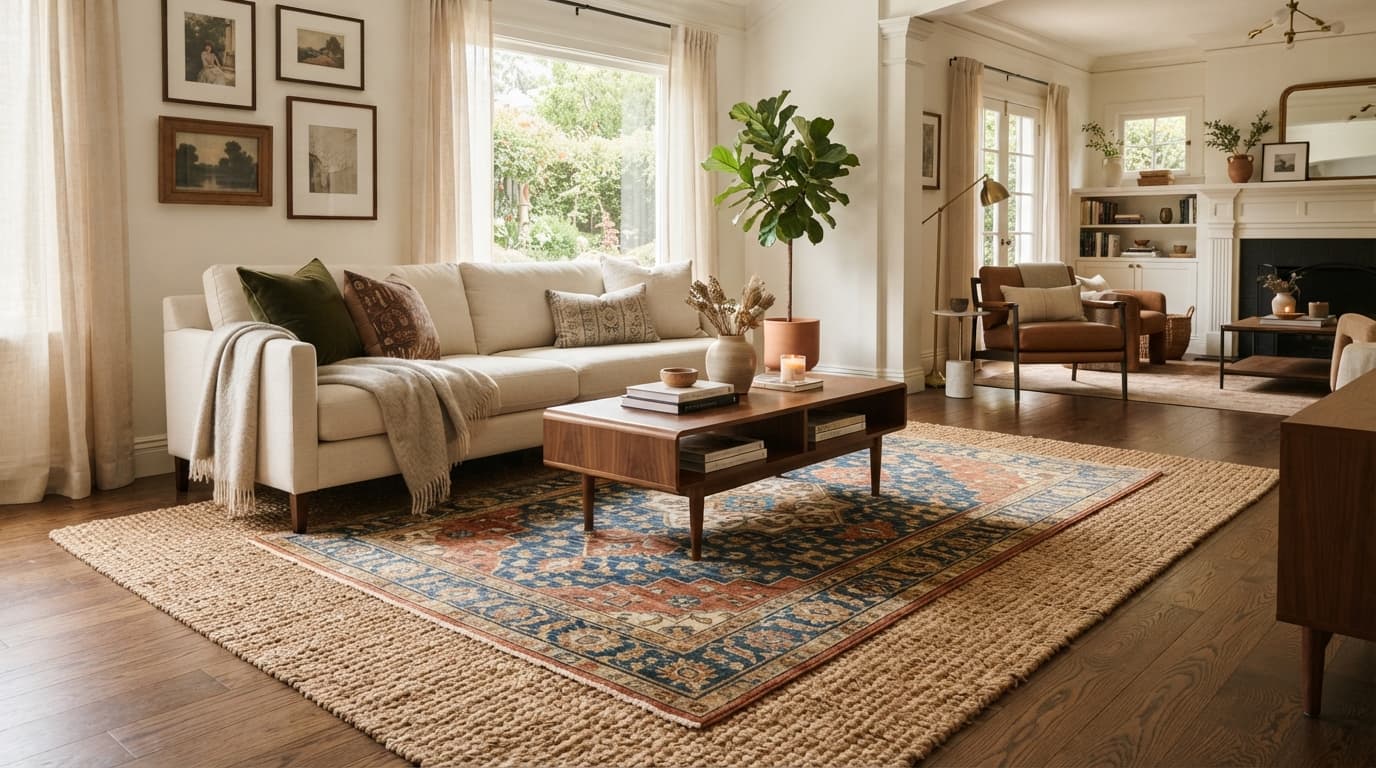
The living room rug. It’s the foundation of your space, the silent anchor that grounds your furniture and ties everything together. But what if one rug isn't enough? What if you're craving more texture, more visual interest, more oomph? That's where the magic of layering rugs comes in.
Layering rugs isn't just for magazine spreads or professional designers; it's an accessible way for you to inject personality, warmth, and depth into your living room, no matter your style. We’ve seen countless rooms transformed by this simple yet powerful technique, moving from "fine" to "phenomenal." It adds a level of intentionality and coziness that a single rug often can't achieve, especially if you're dealing with a large space or a rental where permanent changes aren't an option.
So, let's peel back the layers (pun intended!) and talk about how to master this art form in your own home.
Why Layering Rugs Is a Design Game-Changer
Before we dive into the "how," let's chat about the "why." Understanding the benefits will empower you to make more confident design choices.
- Adds Texture and Depth: This is probably the number one reason we recommend layering. A flat-weave jute rug topped with a plush sheepskin creates an immediate tactile experience that’s rich and inviting. It prevents a room from feeling flat or one-dimensional.
- Defines Zones in Open-Concept Spaces: If you have an open-concept living and dining area, layering rugs in your living room corner can clearly delineate it as a cozy conversation zone, separate from the dining or kitchen area. It’s like drawing invisible walls.
- Introduces Color and Pattern with Ease: Maybe you love a bold, expensive patterned rug, but buying a massive 9x12 version is out of budget. Layering allows you to get that statement piece in a smaller, more affordable size, laid over a larger, neutral base rug. It's a smart way to incorporate high-impact design without breaking the bank.
- Hides Unsightly Flooring: If you’re living with less-than-ideal carpets or hardwood floors that have seen better days, layering rugs is a brilliant way to cover more surface area and draw the eye to beautiful textures instead of floor imperfections.
- Enhances Warmth and Acoustics: Two rugs are better than one when it comes to insulation and sound absorption. Your living room will feel cozier, and echoes will be minimized, making conversations more pleasant.
Step 1: The Foundation Rug – Go Big or Go Home
This is the rule we won't budge on: Your base rug MUST be big enough. This is where most people go wrong, and it completely undermines any attempt at layering. The base rug is your canvas; it needs to be expansive and grounding.
Our take? A 9x12 rug under a sectional or a large sofa with two accent chairs is non-negotiable for most standard living rooms. For smaller spaces, an 8x10 might suffice, but push for the largest size your room can comfortably hold without hitting the walls.
Key Rule for Placement: At a minimum, the front legs of all major upholstered pieces (sofa, loveseat, accent chairs) should rest on the rug. Ideally, all legs of the sofa and chairs should be on the rug. This creates a cohesive, intentional look that makes your furniture feel anchored, not floating. Check out our guide on how to pick a rug for living room for more detailed sizing advice.
Material Matters for the Base: Think durable, low-pile, and neutral. This rug will take the brunt of foot traffic and furniture weight.
- Jute or Sisal: These are our absolute favorites for a base layer. They’re incredibly textured, hard-wearing, budget-friendly (a 9x12 can range from $200-$600), and add an organic, natural warmth. They're also incredibly forgiving with dirt and spills.
- Flatweave Wool Blend: A neutral, tightly woven wool or wool blend rug is another excellent choice. They offer a bit more softness than jute but still maintain a low profile and great durability. Expect to pay $400-$1000 for a quality 9x12.
- Low-Pile Cotton: For a softer, more flexible base, a large cotton flatweave in a solid, neutral color can work. Just be aware that cotton can show wear more quickly than jute or wool.
Color & Pattern for the Base: Keep it subtle. The base rug should be a supporting actor, not the star. Think creams, natural tones, soft grays, or very muted patterns. This allows your top layer to truly pop.
Step 2: The Top Rug – Your Personality Layer
Now for the fun part: the top rug! This is where you introduce the color, the bold pattern, the luxurious texture, and the true character of your room.
Size and Placement for the Top Rug: Your top rug should be significantly smaller than your base rug, but not so small that it looks like a bathmat. A good rule of thumb is for the top rug to be about two-thirds the size of the exposed area of your base rug, or large enough to sit comfortably under your coffee table with a generous border.
- For a 9x12 base: A 5x7 or 6x9 top rug is usually perfect. Sometimes even a 4x6 if you’re using it to highlight a very specific, smaller seating arrangement or just under the coffee table itself.
- Placement: Center it over the main seating area, typically under your coffee table. Make sure it's centered visually within the base rug and your furniture arrangement. You want about 12-18 inches of the base rug showing around all sides of the top rug for a deliberate, layered look.
Material Matters for the Top: This is your chance to indulge in softness and luxury.
- Sheepskin or Faux Fur: For ultimate cozy vibes, a sheepskin or a high-quality faux fur rug is unbeatable. These add incredible softness and a touch of glamour. They're surprisingly versatile, working with everything from a scandinavian living room makeover to a more bohemian living room. A smaller sheepskin can range from $70-$300 depending on size and authenticity.
- Vintage Persian or Oushak: These rugs bring history, character, and often, beautiful muted colors and intricate patterns. They're unique, often one-of-a-kind pieces that tell a story. You can find authentic vintage rugs on sites like Etsy or Chairish, with prices varying wildly ($200 to $2000+ depending on size, condition, and origin).
- High-Pile Wool or Shag: A plush, high-pile wool rug adds significant warmth and softness. A shag rug (be careful not to go too shaggy, unless that’s your vibe!) can bring a retro or distinctly cozy feel. These are great for sinking your toes into.
- Silk or Viscose Blend: For a more refined, luxurious sheen and softness, a rug with silk or viscose can be stunning. Be aware that these materials can be more delicate and harder to clean.
Color & Pattern for the Top: This is your opportunity to express your style!
- Bold Patterns: A geometric, abstract, or traditional patterned rug can be the focal point of your living room.
- Rich Colors: Use the top rug to introduce a pop of color that complements or contrasts with your existing decor. Pick up a hue from your throw pillows, artwork, or an accent chair.
- Monochromatic Textures: Sometimes, layering two rugs in similar neutral tones but wildly different textures (e.g., natural jute and a creamy high-pile wool) creates a sophisticated, understated look.
Step 3: Master the Art of Texture Play
This is the secret sauce of successful rug layering. You want contrast. If both rugs are flat and smooth, you lose much of the visual interest.
Our go-to combinations:
- Rough & Refined: A coarse, natural jute or sisal base rug paired with a soft, plush, and perhaps subtly patterned wool or a vintage silk blend. The natural texture grounds the space, while the top rug adds a touch of elegance.
- Flat & Fluffy: A tightly woven flatweave base (maybe with a subtle stripe or geometric pattern) topped with a luxurious sheepskin or a shaggy faux fur. This creates an inviting, sink-your-toes-in kind of comfort.
- Subtle & Statement: A neutral, low-pile wool rug as the base, allowing a vibrant, intricately patterned vintage rug or a modern abstract design to shine as the top layer. The base provides a quiet stage for the star.
Think about the feeling you want to evoke. Do you want rugged durability? Soft luxury? A mix of both? Let the textures guide you.
Step 4: Harmonize Colors and Patterns Strategically
While the top rug is your personality layer, it shouldn't clash with the rest of your room.
- Complement, Don't Compete: If your base rug is a solid neutral, your top rug can be a pattern or a bolder color. If your base has a very subtle pattern, your top rug could be a solid rich color that picks up one of the base rug's accent tones.
- Tie It In: Look around your living room. What colors are in your artwork? Your throw pillows? Your drapes? Use your top rug to echo one or two of these colors. This creates a cohesive, thoughtfully designed space. You might find some inspiration in our living room color schemes and combinations guide.
- Avoid Overwhelm: If you have very busy patterns on your sofa or accent chairs, opt for a more subdued pattern or a solid color for your top rug. The goal is visual harmony, not chaos.
Step 5: Don't Forget the Rug Pad
This isn't an optional step. For both rugs. Especially the top one.
- Safety First: Rug pads prevent slipping and sliding, which is crucial when you have two rugs.
- Longevity: They protect your rugs (and your floors) from wear and tear.
- Comfort: They add an extra layer of cushioning underfoot, making your layered rugs feel even more luxurious.
Choose a non-slip rug pad for each rug. For the base rug, a thicker felt-and-rubber combo pad is ideal for cushioning and protection. For the top rug, a thinner, grippier pad will keep it from migrating across the base.
Our Take: The Trade-Offs
Layering rugs isn't without its considerations, and it’s important to be realistic.
- Cleaning: Yes, vacuuming two rugs can be a bit more cumbersome than one. High-pile rugs, especially shag or sheepskin, require more effort and may need professional cleaning periodically. If you have pets that shed heavily, boucle or very shaggy top rugs might be more of a commitment than you're ready for.
- Cost: Two rugs will generally cost more than one. However, if you need a huge rug for your base, layering allows you to buy a less expensive, large neutral rug and then invest in a smaller, more unique (and therefore often less expensive) top rug that might have been out of budget in a larger size.
- Tripping Hazards: This is why rug pads are so important. If rugs aren’t properly anchored, they can bunch up and become a trip risk. Ensure both rugs are lying flat and firmly padded.
- Style Commitment: While rugs are relatively easy to swap, layering them requires a bit more intention. Make sure you truly love the combination before investing.
Real-World Combinations to Inspire You
-
The Coastal Retreat:
- Base: A light, textural jute rug (e.g., Safavieh Natural Fiber Jute Rug in ivory, 9x12, around $300-$400).
- Top: A vintage-inspired distressed blue and white flatweave or a thick, soft cream wool rug (e.g., Anthropologie tufted wool rug, 5x7, around $300-$600).
- Why it works: The organic base grounds the space, while the top rug adds a serene color palette and comforting softness, perfect for a coastal interior design.
-
The Modern Eclectic Vibe:
- Base: A subtle charcoal gray wool flatweave (e.g., West Elm Gradient Rug, 9x12, around $700-$1000).
- Top: A bold geometric pattern in black and white or a rich, jewel-toned velvet or silk blend (e.g., CB2 graphic patterned rug, 5x7, around $400-$800).
- Why it works: The neutral, sophisticated base allows a dramatic top rug to become an art piece, adding a contemporary edge to your living room ideas.
-
The Cozy Bohemian Nook:
- Base: A chunky braided natural jute rug (e.g., Pottery Barn Chunky Jute Rug, 9x12, around $500-$700).
- Top: A Beni Ourain-style shaggy Moroccan wool rug or a faux sheepskin (e.g., Revival Rugs smaller Beni Ourain, 5x8, around $600-$1200 or Ikea sheepskin, $50).
- Why it works: The rustic base complements the plush, handcrafted feel of the top rug, creating an incredibly warm and inviting space, perfect for a relaxed bohemian bedroom decor (or living room!).
Layering rugs is an art, not a science. Trust your gut. If it looks good to you, it probably is. The best part is, rugs are not permanent fixtures. You can experiment, swap out the top layer with the seasons or as your style evolves.
Ready to see how different rug combinations look in your actual living room? Instead of guessing, upload a photo of your space to Roomellow and use our AI design tools to visualize layered rugs and other real, purchasable furniture from various furniture stores right in your room. It’s a fantastic way to confidently try out new ideas before you buy. Try it yourself.
Ready to redesign your room?
Upload a photo of your room and get a professional AI redesign with real furniture you can buy. Free to try — no credit card required.
Try Roomellow freeFAQ: Layering Rugs
Q: Can I layer rugs on carpet? A: Yes, absolutely! Layering rugs on carpet is an excellent way to define a seating area, add personality, or cover up less-than-desirable carpet. The same rules apply: choose a larger, low-pile base rug (even a thin flatweave can work) and then layer a smaller, more decorative rug on top. A non-slip rug pad is even more critical here to prevent bunching.
Q: How do I prevent my layered rugs from shifting? A: The most important step is to use a good quality non-slip rug pad under both rugs. For the base rug, a felt-and-rubber combo pad provides cushioning and grip. For the top rug, a thinner, grippy rubber pad should be sufficient to hold it in place on the base rug. Make sure both rugs are laid completely flat without wrinkles.
Q: What if my base rug is already patterned? A: If your base rug has a prominent pattern, you have two main options for your top rug:
- Solid & Neutral: Choose a top rug in a solid, neutral color that pulls from one of the less dominant colors in the base rug's pattern. This allows the base pattern to still show through without clashing.
- Subtly Patterned with Contrast: If the base pattern is very subtle, you can sometimes layer a top rug with a contrasting, but not overwhelming, pattern (e.g., a geometric over a subtle stripe). The key is to ensure enough visual difference so they don't fight for attention. Often, a neutral base makes the layering process easier, but it's not a strict rule.