Biophilic Interior Design: Connect with Nature, Boost Wellness
Explore biophilic interior design! Integrate nature into your home for wellness, stress reduction, and creativity. Learn how this holistic approach can transform your living space.
By Roomellow Team
There’s a shift happening in interior design, and it’s one We're genuinely excited about. Forget stark, sterile spaces – people are craving connection, comfort, and a deep breath of fresh air, even when they’re indoors. This is where biophilic interior design steps in, not just as a trend, but as a thoughtful approach to creating spaces that feel good to live in.
At its core, biophilic design is about integrating elements of the natural world into our built environments. It acknowledges our innate human desire to connect with nature (that’s the "bio" part, for life, and "philia" for love). It’s more than just adding a potted plant to a corner; it’s a holistic philosophy that considers everything from natural light and airflow to materials, colors, and patterns, all aimed at fostering well-being, reducing stress, and even boosting creativity.
For years, we’ve been designing houses that often isolate us from the natural world. Think about how many modern homes prioritize clean lines and minimalist aesthetics, sometimes at the expense of warmth and organic connection. Biophilic design challenges that by asking: "How can this room make me feel as calm and invigorated as a walk in the woods, or a moment by the ocean?" It’s a question that, for me, always leads to more meaningful design solutions.
Our take: why biophilic design isn't going anywhere
We've seen countless trends come and go, from shabby chic to hyper-minimalism, but biophilic design feels different. It taps into something fundamental about how humans thrive. We spend so much of our lives indoors – working, eating, sleeping – that the quality of these spaces directly impacts our mood, our health, and our overall sense of peace. When you walk into a truly biophilic space, you immediately feel a subtle ease, a lowering of my shoulders that few other design styles evoke. It’s not about perfection; it’s about a living, breathing environment that supports you.
This isn't just about aesthetics; there's real science behind it. Studies show that exposure to nature, even in subtle ways, can lower blood pressure, improve cognitive performance, and speed up healing. So, when we talk about biophilic design, we're not just giving you styling tips; We're advocating for a healthier way to live within your four walls. It's an investment in your well-being, and honestly, that’s an investment worth making. If you’re feeling overwhelmed by the idea of redesigning your room, starting with principles like these can be a great way to approach how to design a room when you don't know where to start.
So, how do you actually bring this philosophy into your own home? Let’s break it down into actionable steps.
1. Embrace Living Greenery (The Obvious, But Crucial Part)
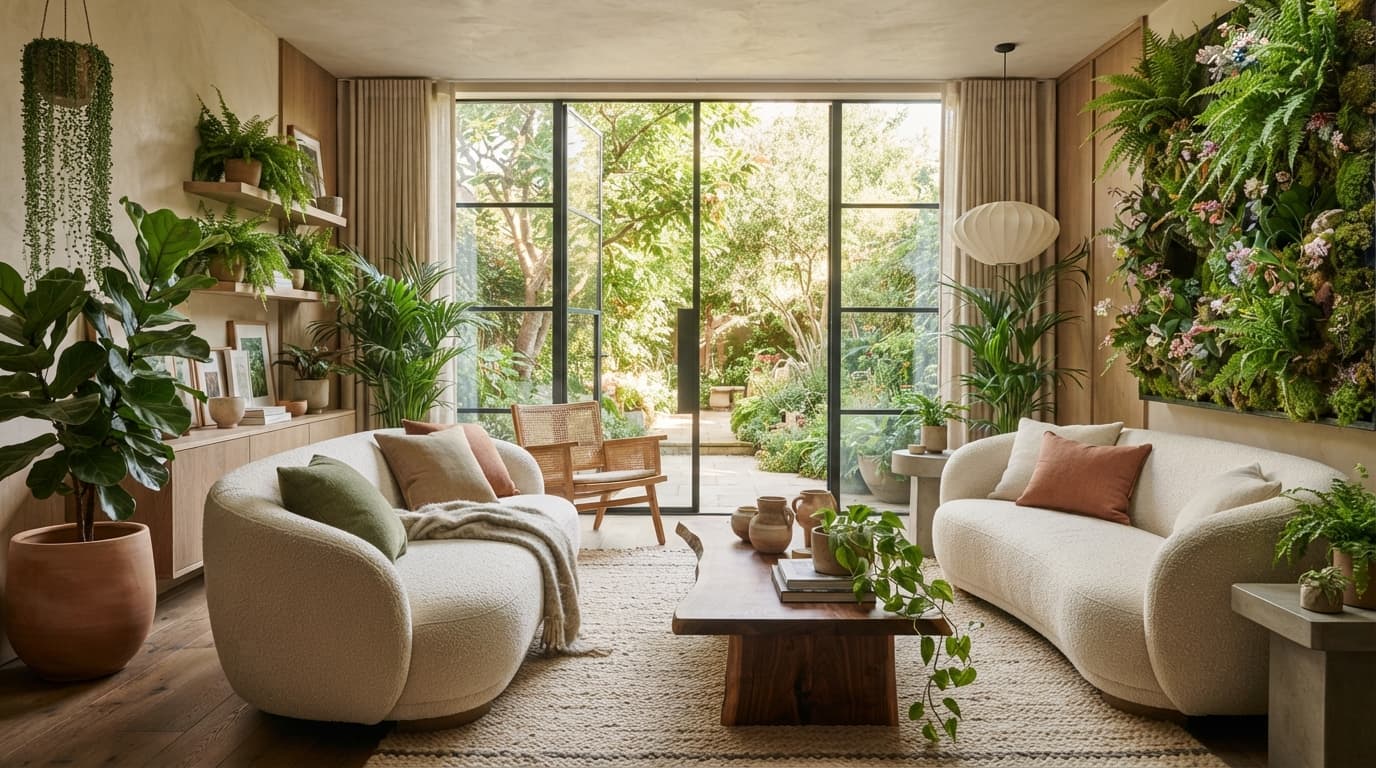
Yes, plants. Lots of them. But not just any plants, and not just placed haphazardly. The key here is integrating them thoughtfully, considering light, scale, and variety.
- Go Big or Go Home (Literally): A large floor plant can be a focal point in a living room or bedroom. Think a Fiddle Leaf Fig (fussy but stunning, requiring bright indirect light), a Bird of Paradise (needs a lot of light, grows tall), or a large Monstera Deliciosa (easier to care for, loves humidity). For a 6-foot plant, you’ll typically spend $100-$300, plus another $50-$100 for a quality pot. Don’t skimp on the pot – a beautiful terracotta or ceramic planter elevates the plant to a piece of furniture.
- Variety is Key: Mix heights, textures, and leaf shapes. Combine a tall snake plant with a trailing Pothos on a shelf, and a bushy ZZ plant on a side table. This mimics the natural layering you’d see outdoors.
- Consider Maintenance (Honestly): This is where many people stumble. If you’re a plant novice or have a black thumb, start with low-maintenance options like Snake Plants, ZZ Plants, Pothos, or even a robust Peace Lily. They tolerate a wider range of conditions and forgive a missed watering or two. A good watering schedule and checking the soil moisture before watering are non-negotiables.
- Pet Safety: Always check if a plant is toxic to pets before bringing it home. Many common houseplants are, so prioritize species like Boston Ferns, African Violets, or Christmas Cacti if you have furry friends.
- My Honest Take on Faux Plants: We're not entirely against them, but they need to be high-quality. A cheap, plastic-looking faux plant actually detracts from a biophilic design. If you must use faux, choose something with realistic leaves and stems, and place it where it’s not immediately apparent it’s fake (e.g., a high shelf, a dimly lit corner). My general rule: one excellent faux plant is better than five mediocre ones. Better yet, fill your space with real plants that thrive!
2. Natural Materials & Textures (More Than Just "Wood")
This is where the tactile experience of a biophilic space comes alive. Move away from synthetic materials and embrace the organic.
-
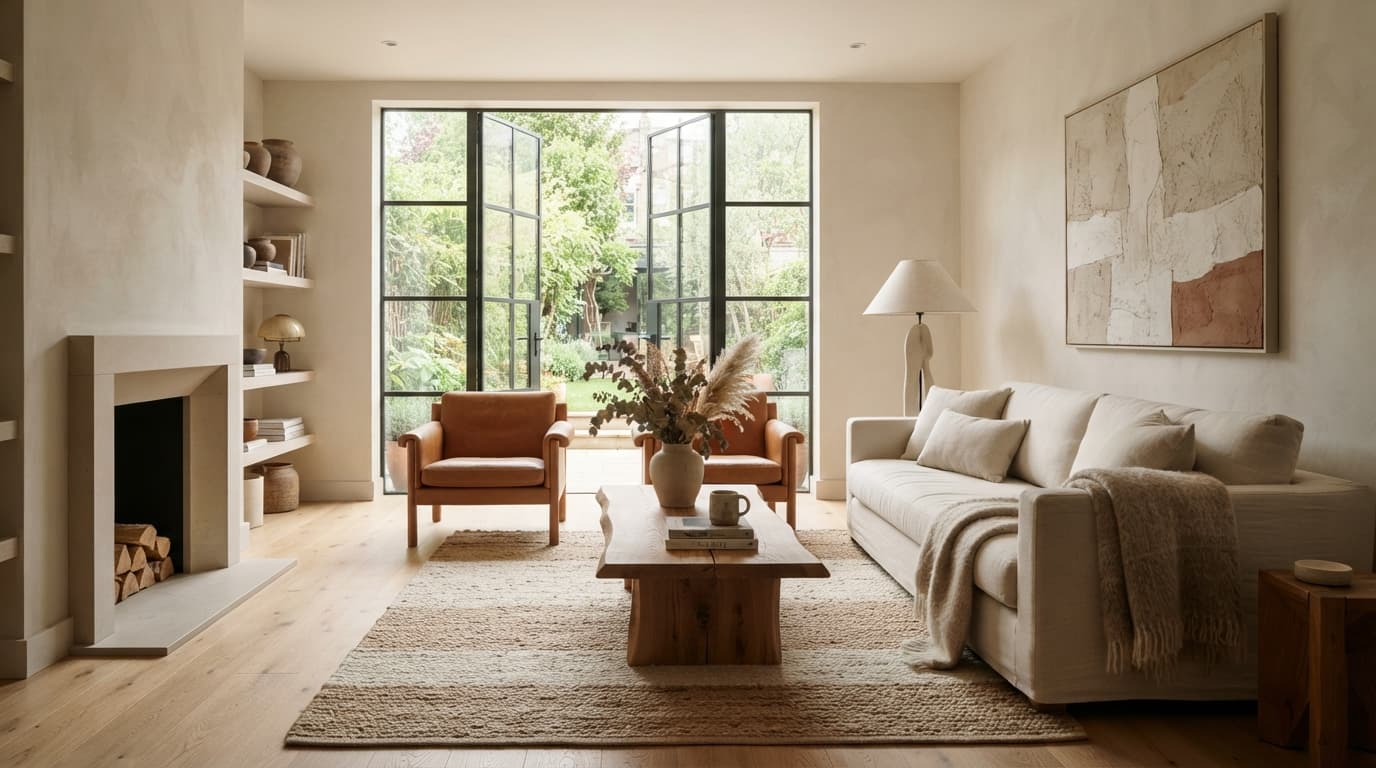
Wood, Wood, Wood: Not just stained pine, but genuine solid wood in various tones. Light oaks, warm walnuts, or even reclaimed woods add character and warmth. Consider a solid wood coffee table (expect to pay $400-$1000 for a good one, like options from West Elm or Crate & Barrel), a live-edge console table, or even wooden accent chairs. The grain itself is a natural pattern that brings the outdoors in.
-
Stone & Clay: Think travertine coffee tables, marble countertops (if you’re renovating), or even just decorative ceramic vases and planters. The cool, earthy feel of stone grounds a space.
-
Woven Wonders: Rattan, jute, sisal, and wicker bring incredible texture. A large jute rug (a 9x12 can range from $300-$800, depending on the weave and brand) instantly adds an organic, grounding layer to a room. Consider a rattan accent chair (typically $200-$500) or woven baskets for storage. When you’re choosing, think about how to pick a rug for living room – natural fibers are almost always the best biophilic choice.
-
Softness & Breathability: Linen, cotton, and wool are your friends. A linen sofa cover, wool throw blankets, and cotton bedding feel good against the skin and allow for natural airflow. They’re also less prone to static and off-gassing than synthetic alternatives. Bouclé looks incredible and has a fantastic texture, but it's a nightmare if you have pets – it snags easily and collects fur like a magnet. Opt for a tightly woven linen or performance fabric instead for durability with a natural look.
-
Trade-offs: Natural materials can be more expensive than their synthetic counterparts. Solid wood requires occasional oiling, and linen wrinkles easily (charming to some, not to everyone). Jute rugs can shed a bit initially. These aren't downsides, just realities to be aware of.
3. Maximize Natural Light (The Most Powerful Design Tool)
This might be the single most impactful element of biophilic design, and it’s often free. Don't underestimate the power of good daylight.
- Window Treatments with Purpose: Ditch heavy, opaque curtains that block light. Instead, opt for sheer linen drapes that diffuse sunlight beautifully while still offering some privacy. Bamboo or woven wood blinds are another excellent choice, allowing you to control light while adding natural texture. If you need blackout for a bedroom, layer a blackout blind under a sheer curtain.
- Strategic Mirror Placement: Place mirrors opposite windows to reflect and amplify natural light, making the room feel larger and brighter. A large, unframed mirror or one with a simple wooden frame works best.
- Clear the Path: Don't block windows with tall furniture. Arrange your layout to allow light to penetrate deep into the room. This might mean placing your sofa on a solid wall and letting an accent chair float near a window.
- My Honest Take: This is non-negotiable. If you have limited natural light, consider sheer curtains even if privacy is less of a concern. Every ray of sunlight is precious in creating that biophilic feel. Supplement with soft, layered artificial lighting (warm LED bulbs, dimmer switches) to mimic natural light cycles in the evenings.
4. Incorporate Natural Shapes & Patterns (Beyond the Leaf Print)
Biophilic design isn't just about literal representations of nature; it's also about mimicking its inherent forms and rhythms.
- Organic Curves: Nature rarely creates harsh, straight lines. Look for furniture with soft, rounded edges – a curved sofa, an oval coffee table, an arched doorway. These gentle forms feel more inviting and less rigid. Think about a sofa with a subtle curve to its back or armrests, or a console table with a gently scalloped edge.
- Subtle Patterns: Instead of overtly floral wallpaper (unless it’s a very sophisticated botanical), consider patterns that evoke natural phenomena. Think abstract patterns reminiscent of water ripples, wood grain, or subtle leaf motifs. Even the pattern in a natural stone tile or a textured plaster wall can contribute.
- Art Inspired by Nature: Choose artwork that depicts landscapes, seascapes, botanical illustrations, or abstract pieces with earthy color palettes and fluid forms. Large format landscape photography can be incredibly impactful.
- My Opinion: Avoid overly geometric or stark lines as dominant themes. While minimalism can be beautiful, extreme minimalism often clashes with the soft, inviting nature of biophilic design. It's about finding that balance.
5. Thoughtful Color Palettes (The Calm of the Earth)
Color plays a huge role in setting the mood, and for biophilic design, we’re drawing directly from nature’s soothing spectrum.
- Earthy Neutrals: Think creams, sandy beiges, warm greys, and muted browns. These form the base of your palette, creating a calm, grounding backdrop.
- Greens & Blues: These are your primary accent colors. Sage green, forest green, mossy green – they evoke foliage and growth. Deep blues, ocean blues, or sky blues bring in the calming element of water and sky. Use them in throw pillows, blankets, a statement accent chair, or even a feature wall.
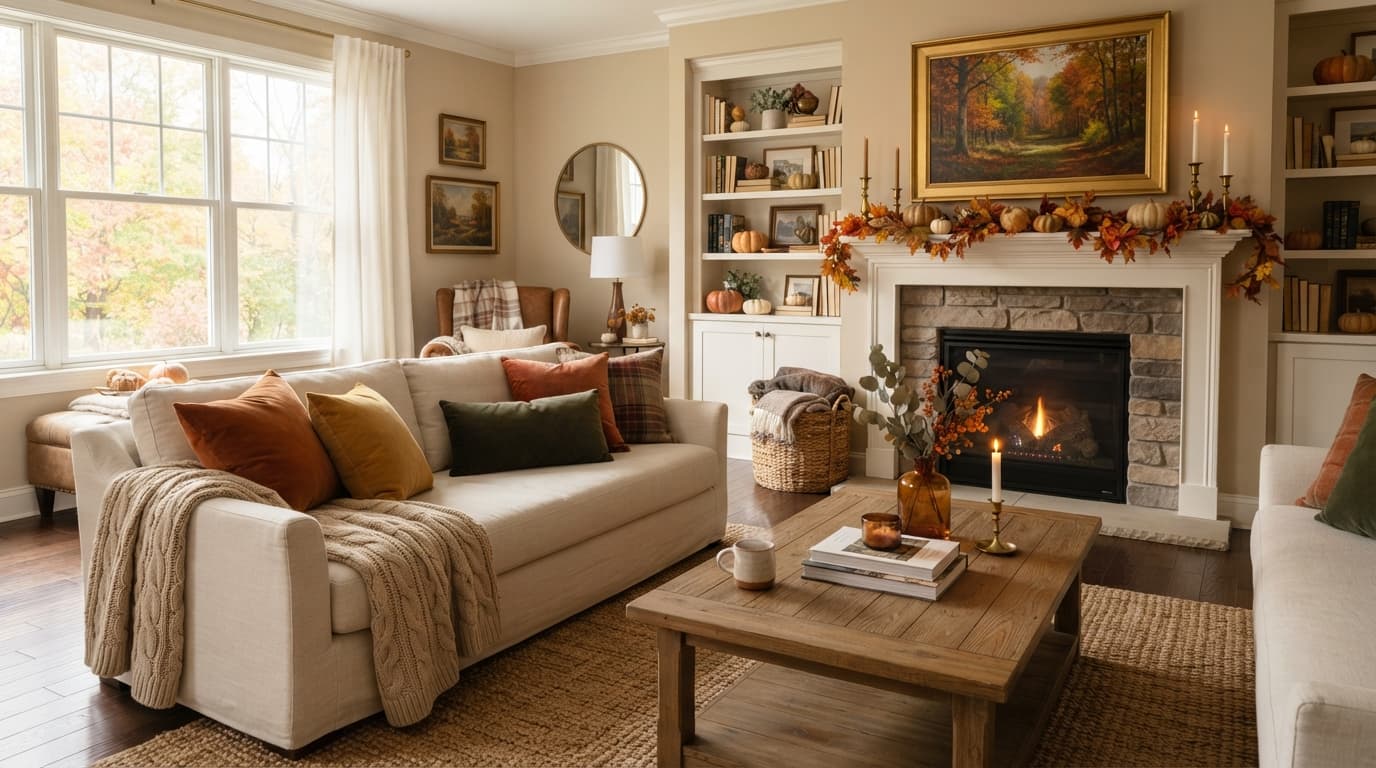
- Warm Accents: A touch of terracotta, rust, or ochre can add warmth and mimic autumn leaves or sunsets. Use these sparingly, perhaps in a ceramic vase or a small piece of art.
- My Take: Layer different shades of your chosen colors for depth. Don't feel like you need to paint every wall green. A neutral base with varying shades of green plants, a blue rug, and a few wooden accents creates a rich, natural tapestry. For a modern living room makeover before and after using biophilic principles, you'd often see a blend of these soothing tones.
6. Water Elements (Optional, But Impactful)
While not always practical for every space, incorporating water elements can be a powerful biophilic addition.
- Small Indoor Fountains: The gentle sound of trickling water is incredibly soothing and can mask unwanted background noise. Choose a small, self-contained unit that fits your space and budget (many options are available under $100).
- Aquariums: A well-maintained aquarium with live plants can be a mesmerizing focal point. The movement of fish and the gentle gurgle of filters add dynamic natural life.
- Trade-offs: Fountains require regular cleaning and water refills, and aquariums are a significant commitment. Humidity can also be a consideration, especially in smaller spaces.
- My Opinion: A little goes a long way. If you choose a water feature, ensure it's kept clean and integrated seamlessly into the design rather than feeling like an afterthought.
Bringing It All Together: Your Biophilic Space
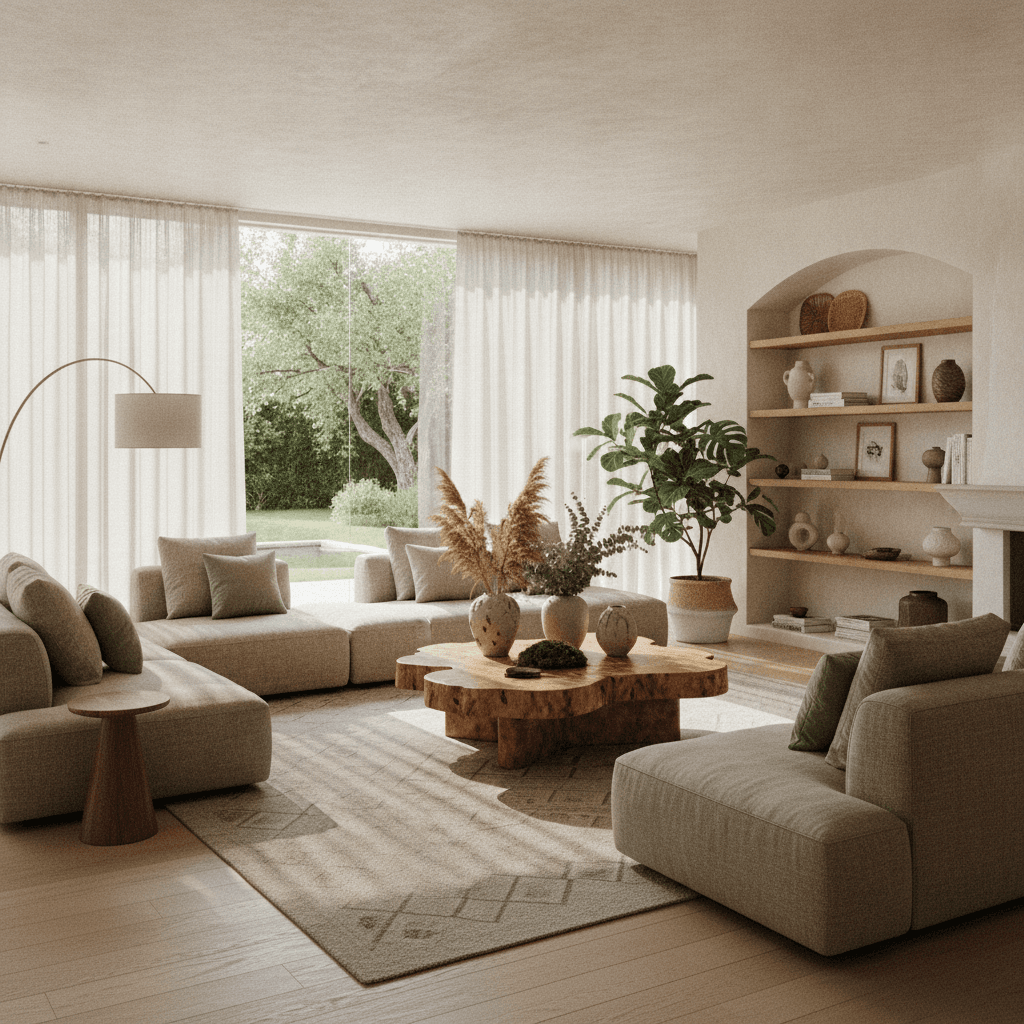
Imagine stepping into your living room: soft, diffused light streams through sheer linen curtains, falling onto a rich, solid oak coffee table. A sprawling Monstera plant in a terracotta pot anchors one corner, its large leaves bringing life and vibrant green. Your sofa is upholstered in a textured, natural linen, adorned with a mix of deep green and warm beige pillows. A large jute rug grounds the seating area, its natural fibers soft underfoot. On a shelf, a collection of handmade ceramic vases and a few trailing Pothos add further organic interest.
For your bedroom ideas, think about natural wood for your bed frame (a platform bed in a light oak can be stunning), crisp organic cotton or linen bedding in serene blues and greens, and a small, air-purifying snake plant on your bedside table. Soft, indirect lighting from a lamp with a natural fiber shade completes the calming atmosphere.
In an office space, a beautiful desk plant (like a ZZ plant or a small Fiddle Leaf Fig) can improve focus. Maximize natural light at your workstation, and opt for a desk made of solid wood or with a wood veneer. Add a cozy wool throw over your office chair for moments of comfort.
It's not about replicating a forest indoors; it's about drawing inspiration from nature’s principles to create spaces that feel inherently good, promoting peace and well-being.
My Honest Take on Longevity and Common Pitfalls
Is biophilic design just another fleeting trend? Absolutely not. It's rooted in our fundamental human need for connection to the natural world. As our lives become increasingly digital and urbanized, the desire to counterbalance that with natural elements in our homes will only grow stronger. It's a style that offers timeless appeal because it caters to something deeper than fleeting fashion.
However, there are pitfalls:
- Overdoing it: Don't turn your home into a jungle or a rustic cabin if that's not your style. Biophilic design can be minimalist, modern, or bohemian. The principles are adaptable.
- Neglecting Plant Care: Dead or dying plants are the opposite of biophilic. If you struggle, start small and invest in hardy varieties.
- Cheap Imitations: As noted above, bad faux plants or synthetic materials that poorly mimic natural ones detract from the authenticity. Invest in real, quality items when you can.
- Lack of Balance: A biophilic space still needs to be functional and comfortable for daily living. Don't sacrifice practicality for an aesthetic.
The beauty of biophilic design is that you don't have to overhaul your entire home at once. Start with one room, or even one corner. Add a large plant, swap out some synthetic textiles for natural ones, or simply open your curtains wider. Observe how you feel in that space.
On Roomellow, you can upload a photo of your room and get redesign suggestions that incorporate elements like specific plants, natural wood furniture from various furniture stores, and textured rugs. It's an easy way to visualize how these principles would look in your actual space before you commit to any purchases.
Ready to redesign your room?
Upload a photo of your room and get a professional AI redesign with real furniture you can buy. Free to try — no credit card required.
Try Roomellow free