Are Online Interior Design Services Worth It? Unpack the Reality
Discover if online interior design services are the affordable solution for your home. Learn how they work, what to expect, and if they're worth your investment. Start designing today!
By Roomellow Team
Designing a room can feel like staring at a blank canvas with a hundred different ideas swirling, none of them quite forming a coherent picture. You know what you like, you scroll through endless inspiration photos, but translating that vibe into your actual living room or bedroom with furniture you can actually buy? That’s where many of us hit a wall. For years, professional interior design felt out of reach for most budgets, reserved for large-scale renovations or luxury homes. But then, the internet happened, and with it, the rise of online interior design services.
These services promised a solution to the design dilemma without the hefty price tag or the commitment of an in-person designer. They aimed to democratize good design, bringing expert advice and curated selections to anyone with a Wi-Fi connection. But what exactly are they, how do they work, and most importantly, are they truly worth your hard-earned money? Let's unpack the reality of online interior design services.
What Are Online Interior Design Services, Really?
At their core, online interior design services connect you with design professionals (or powerful AI tools, which we’ll get to) who help you plan and furnish your space remotely. The process typically kicks off with you providing details about your room – photos, measurements, a budget, and often, a style quiz or questionnaire to gauge your aesthetic preferences. Think of it as a virtual design consultation.
The beauty of these services is their flexibility. They’re not one-size-fits-all, ranging from simple mood boards to comprehensive 3D renderings complete with shoppable links to furniture and decor. Some services offer a one-time package for a single room, while others provide ongoing support or subscription models. The common thread is convenience: you can get professional design help without ever leaving your couch, often at a fraction of the cost of a traditional in-person designer.
The "why" behind their popularity is simple: people are busy, and making design decisions is hard. We want spaces that feel intentional, cohesive, and reflect our personalities, but we don't always have the time, skill, or confidence to make it happen alone. Online services step in to bridge that gap, offering a guiding hand through the overwhelming world of furniture stores, color palettes, and layout challenges.
The Good, The Bad, and The Budget: Pros & Cons
Like any service, online interior design comes with its own set of advantages and disadvantages. Being aware of these trade-offs upfront will help you decide if it's the right path for your project.
The Upsides
- Accessibility & Convenience: This is the big one. You can access talented designers from anywhere, at any time, often on your own schedule. No need to coordinate in-person meetings or worry about geographical limitations.
- Cost-Effectiveness: Generally, online services are more affordable than traditional interior designers. You're typically paying for a specific deliverable (a design plan, a shopping list), rather than hourly rates for project management. You might pay a flat fee of a few hundred dollars for a basic room design, whereas an in-person designer might charge thousands.
- Wider Pool of Talent: You're not limited to designers in your immediate area. This opens up a world of specialists – whether you're looking for someone specifically skilled in mid-century modern living room ideas or bohemian bedroom decor ideas.
- Visual Confidence: Many services offer 2D layouts or 3D renderings, allowing you to "see" how furniture will fit and look in your space before you buy. This is a huge benefit for visual thinkers and helps prevent costly mistakes.
- Curated Shopping Lists: Instead of endlessly browsing, you receive a list of specific products, often from multiple furniture stores, that fit your budget and style. This takes the guesswork out of where to buy furniture online.
The Downsides
- Less Hands-On: The designer isn't physically in your space. They rely entirely on the information you provide (photos, measurements, descriptions). If you're not meticulous with details, or if your lighting is tricky, there's a higher chance of misinterpretation.
- Limited Customization for Complex Projects: For structural changes, custom built-ins, or managing contractors, online services usually fall short. Their strength lies in furnishing and decorating existing spaces.
- Communication Challenges: While most platforms offer good communication tools, it still relies on written descriptions and digital visuals. Subtle nuances of texture, color, and comfort are harder to convey or assess remotely.
- Dependency on Accurate Measurements: We cannot stress this enough: your measurements must be precise. A few inches off on a wall or a window can make a huge difference in furniture placement and overall flow. For instance, recommending a custom sofa might be pointless if you provide inaccurate doorway dimensions.
- Potential for Decision Fatigue (Still): While curated, you're still often presented with options, and the final decision-making, purchasing, and assembly are usually on you.
Budget Talk: What to Expect to Pay
The cost of online interior design services varies widely, typically falling into a few tiers:
- Entry-Level/AI-Powered Tools: These might be free or range from $10-$50 per room for basic mood boards, styling suggestions, or AI-generated redesigns. Roomellow, for instance, focuses on AI-powered visualization with real furniture, allowing you to design your room with real furniture for free to explore possibilities.
- Mid-Tier Packages: Expect to pay $100-$500 per room. This usually includes a dedicated designer, 2D floor plans, mood boards, and a shoppable list. Revisions might be limited.
- Premium Packages: These can range from $500-$1500+ per room. You'll likely get more comprehensive 3D renderings, more extensive revision rounds, direct communication with a senior designer, and potentially assistance with ordering.
Remember, these prices generally cover the design service itself, not the furniture. Your furniture budget will be a separate, often much larger, consideration.
How to Choose the Right Online Design Service for You
With so many options, finding the right fit can feel like another design challenge. Here's my advice on navigating the choices:
1. Define Your Needs & Budget
Before you even look at services, get crystal clear on:
- Which room(s) needs help? A living room refresh is different from a full bedroom makeover on a budget.
- What's your furniture budget? Be realistic. If you only have $1,000 for a whole living room, even the best designer can't conjure high-end pieces. Knowing this helps the designer (or AI) narrow down furniture stores and options.
- What kind of output do you need? Do you just need inspiration and a color palette? Or do you need a full 3D visual of your room with every item specified and a direct link to buy?
2. Understand Service Tiers & Deliverables
Review what each service actually provides.
- Mood Boards: Great for getting a feel for style and color, but won't show you layout.
- 2D Floor Plans: Essential for understanding furniture placement and traffic flow. We consider this non-negotiable for most rooms, especially a small living room.
- 3D Renderings: The closest you'll get to seeing your room finished. This is powerful for visualizing how a new sofa from one store will look next to a rug from another.
- Shopping Lists: Often with direct links and pricing. Check if they track inventory or offer alternatives if an item is out of stock.
- Revisions: How many are included? What's the turnaround time? A good service understands that design is iterative.
3. Consider Style & Expertise Alignment
Browse designer portfolios if the service offers individual designers. Look for projects that resonate with your aesthetic. If you're drawn to scandinavian interiors, find a designer whose portfolio reflects that clean, functional aesthetic. If you're into farmhouse dining room decor, look for that vibe. This ensures you're not paying someone to push you towards a style you don't actually love.
Our Take: Roomellow's Role
We built Roomellow to empower you in this process, especially when it comes to visualization and real products. While we don't offer one-on-one human designer consultations in the traditional sense, we provide powerful AI room design with real products that lets you experiment with furniture from various stores in your actual room. It's an incredible tool for exploring different layouts and styles, giving you a strong foundation or a complete design plan to work from. Think of it as your super-smart design assistant, always ready to render another option.
What to Expect When You Go Online: A Step-by-Step Guide
The process for most online interior design services generally follows a similar path:
Step 1: The Initial Intake – Sharing Your Story
You’ll start by filling out a detailed questionnaire. This is your chance to tell the designer (or AI) everything:
- Your Style: What aesthetics do you gravitate towards? (e.g., modern, bohemian, mid-century). Many services use visual quizzes, asking you to pick favorite rooms.
- Your Budget: Be specific for both the design service and the furniture you plan to buy.
- Your Functional Needs: How do you use the room? Do you need a cozy home office setup for productivity? A dining room for entertaining or just quick meals?
- Your "Must-Haves" & "Deal-Breakers": Keep that inherited armchair? Absolutely no blue? Speak up!
- Photos & Videos: Take clear, well-lit photos from multiple angles. Videos can also be incredibly helpful.
- Accurate Measurements: Seriously, double-check these. Every wall, window, doorway, and existing furniture piece you want to keep. This is where the foundation of a good design is laid.
Step 2: The Design Concept – Seeing It Come to Life
After reviewing your information, the designer or AI will get to work.
- Mood Boards: You'll typically receive a mood board first, a collage of images, colors, textures, and furniture pieces that capture the proposed style and aesthetic. This is for vibe-checking.
- 2D Floor Plans: These show you where every piece of furniture will go, detailing dimensions and spacing. This is crucial for understanding flow and ensuring everything fits. A common mistake we see is oversized furniture in small spaces. A good floor plan prevents this.
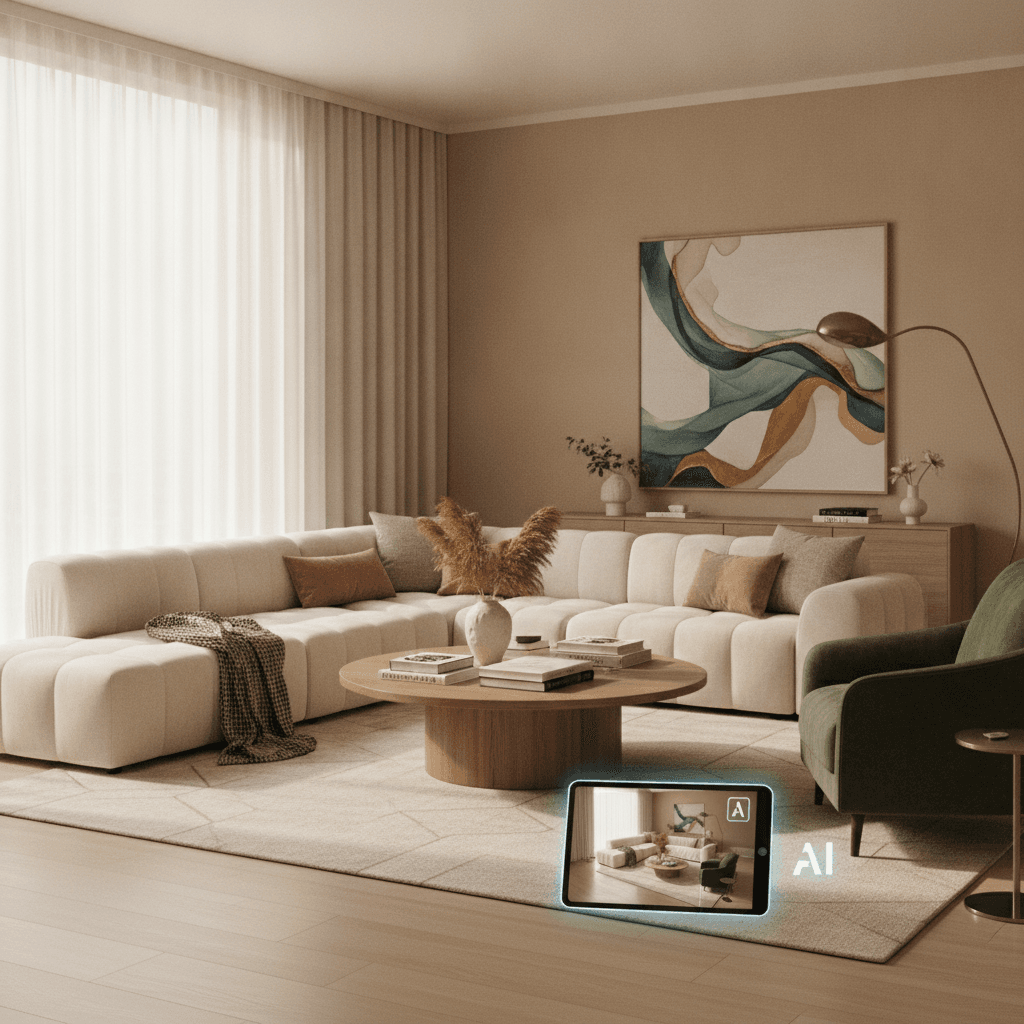
- 3D Renderings (if applicable): If your package includes them, these are lifelike visuals of your room with the proposed design. This is where the magic happens – you can truly envision yourself in the redesigned space. Roomellow excels at this, showing AI interior design with real furniture in your uploaded photos.
Step 3: Feedback & Revisions – Making it Yours
You'll have an opportunity to review the initial concepts and provide feedback. Be honest and specific. If you hate the color, say so. If you think the sofa is too big, explain why. Most services include a limited number of revisions, so make them count. This is a collaborative process, even if it's virtual.
Step 4: The Final Deliverables – Your Design Blueprint
Once you've approved the design, you'll receive your final package, which usually includes:
- A finalized design concept.
- Detailed floor plans.
- 3D renderings (if part of your package).
- A comprehensive shopping list with links to purchase furniture and decor from various stores. These links often take you directly to the product pages, making buying incredibly easy.
Beyond the Buzzwords: Our Take on Specifics
Let's get down to the brass tacks and talk about some crucial design elements that online services (and you) need to nail.
Furniture Selection: More Than Just Good Looks
Good design isn't just about pretty pictures; it's about functionality and longevity. When looking at the furniture recommendations from an online service:
- Check Dimensions: This goes back to accurate measurements. Always compare the furniture dimensions against your floor plan. An 8-foot sofa looks great on a mood board, but if your wall is only 9 feet and you need space for end tables, it's a non-starter.
- Consider Materials: Bouclé upholstery looks incredible and is hugely popular right now, offering a beautiful texture and softness. But honestly: it's a nightmare if you have pets or small children. Spills are hard to clean, and claws can pull loops. Sometimes, a performance fabric or a sturdy leather sofa is a more practical (and still stylish) choice, especially for a high-traffic living room.
- Mix, Don't Match: A common design faux pas is buying entire furniture sets. A good online service will advise against this. Instead, they should suggest mixing different textures, materials, and even wood tones to create a more curated, lived-in feel. We'd almost always skip the matching living room set and mix a leather accent chair with a fabric sofa, for example, to add depth and interest. Learning how to mix and match furniture is a foundational skill for a reason.
The Non-Negotiable Rules of Rugs
If there's one area where online design services must get it right, it's rug sizing. This is a hill we will die on:
- Under a Sectional: A 9x12 rug under a sectional in a standard living room is non-negotiable. At minimum, the front two legs of all primary seating pieces should be on the rug. Anything smaller makes the room feel disconnected and cheap. You can learn more about how to pick a rug for your living room here.
- Bedroom Rugs: For a queen bed, an 8x10 rug is the minimum, allowing enough rug to extend past the sides and foot of the bed. For a king, you'll want a 9x12. It grounds the space and adds warmth underfoot.
These aren't just arbitrary rules; they create visual balance, define zones, and make a room feel complete.
Is Roomellow an Online Interior Design Service? My Perspective.
This is an important distinction to make. Roomellow isn't a traditional "online interior design service" where you hire a human designer for one-on-one consultation and project management. Instead, we are a powerful tool that empowers you to be your own designer, leveraging cutting-edge AI.
We specialize in virtual interior design, offering a platform where you can upload photos of your room and get instant redesigns using real, purchasable furniture from various furniture stores. You can experiment with different styles, layouts, and products until you find exactly what you love. It's like having an infinite number of mood boards and 3D renderings at your fingertips, letting you visualize how that sectional sofa for a small living room would actually look in your space.
Our strength lies in visualization and product discovery. We help you answer questions like:
- "Will this specific sofa from West Elm fit in my open concept living room?"
- "What if I tried a coastal interior design look versus a modern living room redesign?"
- "Where can I find furniture that actually fits my style and budget?"
So, while we don't hold your hand through every single step like a full-service human designer, we give you the most advanced and accessible tools to make incredibly informed design decisions. We aim to be the ultimate shoppable room visualizer, making the design process fun, accessible, and ultimately, successful for you.
Making the Most of Your Online Design Experience
Regardless of whether you choose a human-led service or an AI-powered platform like Roomellow, here are my top tips for success:
- Be Prepared & Honest: The more detailed and honest you are about your preferences, budget, and pain points, the better the outcome. Don't sugarcoat your budget or pretend you love a style you don't.
- Communicate Clearly: Vague feedback ("I don't really like it") isn't helpful. "I'd prefer a sofa in a lighter neutral shade, perhaps linen instead of velvet, and I'm not keen on the abstract art; something more minimalist would be better," is specific and actionable.
- Trust, But Verify: Trust the expertise, but always cross-reference dimensions and read reviews for suggested furniture pieces. You're the one living with it.
- Embrace the Process: Design is rarely linear. Be open to new ideas and iterations.
- Have Fun: This is your home, your space. It should reflect you. Enjoy the journey of creating something beautiful and functional.
Online interior design services have revolutionized how we approach decorating our homes. They've made professional-level aesthetics more accessible and affordable than ever. By understanding their nuances, choosing wisely, and engaging thoughtfully, you can transform your space from a blank canvas into a beautifully designed home that truly feels like you.
Ready to redesign your room?
Upload a photo of your room and get a professional AI redesign with real furniture you can buy. Free to try — no credit card required.
Try Roomellow free